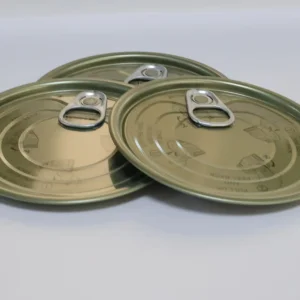
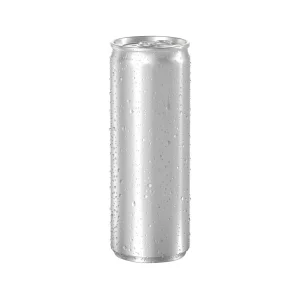
Certified food-grade aluminum containers, easy-open ends, and specialized industrial aluminum coils
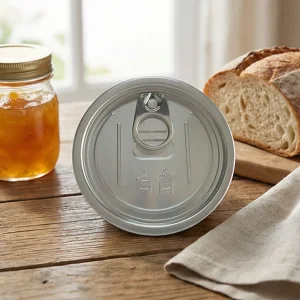
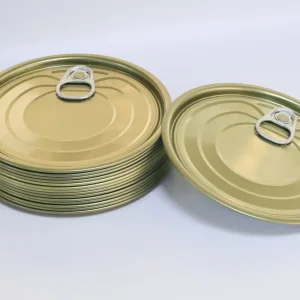
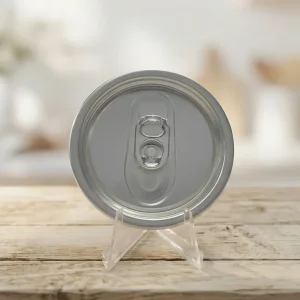
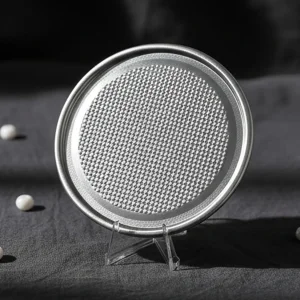
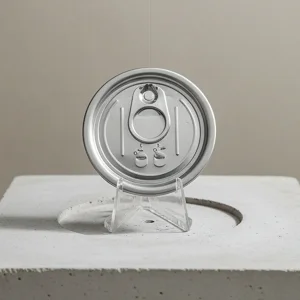
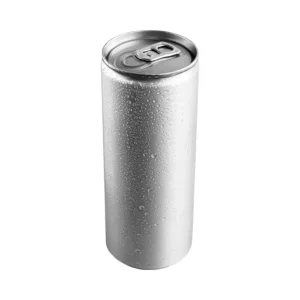
In the rapidly evolving landscape of global fast-moving consumer goods (FMCG), rigid packaging has undergone a historic transformation. Modern beverage brand owners, craft breweries, multinational beverage conglomerates, and co-packers are systematically migrating from traditional high-carbon containers toward high-precision aluminum beverage cans. As a global leading aluminum beer cans manufacturer, our enterprise operates at the intersection of metallurgy, advanced mechanical engineering, and ecological stewardship, providing certified, high-performance packaging solutions engineered to withstand demanding global supply chains.
The economic and functional superiority of aluminum packaging rests upon its unique physical characteristics: absolute oxygen and UV light barrier properties, unmatched thermal conductivity for rapid chilling, structural durability under internal hydrostatic pressure, and an infinitely recyclable cradle-to-cradle lifecycle. The global aluminum can market, projected to expand significantly over the next decade, is driven by heightened environmental legislation against single-use plastics, expanding craft beer penetration, and the exponential growth of Ready-To-Drink (RTD) alcoholic beverages, sparkling herbal teas, and functional energy formulas.
For enterprise purchasing officers and packaging engineers, selecting a certified global supplier is a decision that dictates line efficiency, seam integrity, and brand protection. This whitepaper provides a comprehensive technical breakdown of our manufacturing capabilities, metallurgical standards, factory efficiencies in China, and regional compliance frameworks governing food-grade aluminum packaging.
The integrity of an aluminum beer can relies on advanced metallurgy and precise wall-thinning mechanics. Can bodies and easy-open lids (EOL) utilize distinct aluminum-manganese (Al-Mn) and aluminum-magnesium (Al-Mg) alloys, cold-worked to extreme tempers to achieve high yield strengths while minimizing material weight.
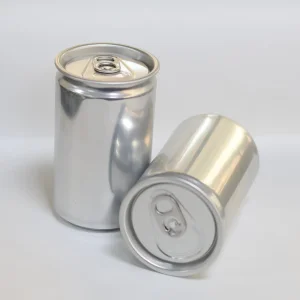
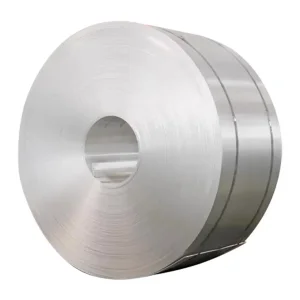
The body of our aluminum cans is fabricated from premium 3104-H19 aluminum alloy coil. The H19 temper signifies extreme strain-hardening achieved through cold rolling. This alloy offers exceptional deep-drawing capabilities, allowing body walls to be ironed down to under 0.09mm while maintaining structural axial strength to resist pallet stack pressures up to 850 Newtons.
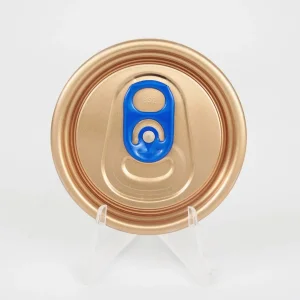
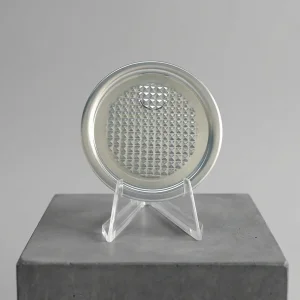
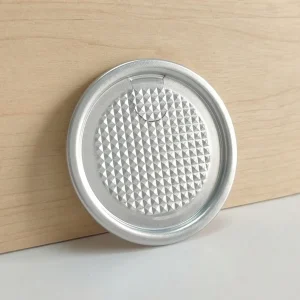
Easy-open ends (including 200#, 202# SOT, and RPT styles) demand high yield stress and fatigue resistance. We utilize 5182-H48 aluminum alloy enriched with magnesium. This formulation provides high buckle resistance under internal carbonation pressure exceeding 90 PSI (6.2 Bar), preventing dome reversal during tunnel pasteurization at temperatures up to 65°C.
The pull tab is subjected to intense localized leverage during opening. Formed from 5052-H19 alloy, it offers ideal stiffness and formability, preventing tab buckling or rivet failure. Our tab score designs ensure controlled opening pop-and-pull force metrics (Pop force: 15–28 N; Pull force: 22–38 N) for optimal consumer ergonomics.
Standard dimensional configurations engineered for ultra-high-speed commercial filling lines (Krones, Ferrum, Angelus seamer compatibility):
| Can Profile / Volume | Body Diameter (mm) | Neck Diameter | Can Height (mm) | Alloy (Body/End) | Internal Pressure Rating | Internal Coating System |
|---|---|---|---|---|---|---|
| Standard 330ml | 66.0 mm | 202 Neck (52.5mm) | 115.2 ± 0.5 | 3104-H19 / 5182-H48 | ≥ 6.2 Bar (90 PSI) | BPA-NI Polyorganosol / Modified Epoxy |
| Standard 355ml (12oz) | 66.0 mm | 202 Neck (52.5mm) | 122.0 ± 0.5 | 3104-H19 / 5182-H48 | ≥ 6.2 Bar (90 PSI) | BPA-NI Water-Based Acrylic |
| Standard 500ml | 66.0 mm | 202 Neck (52.5mm) | 168.0 ± 0.5 | 3104-H19 / 5182-H48 | ≥ 6.2 Bar (90 PSI) | BPA-NI Polyorganosol |
| Sleek 330ml | 58.0 mm | 200 Neck (50.0mm) | 145.8 ± 0.5 | 3104-H19 / 5182-H48 | ≥ 6.0 Bar (87 PSI) | BPA-NI Modified Epoxy |
| Slim 250ml | 53.0 mm | 200 Neck (50.0mm) | 134.5 ± 0.5 | 3104-H19 / 5182-H48 | ≥ 5.8 Bar (84 PSI) | BPA-NI Acrylic Resin |
Operating from Shanghai and integrated within China’s Yangtze River Delta industrial ecosystem, our automated manufacturing facilities deliver unmatched production speed, strict dimensional tolerances, and cost competitiveness. China’s advanced manufacturing infrastructure enables continuous innovation in wall ironing, internal spraying, and automated quality control.
Our automated production lines utilize high-precision multi-stage cupping presses and bodymakers capable of producing up to 2,400 cans per minute per line. The DWI process begins with uncoiling 3104 aluminum sheet stock, punching shallow cups, and progressively drawing and ironing them through tungsten carbide rings. This achieves precise wall thinning down to 0.088mm at the mid-body, while preserving thick bottom domes (0.28mm) for structural pressure resistance.
Every production line integrates high-resolution optoelectronic inspection cameras and high-voltage pinhole detectors. Cans pass through high-speed camera sensors checking flange width, neck eccentricity, internal contamination, and rim deformities. Online Enamel Raters test 100% of internal lacquer coating continuity using electrical conductivity thresholds (≤ 2.0 mA under 6.3V DC test), guaranteeing that zero raw aluminum comes into contact with aggressive or acidic beverages.
Furthermore, our strategic proximity to Shanghai Port—the world’s largest container shipping hub—delivers significant logistics efficiencies. We maintain synchronized supply schedules with global shipping lines, offering containerized loading optimizations that maximize unit load density, lower freight costs per thousand cans, and eliminate ocean transport transit risks through vacuum-sealed stretch packaging and desiccated protective liners.
Packaging requirements vary across different beverage categories. Chemical aggressiveness, pasteurization cycles, dissolved oxygen limits, and consumer usage patterns dictate specific liner chemistries, end profiles, and structural specifications.
Beer is highly sensitive to dissolved oxygen (DO) pick-up and light strike (skunking). Our 330ml, 355ml, and 500ml standard cans paired with 202 SOT ends provide a 100% UV barrier and air-tight double seams (≤ 0.02 cc/year oxygen transmission rate). Internal BPA-NI coatings safeguard delicate hop aromas and subtle malt profiles against flavor scalping or metal interaction.
Ready-To-Drink premixed cocktails containing spirits, citric acid, and carbonation require specialized internal barrier coatings. We deploy dual-pass polyorganosol internal sprays engineered to resist ethanol concentrations up to 15% ABV and low pH levels (pH 2.5–3.2), preventing liner degradation and shelf-life failures.
Non-carbonated beverages lack internal CO₂ pressure to maintain container rigidity. Our sleek and slim cans support precise liquid nitrogen dosing (LN2) prior to seaming. The instant expansion of liquid nitrogen creates internal pressures of 15–25 PSI, providing column strength for stacking while delivering a rich, creamy cascade upon opening.
Environmental sustainability is no longer merely a corporate social responsibility objective—it is an economic imperative and a regulatory requirement across major consumer markets. Aluminum beverage cans represent the benchmark for circular packaging solutions under global Life Cycle Assessment (LCA) frameworks.
Procuring aluminum beverage packaging on a global scale requires evaluating suppliers beyond unit pricing. Procurement directors must assess technical compatibility, quality assurance protocols, and supply chain reliability.
The seam between the can body flange and the easy-open lid curl is the primary defense against leakage and microbial contamination. A professional manufacturer must provide full technical parameters—including curl height, countersink depth, cover hook, and body hook specifications—customized to your filling plant’s seaming equipment (e.g., Ferrum, Pneumatic Scale, KHS). Pre-shipment sample lots should always be submitted for double seam teardown analysis.
Visual branding on an aluminum can requires specialized high-speed dry offset printing. Our production facility operates 8-color to 10-color dry offset printing presses capable of high-definition graphics, matte finish overlays, tactile varnish effects, and metallic ink applications. Ensure your supplier provides accurate digital proofing and distortion-corrected pre-press files optimized for cylindrical aluminum bodies.
Explore our complete catalog of precision-manufactured beverage containers and lid systems