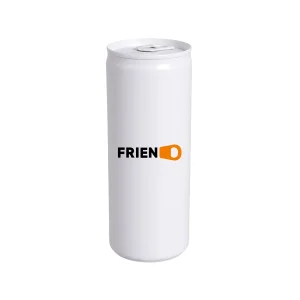
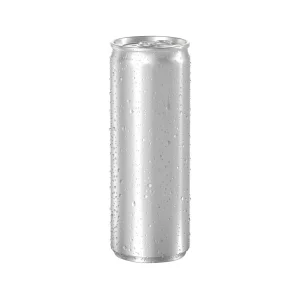
Explore our premium selection of export-grade aluminium beverage cans, easy-open ends, and high-purity alloy coils designed for high-speed filling lines.
Modern metal packaging represents the pinnacle of high-speed mechanical engineering and polymer barrier coating science. In ultra-fast canning environments operating at speeds exceeding 2,000 to 3,000 cans per minute (CPM), microscopic variations in alloy temper, body wall gauge uniformity, internal enamel weight, or double-seam geometry can lead to catastrophic line downtime or premature shelf-life failure. As global leading manufacturers, our engineering protocols align with international food safety standards (FDA 21 CFR 175.300, EU Regulation 10/2011) and precision mechanical tolerances.
The manufacturing of Two-Piece Drawn and Wall Ironed (DWI) aluminium cans and Easy-Open Ends (EOE) requires specific, highly customized wrought aluminium alloys. Each component of a can system is engineered to withstand unique mechanical stresses:
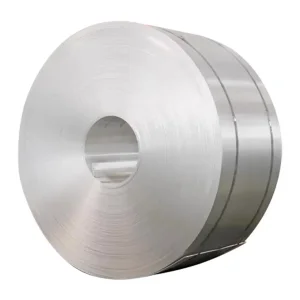
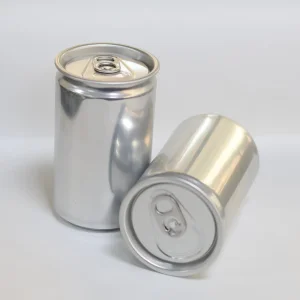
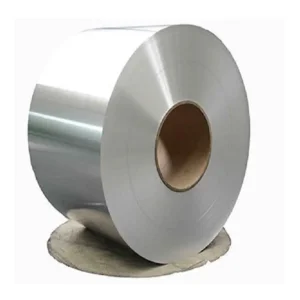
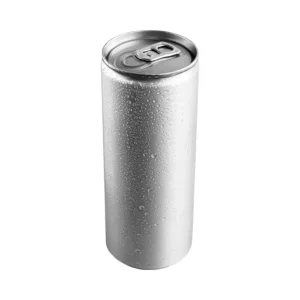
Specially engineered manganese-magnesium aluminium alloy with cold-rolled strain hardening. Possesses an optimal balance between high tensile strength (270–310 MPa) and superior drawability. The fine-grain micro-structure minimizes earing during deep-drawing and wall ironing, enabling body wall reduction down to 0.24mm – 0.26mm without buckling under internal CO₂ pressures up to 6.2 bar.
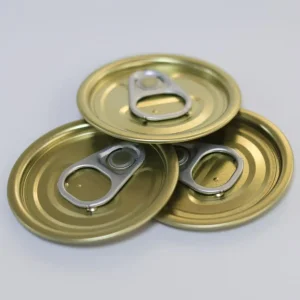
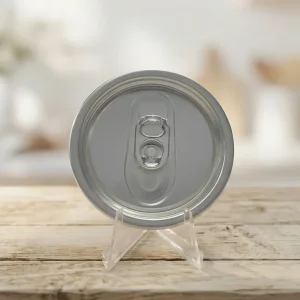
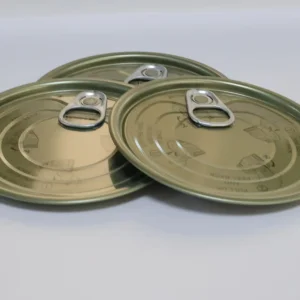
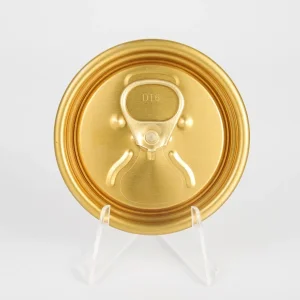
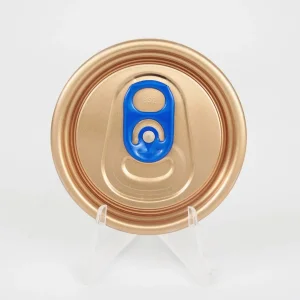
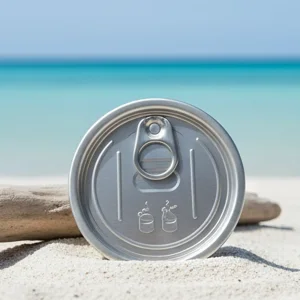
High-magnesium aluminium alloy designed specifically for easy-open end shells (200#, 202#, 206#, 209#, 502#). Yield strength exceeds 310–350 MPa, delivering exceptional buckle resistance under thermal shock during retort pasteurization and internal gas pressures up to 90 PSI. Excellent corrosion resistance in acidic and salty media.
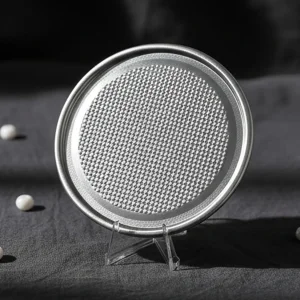
Used for pull-tab stamping and flexible tear-off membrane closures for powder tins. Offers superior stretchability, low feathering during score line rupture, and zero micro-cracking during high-speed riveted tab attachment.
| Alloy Grade | Temper Specification | Tensile Strength (MPa) | Yield Strength (MPa) | Typical Thickness Range | Primary Industrial Application |
|---|---|---|---|---|---|
| AA 3104 | H19 / H39 | 270 - 310 | 240 - 280 | 0.240mm - 0.280mm | DWI Beverage Can Bodies (Standard, Sleek, Slim) |
| AA 5182 | H48 / H19 | 360 - 410 | 310 - 350 | 0.208mm - 0.224mm | SOT / RPT Beverage Ends & Easy-Open Shells |
| AA 5052 | H32 / H34 | 210 - 260 | 160 - 200 | 0.350mm - 0.420mm | Easy-Open Ring Pull Tabs & Heavy Fasteners |
| AA 8011 | O / H14 | 120 - 185 | 85 - 145 | 0.180mm - 0.300mm | Peelable Foil Lids, Powder Jar Seals & Deep Draw Caps |
| Tinplate (MR Grade) | T2.5 - T4 / DR8 | 330 - 520 | 230 - 480 | 0.150mm - 0.280mm | Aerosol Cans, Food Tins, Paint Jars & Rigid Lids |
The internal barrier coating is the critical defense mechanism preventing metallic migration, off-taste flavor scalping, and localized galvanic corrosion caused by aggressive media (low pH carbonated soft drinks, craft beers, energy drinks, or salty sauces). Modern regulatory compliance necessitates a complete transition from traditional Bisphenol A (BPA)-based epoxy systems to cutting-edge BPA-Non Intent (BPA-NI) interior coatings:
Why leading multinational beverage brands, dairy processors, and industrial packagers centralize their packaging procurement in China's advanced manufacturing hubs.
China's Yangtze River Delta and Pearl River Delta manufacturing clusters integrate primary aluminium smelting, ultra-wide precision coil cold-rolling, chemical lacquering, high-speed cupping, and automated decoration under localized industrial parks. This proximity reduces raw coil transportation lead times from weeks to hours, translating into massive cost efficiencies and rapid production scheduling for international buyers.
Our production facilities utilize state-of-the-art Minster and Stolle cupping presses, continuous multi-stage bodyformers, and 8-color dry offset printing presses capable of high-definition line art, tactile varnishes, and spot matte finishes at speeds exceeding 3,000 units per minute. Computer vision systems inspect 100% of cans and lids online for rim deformations, score anomalies, and pinhole micro-fractures.
Operations are accredited under ISO 9001:2015, FSSC 22000 food safety management, and ISO 14001 environmental standards. Certified export documentation including FDA food contact declarations, heavy metal testing (RoHS / REACH), and batch-level mill test certificates (MTC) travel with every ocean shipping container, guaranteeing zero clearance delays at customs ports worldwide.
The global packaging industry is undergoing a structural transition driven by stringent plastic reduction regulations (EU Single-Use Plastics Directive, US EPR Frameworks) and corporate carbon neutrality targets. Aluminium and tinplate lead this circular transformation due to their economic recyclability and structural permanence.
Unlike polymers that degrade during mechanical recycling, aluminium maintains its elemental alloy structure indefinitely. Over 75% of all aluminium ever produced in human history remains in active use today. Recycling aluminium cans consumes 95% less energy than producing primary metal from bauxite ore, drastically reducing Scope 3 supply chain greenhouse gas emissions.
Through finite element analysis (FEA) and optimized dome geometry, modern 330ml and 355ml aluminium cans have reduced metal weight by over 30% during the past two decades. Current body wall thickness measures down to 0.095mm in the mid-body column while retaining top-load axial strength exceeding 1.2 kN to prevent container collapse during multi-tier pallet transportation.
Modern enterprise buyers demand high visual differentiation. Innovations include thermo-chromic inks that change color when chilled to serving temperature, photo-luminescent UV inks, tactile matte-embossed textures, and laser-etched QR codes printed on the underside of 202# RPT/SOT tabs for direct consumer engagement and loyalty tracking.
Customized metal packaging architectures engineered for unique shelf-life, filling temper, and pressure environments.
Form Factor: 250ml Slim, 330ml Standard, 355ml Sleek, 473ml / 500ml Cans paired with 202# SOT / RPT ends.
Technical Challenge: High internal pressure stability up to 6.2 bar; oxygen ingress avoidance (<10 ppb DO pickup).
Engineering Solution: 5182-H48 shell stock with modified countersink depth and double-bead baseline structure to absorb internal gas expansion during summer sea transport.
Form Factor: 300#, 401#, 502# Easy-Open Aluminium Lids & Peel-Off Membrane Caps.
Technical Challenge: Oxygen barrier maintaining <0.5% internal O₂ after nitrogen flushing to prevent fat oxidation in infant formula.
Engineering Solution: Hermetic compound lining sealant applied inside the curl, paired with anti-static surface lacquers to prevent powder particle static cling on sealing faces.
Form Factor: Anti-static coated 300# easy-open aluminium lids mounted on composite or tin jars.
Technical Challenge: Electromagnetic shielding, zero moisture transport, zero particulate contamination during vacuum sealing.
Engineering Solution: Cleanroom Class 10,000 double-bagged packaging, conductive lacquer formulation, and ultra-smooth burr-free score lines.
To guarantee seamless integration into client high-speed filling facilities, our engineering team executes strict pre-shipment double-seam validation protocols:
Double-seaming is the mechanical joining of the can body flange and the end curl. Key inspection parameters measured via computer optical seam micro-meters include:
To prevent condensation corrosion (white rust) during trans-oceanic shipping across varying climate zones, finished product pallets are protected by:
Expert answers to common technical queries raised by global enterprise buyers, packaging engineers, and QA directors.
Complete your packaging line setup with specialized easy-open ends, airtight tinplate lids, and raw coil materials.