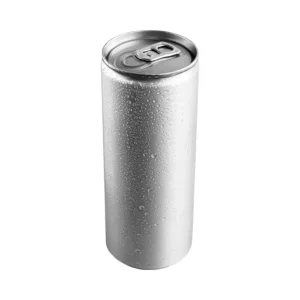
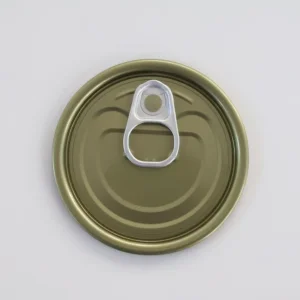
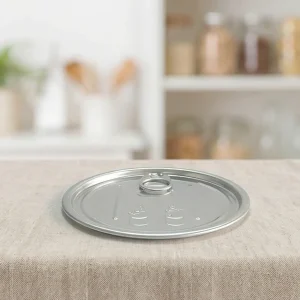
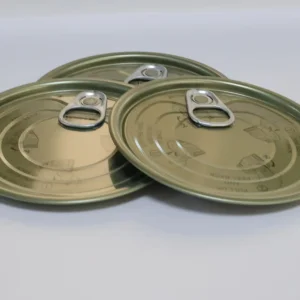
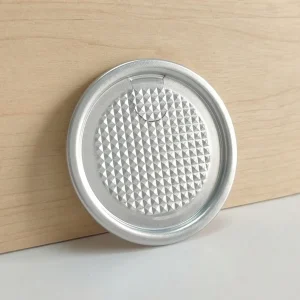
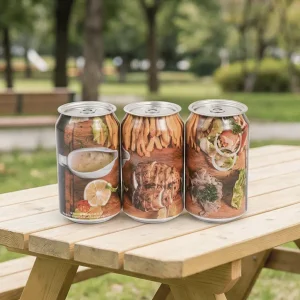
Engineered for high-speed filling lines, superior double-seam performance, and strict food-contact compliance across international markets.
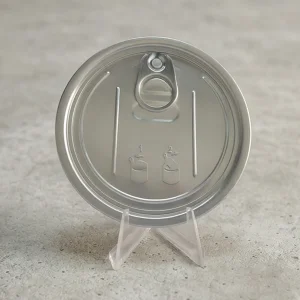
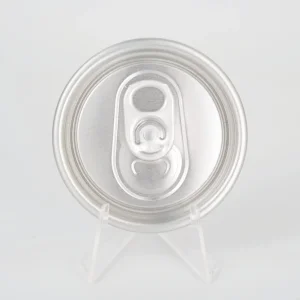
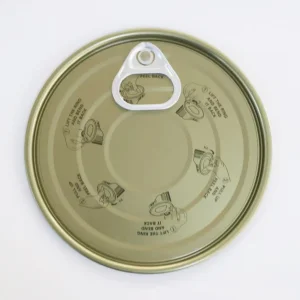
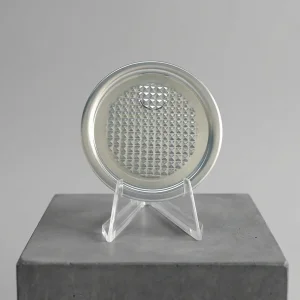
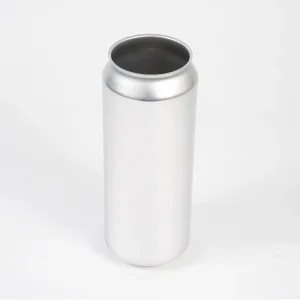
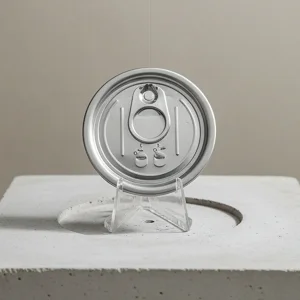
In the hyper-competitive landscape of global rigid metal packaging, the selection of Global Leading 200 Easy Open End Manufacturers represents a pivotal strategic decision for beverage conglomerates, food processors, dairy producers, and industrial packagers. An Easy Open End (EOE)—whether a Stay-On Tab (SOT) for pressurized carbonated soft drinks, a Ring Pull Tab (RPT) for ready-to-drink juices, or a full-aperture score end for dry powders—is not merely a passive closure. It is a highly sophisticated, precision-engineered pressure vessel component designed to guarantee hermetic isolation, withstand severe thermal retort processing, maintain structural integrity across ocean freight transit, and deliver an effortless consumer opening experience.
As the global packaging sector accelerates its transition away from single-use plastics and glass toward infinitely recyclable aluminum and tinplate, the technical demands placed on EOE stamping facilities have intensified exponentially. Modern filling speeds exceeding 1,200 to 2,000 cans per minute (CPM) leave zero margin for dimensional variance, score line inconsistency, or double-seam misalignment. A micro-defect in end curl depth or countersink geometry can trigger line jams, catastrophic double-seam leakage, or batch spoilage costing hundreds of thousands of dollars in downtime and commercial liability.
A macro-analysis of technological transformations, metallurgical innovations, and regulatory shifts sweeping the global rigid packaging ecosystem.
Leading manufacturers are migrating from legacy 0.224 mm shell gauges to ultra-thin 0.203 mm and 0.198 mm 5182-H48 / H19 aluminum coils. Through precise tension leveling and computer-modeled score depth profile tuning, high-speed conversion presses achieve maximum buckle resistance while trimming metal weight by 8% to 12% per thousand ends.
Driven by strict European Food Safety Authority (EFSA) directives and US FDA 21 CFR regulations, tier-1 producers have phased out legacy Epoxy-Phenolic systems. Next-generation coatings leverage acrylic, polyester, and bio-based organosol formulations that eliminate Bisphenol-A migration while delivering chemical resistance against low-pH sour beverages and high-salinity canned foods.
To eliminate manual inspection bottlenecks, state-of-the-art lines integrate multi-camera high-resolution optical vision systems. AI inspection algorithms continuously evaluate score line integrity, rivet alignment, compound gasket distribution, and lip curl uniformity at speeds exceeding 3,000 parts per minute, automatically rejecting sub-micron anomalies.
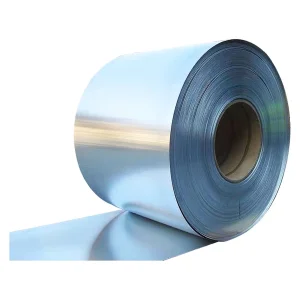
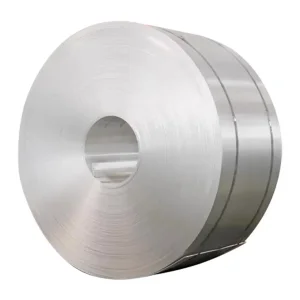
Understanding the underlying material science is fundamental for corporate procurement managers evaluating EOE suppliers. Below is a engineering-level matrix detailing the mechanical properties and end-use suitabilities of core coils supplied by top manufacturers:
| Alloy Grade & Temper | Nominal Thickness Range | Tensile Strength (MPa) | Yield Strength (MPa) | Primary EOE & Packaging Application |
|---|---|---|---|---|
| 5182-H48 / H19 | 0.198 mm – 0.240 mm | 360 – 410 | 310 – 360 | High-pressure SOT & RPT Beverage Ends (Beer, CSD, Energy Drinks) |
| 3104-H19 | 0.230 mm – 0.280 mm | 270 – 320 | 250 – 290 | DWI Beverage Can Bodies, Deep-Draw Shallow Cans |
| 8011-H14 / H16 | 0.180 mm – 0.250 mm | 140 – 180 | 110 – 150 | Powder Lids, Peel-Off Foil Membranes, Pharmaceutical Closures |
| 5052-H32 / H34 | 0.220 mm – 0.300 mm | 210 – 260 | 150 – 200 | Easy Open End Pull Tabs, Specialty Industrial Container Caps |
| MR Tinplate (TH570) | 0.170 mm – 0.230 mm | 520 – 620 | 540 – 600 | Food-Grade Retort Sanitary Ends (603#, 401#, 307# Cans) |
Decoding the multi-faceted purchasing criteria of tier-1 global buyers across technical, financial, operational, and risk mitigation vectors.
When global procurement directors source Easy Open Ends from international suppliers, their user intent extends far beyond comparing price-per-thousand units (CPM). Modern B2B buyer intent encompasses total cost of ownership (TCO), seam setup compatibility, risk displacement, and environmental compliance documentation.
Custom-engineered lid and end configurations tailored to specific filling conditions, internal pressure profiles, and shelf-life requirements.
Primary Hardware: 202# SOT / 200# SOT / 202# RPT Ends.
Designed for rapid filling up to 1,800 CPM. Built with 5182 aluminum shells and high-tenacity 5052 tabs. Feature high-volume compound injection for absolute hermetic seal against carbonation loss up to 6.2 bar internal pressure.
Primary Hardware: 502#, 401#, 307# Foil Peel-Off & EOE.
Requires absolute barrier against oxygen transmission (<0.5 cc/m²/day) and moisture ingress. Utilizes soft-tear aluminum foil membranes heat-sealed to tinplate or aluminum ring collars, eliminating sharp edges for consumer safety.
Primary Hardware: 307#, 401#, 603# Tinplate & Aluminum Ends.
Formulated to withstand aggressive 121°C high-pressure steam autoclaving. Coated with food-grade organosol or heavy-duty polyester lacquers resistant to sulfur staining from meat, tuna, and vegetable proteins.
Demonstrating rigorous technical compliance (E-E-A-T) and localized engineering support to ensure seamless factory-to-filling-line deployment.
Leading 200 EOE manufacturing facilities operate under comprehensive integrated management systems certified to international benchmarks:
Recognizing that end performance relies entirely on seaming precision, top-tier suppliers deploy dedicated packaging technical service (PTS) engineers to client canning plants worldwide.
Services include on-site seamer roll profile alignment, double-seam teardown evaluation (measuring cover hook, body hook, overlap, and seam tightness), and staff training to prevent micro-leakage defects.
A ten-year technological horizon detailing emerging breakthroughs in smart closures, low-carbon aluminum, and digital printing.
Transitioning to inert anode smelting and 100% renewable hydro-powered electrolysis. Coils produced with high recycled content (>80% post-consumer scrap) cut embedded carbon emissions from 18 kg CO₂/kg Al down to <2.5 kg CO₂/kg Al.
Replacing mechanical die-scoring with precision high-speed fiber lasers. Allows non-contact, ultra-precise score depth control (±0.002 mm), eliminating tool wear and enabling dynamic opening geometries customized for thick viscous liquids.
High-speed inline digital printing of unique high-resolution 2D matrix QR codes on the underside of pull-tabs. Enables direct-to-consumer promotional campaigns, anti-counterfeiting verification, and granular unit-level supply chain tracking.
Expert engineering answers addressing the most critical technical, operational, and commercial queries raised by B2B buyers.
SOT (Stay-On Tab) ends are designed so that upon opening, the tab and severed score panel remain attached to the end shell. This is the global standard for carbonated soft drinks and beer to prevent littering and facilitate 100% aluminum can recycling. RPT (Ring Pull Tab) ends allow the consumer to detach the tab and score panel completely, making them ideal for ready-to-drink canned juices, food products, and solid canned foods where full aperture pourability is required.
BPA-NI coatings utilize advanced cross-linked polyester, acrylic, or polyolefin resins instead of traditional bisphenol-A epoxy resins. Leading manufacturers conduct rigorous accelerated pack testing and electrochemical impedance spectroscopy (EIS) to verify that internal coatings resist aggressive beverage acids (such as phosphoric, citric, and lactic acids) for up to 18–24 months without flavor scalping or metal leaching.
Double-seam integrity is evaluated across five critical dimensional metrics: Cover Hook Length (CH), Body Hook Length (BH), Seam Thickness (ST), Seam Length/Height (SL), and Countersink Depth (CS). From these, Overlap Percentage (target >50%) and Seam Tightness / Wrinkle Rating (target >75% free of wrinkles) are calculated to guarantee an airtight, leak-proof seal.
5182 aluminum alloy contains a higher magnesium content (4.0%–5.0%), providing significantly greater yield strength and work hardening capability compared to 3104 alloy. This high tensile strength allows EOE end shells to resist extreme internal pressure (buckle strength >6.2 bar) even when stamped from ultra-thin gauge stock (0.203 mm). 3104 alloy, conversely, offers superior deep-drawing ductility, making it ideal for drawn can bodies rather than ends.
Standard ocean export MOQs typically start at one 20-foot full container load (FCL), accommodating approximately 1.2 million to 1.5 million 202# easy open ends. Ends are packed in paper or PE sleeves (approx. 300–400 ends per sleeve), loaded into heavy-duty corrugated cartons or wooden pallets with desiccants, wrapped in moisture-barrier stretch hooding, and strapped for long-distance marine transit.
For coastal or high-humidity warehousing, tinplate and aluminum ends receive specialized exterior clear or gold organosol varnishes containing corrosion inhibitors. Furthermore, tinplate ends feature electro-deposited tin layers (2.8 g/m² to 5.6 g/m²) combined with passivated chromate treatment, passing 48-hour continuous neutral salt spray testing (ASTM B117) without micro-pitting or rust formation.
Explore our extended range of precision-engineered aluminum cans, specialized powder lids, freeze-resistant closures, and high-performance coils.