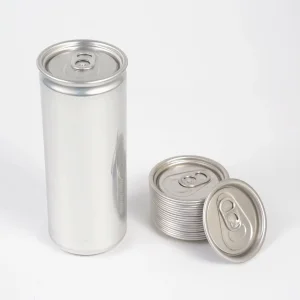
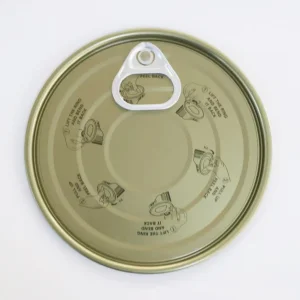
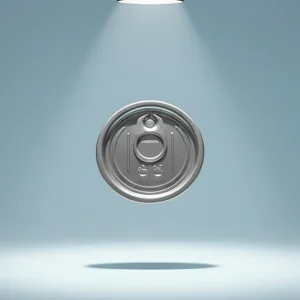
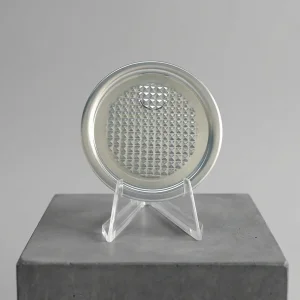
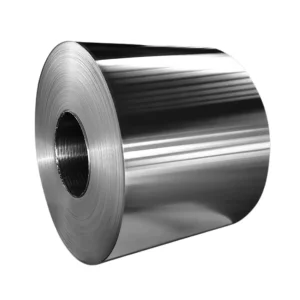
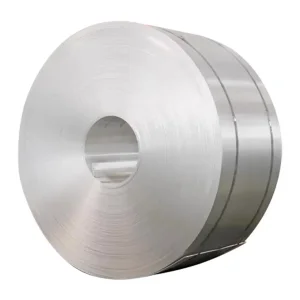
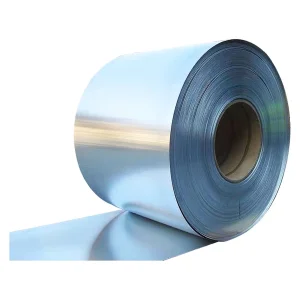
Explore our certified range of aluminum beverage cans, precision food-grade tinplate lids, and specialty freeze-resistant ends manufactured to international food-contact standards.
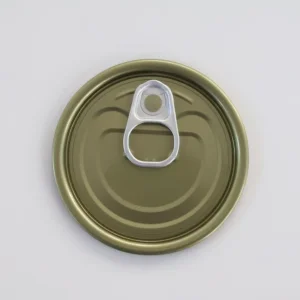
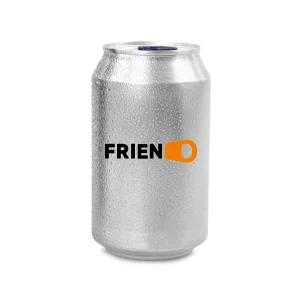
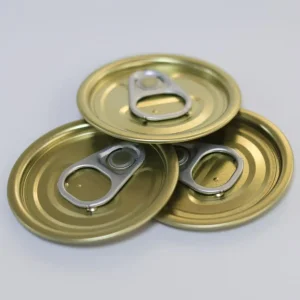
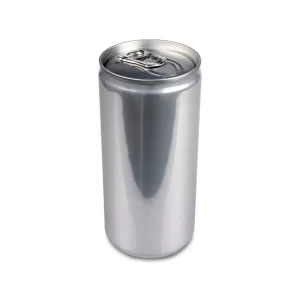
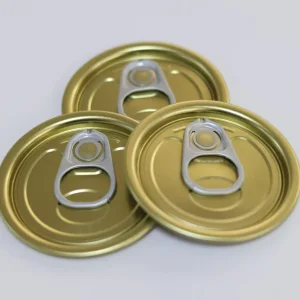
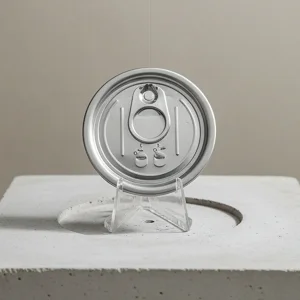
In an era defined by global supply chain volatility, climate shift risks, and escalating food security imperatives, the role of a modern global canned food storage factory extends far beyond standard container manufacturing. Industrial food preservation relies on precision metal packaging engineering designed to insulate perishables against micro-bacterial ingress, photo-oxidation, thermal breakdown, and physical mechanical shock over multi-decade shelf lives.
Eliminating gas leakage at the microscopic level. Double-seam technology integrates 5182-H48 shell stock with sealing compounds formulated for ultra-low permeation, safeguarding nutritional density for up to 30 years in long-term emergency rations.
Engineered internal lacquers (acrylic, polyester, organosol) compliant with US FDA 21 CFR 175.300 and EU Regulation 1935/2004. Prevents chemical migration between metal substrates and high-acid or high-salt preserved foods.
Dimensional tolerances engineered to fractions of a millimeter (±0.015mm). Flawless feed rates across automated canning lines running at up to 1,200 cans per minute (CPM), minimizing machine jam downtime and seam defects.
The worldwide industrial food packaging sector is undergoing a massive transformation. Driven by stringent environmental regulations banning single-use plastics and rising commercial demand for shelf-stable food security supplies, major institutional food buyers, military logistics divisions, and multinational food processing brands are shifting toward rigid metal containers.
Aluminum and tinplate metal cans represent the gold standard of circular economy packaging. Unlike plastic polymers that degrade with each recycling loop, aluminum retains its elemental structural properties indefinitely. Over 75% of all aluminum ever produced globally remains in productive industrial circulation today.
Furthermore, lightweighting advancements in 3104-H19 alloy coil manufacturing have reduced can body wall thickness down to 0.095mm while maintaining column collapse resistance above 1.4 kN, significantly reducing ocean freight logistics emissions.
Governments and humanitarian organizations are expanding strategic long-term grain, protein, and powdered dairy reserves. Sealed rigid metal cans with specialized easy-open ends (EEOs) or sanitary tinplate ends eliminate pest entry, humidity absorption, and UV degradation—factors responsible for over 30% of global agricultural storage post-harvest losses in non-rigid packaging.
Our manufacturing infrastructure in Shanghai leverages high-precision alloy rolling and multi-stage stoving lines. Selecting the correct alloy temper is critical to avoiding micro-fractures during necking, flanging, and double-seaming operations.
Application: Can Body Stock (Standard, Sleek, Slim).
High tensile strength (≥290 MPa) optimized for Draw and Wall Ironing (DWI) processes. Exceptional deep-drawing stability ensures minimal earing rate (<2.5%) during high-speed cup forming.
Application: Easy-Open Ends (SOT & RPT Shells).
Magnesium-enriched aluminum alloy supplying extreme buckle resistance under internal carbonation pressure or thermal vacuum processing. Tested for burst pressures exceeding 6.2 bar.
Application: Tab Stock, Powder Lids & Industrial Closures.
Superior ductility and workability for precision scoring, ring-pull stamping, and specialty tear-strip ends utilized in infant nutrition powders and freeze-dried food storage.
Operating under strict E-E-A-T (Experience, Expertise, Authoritativeness, Trustworthiness) frameworks since 2010, Shanghai Friend Metals Technology Co., Ltd. provides complete traceability from raw ingot melt certificates down to individual palleted shipments entering overseas ports.
Every product series leaving our factory is backed by comprehensive analytical testing documentation required by international customs and health authorities:
Our engineering team assists overseas canning facility technicians during seamer setup. We supply complete seam teardown dimension guidelines (Overlap, Hook Lengths, Countersink Depth, Seam Thickness) to guarantee perfect mechanical double seams.
Prior to loading, every batch undergoes enamel porosity testing (Enamel Rater <5mA), salt-spray corrosion chamber evaluation (500hr+ exposure), and video optical inspection for lip defect elimination.
Different regional environments, regional food formulations, and shelf-life targets demand tailored packaging configurations. Here is how our product matrix resolves localized industrial challenges:
Challenge: Storage in non-climate-controlled military depots or emergency shelters prone to humidity fluctuations and extreme temperature spikes.
Solution: Heavy-gauge tinplate lids (603# and 401#) paired with corrosion-resistant organosol outer coatings and double-dusted sealing compound to ensure 20+ year hermetic seal protection against rust and oxygen ingress.
Challenge: High ambient humidity causing caking and lipid oxidation in infant formulas, protein powders, and gourmet coffee beans.
Solution: 401# and 502# Easy-Open Lids with aluminum peelable foil membrane, nitrogen-flush capability (<0.5% residual oxygen level), and anti-static internal lacquer formulations.
Challenge: Corrosion risk from canned tomato pastes, fruit preserves, and pickled products under high-temperature steam sterilization.
Solution: Dual-coated organosol internal linings applied onto 211# and 307# tinplate ends, capable of enduring 121°C retort cycles for 45 minutes without blistering or enamel peeling.
Challenge: Rapid product line changeovers between carbonated craft sodas, beer, and cold-brew coffee requiring high visual shelf appeal.
Solution: Sleek 250ml and Standard 330ml/355ml aluminum cans with 200# / 202# Stay-On Tab (SOT) and Resealable (RPT) ends, decorated with high-definition 6-color offset printing and matte varnish options.
The next decade of global food storage engineering will focus on digital intelligence integration, ultra-lightweight alloys, and complete carbon neutrality across raw material sourcing.
Embedding laser-etched matrix QR codes on top tabs and lids for end-to-end supply chain traceability, real-time batch authentication, and dynamic shelf-life monitoring for government emergency stockpiles.
Transitioning from petroleum-derived lacquers to 100% plant-based non-BPA internal coatings, offering identical acid-resistant performance with a 40% reduced manufacturing carbon footprint.
Implementing ultra-high yield strength aluminum alloys allowing end shells to drop to 0.20mm thickness while increasing dome pressure resistance above 6.5 bar.
Detailed technical answers to common questions asked by industrial food packaging engineers, B2B procurement managers, and plant operations directors.
Browse our industrial-grade raw material aluminum coils, odor-proof easy-open ends, and large-format food container lids engineered for maximum supply chain efficiency.