Engineered for High-Speed Filling Lines, Pressure Retention, and Extended Shelf-Life Integrity
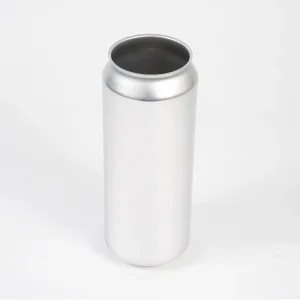
Analyzing the Paradigm Shift Toward Metal Packaging, Circular Carbon Neutrality, and High-Precision Seaming
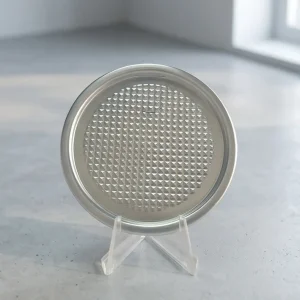
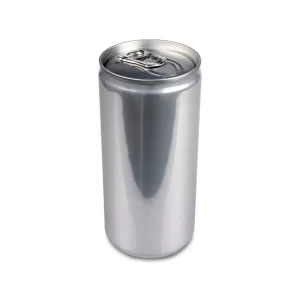
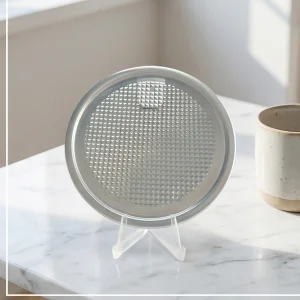
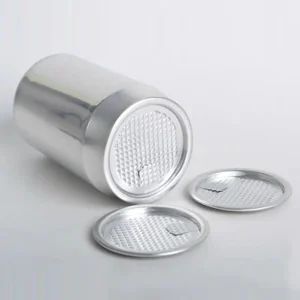
The global rigid metal packaging market is undergoing a seismic structural evolution driven by single-use plastic regulations, extended producer responsibility (EPR) mandates, and aggressive corporate decarbonization commitments. Modern global can easy open end factories stand at the center of this transformation. Aluminum beverage cans, easy-open ends (EOE), stay-on-tab (SOT) lids, ring-pull-tab (RPT) closures, and specialty tinplate ends are replacing legacy multi-layer polymer films and glass containers across beverage, food, infant formula, and industrial sector categories.
Key growth drivers include the rapid expansion of ready-to-drink (RTD) craft beverages, hard seltzers, functional energy drinks, nitrogen-infused cold brews, and premium nutritional powder matrices. As consumer preference shifts toward infinite recyclable materials, aluminum packaging achieves an unparalleled circular recycling rate exceeding 70% in major economic regions. This strategic advantage enables global brand owners to drastically reduce Scope 3 carbon emissions while ensuring hermetic preservation of flavor profiles, nutritional potency, and organoleptic freshness.
Modern B2B enterprise buyers no longer search for basic commodity pricing alone. Search intent mining reveals that procurement directors, packaging engineers, and contract manufacturing executives evaluate factory partners based on micro-level technical criteria: score residual tolerance, internal enamel rater values (mA), double seam overlap ratios, BPA-NI coating compliance, and high-speed filling line seamer machine adaptation.
Deconstructing Technical Demands Across Global Filling Operations, OEM Contract Manufacturers, and Brands
High-volume beverage co-packers require ends engineered for flawless integration with automated seamers (Ferrum, Angelus, Pneumatic Scale). Critical parameters include consistent end curl dimensioning, uniform countersink depth, precise shell rim thickness, and zero-jamming stackability during high-speed denesting.
For carbonated soft drinks (CSD), beer, sparkling water, and pressurized dairy products, easy-open ends must withstand internal pressures exceeding 6.2 to 6.8 bar without doming or score fracture. Nitrogen-dosed still beverages require specialized thin-gauge alloy shells optimized for positive internal pressure balance.
Consumer satisfaction and safety depend on opening force mechanics. Enterprise procurement teams enforce strict quality limits on Pop Force (<30 N) and Tear/Pull Force (<45 N). The score line must open smoothly without metal feathering, sharp burr creation, or tab detaching failures.
Global regulatory harmonization demands complete migration away from traditional Bisphenol-A (BPA) epoxies. Brands demand next-generation BPA-Non-Intent (BPA-NI) acrylic, polyester, or organosol internal coatings that prevent metal ion leaching while resisting aggressive acidic, saline, or fatty food matrices.
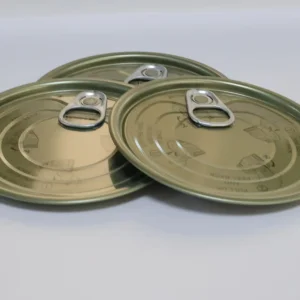
Export logistics involve harsh marine transport conditions. Importers in coastal regions specifically search for rust-proof 401#, 502#, and 307# aluminum lids coated with anti-corrosive external varnishes capable of enduring 5% neutral salt spray testing for over 96 hours without oxidation.
From standard 202# SOT lids to 209#, 300#, 315#, 401#, and 502# full-aperture ends, enterprise buyers require a unified factory platform capable of delivering custom color tabs, laser-etched QR codes, printed promotion lids, and diverse rim profiles (Sleek, Slim, Standard).
In-Depth Analysis of Alloy Selection, Score Residual Precision, and Double-Seam Metallurgy
The structural integrity of modern metal packaging is fundamentally dictated by metallurgical composition and temper selection. World-class global can easy open end factories utilize specialized aluminum-manganese (3104) and aluminum-magnesium (5182) alloys to achieve the optimal strength-to-weight ratio required for aggressive lightweighting initiatives.
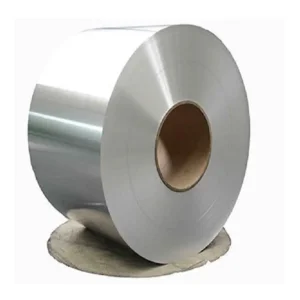
Can Body Coil (AA3104-H19): Formulated with precise additions of manganese (1.0–1.5%) and magnesium (0.8–1.3%), 3104-H19 provides extreme strain hardening during severe Drawing and Wall Ironing (DWI) operations. This allows body wall thicknesses to be ironed down to less than 0.095 mm while retaining structural column strength exceeding 1.4 kN to withstand axial loads during seaming and palletizing.
Easy Open End Shell Stock (AA5182-H48): End shells demand higher yield strength to resist internal pressure doming. AA5182 contains 4.0–5.0% magnesium, delivering superior work-hardening characteristics. The H48 temper ensures high yield stress exceeding 310 MPa, allowing for down-gauged end shells (e.g., 0.208 mm down to 0.180 mm) without compromising buckle pressure resistance.
The most critical engineering parameter in easy-open end manufacturing is the scoring process. A precision carbide scoring die impresses a controlled groove into the aluminum end shell, defining the aperture opening area. The remaining metal thickness at the root of the groove—known as the score residual—must be controlled within micro-inch precision.
If the score residual is too thick, opening force increases beyond ergonomic standards, causing tab detachment or opening failure. Conversely, if the residual is too thin, stress corrosion cracking, micro-leaks, or premature score pop during thermal processing (pasteurization or retort) will occur. Advanced factories deploy closed-loop laser optical micrometer systems that continuously sample score residuals to maintain tolerances within ±0.0015 mm (±1.5 microns).
| Component / Diameter Code | Alloy & Temper | Nominal Gauge (mm) | Internal Coating System | Target Pop Force (N) | Buckle Pressure (bar) | Typical Application |
|---|---|---|---|---|---|---|
| 202# SOT Lid (52.5mm) | AA5182-H48 | 0.208 – 0.220 | BPA-NI Organosol / Acrylic | 18 – 26 N | ≥ 6.2 bar | Beer, Craft Soda, CSD, Energy Drinks |
| 200# SOT Lid (50.0mm) | AA5182-H48 | 0.198 – 0.208 | BPA-NI Waterborne Polyester | 16 – 24 N | ≥ 6.5 bar | Sleek & Slim Can Formats, RTD Cocktails |
| 202# RPT Resealable End | AA5182 + Composite | 0.220 – 0.235 | BPA-NI Epoxy/Modified Resin | 20 – 28 N | ≥ 5.8 bar | Multi-Serve Energy Drinks, Functional Waters |
| 300# EOE (73mm) | AA5182-H48 / Tinplate | 0.230 – 0.250 | Retort-Grade Organosol | 22 – 32 N | ≥ 2.5 bar (Retort) | Canned Fruits, Coffee Powder, Snacks |
| 401# Powder EOE (99mm) | AA5182-H48 | 0.245 – 0.265 | Rust-Proof Anti-Corrosive Varnish | 25 – 36 N | Hermetic Seal | Infant Formula, Milk Powder, Coastal Storage |
| 502# Large EOE (127mm) | AA5182 / ETCS Tinplate | 0.270 – 0.295 | BPA-NI Food Contact Approved | 28 – 42 N | Hermetic Seal | Bulk Dairy Powder, Industrial Food Service |
A metal package is only as reliable as its double seam. The hermetic joint formed between the can body flange and the easy-open end curl requires meticulous geometrical engagement during the first and second operation seaming rolls. Leading global suppliers provide clients with precise double-seam dimensional envelope guidelines:
Navigating Food-Grade Safety Certifications, Migration Testing, and Regional Customs Logistics
All internal coatings and compound lining materials strictly adhere to global regulatory frameworks including FDA 21 CFR 175.300 (Resinous and Polymeric Coatings), EU Regulation 1935/2004, EU 10/2011, and China GB 4806.10. Comprehensive overall migration testing (OMT) and specific migration testing (SMT) reports accompany every export shipment.
To withstand long-distance maritime transport across humid tropical or high-salinity coastal routes, products are packaged using heavy-duty export-grade bulk wooden pallets, plastic slip sheets, anti-static polyethylene sleeves, edge protectors, desiccants, and vacuum shrink-wrap films to eliminate moisture damage and transportation chafing.
Partnering factories operate under ISO 9001:2015 Quality Management Systems and FSSC 22000 Food Safety Certification standards. Every coil lot, liner compound batch, and score press run is assigned a unique tracking barcode, ensuring 100% full-chain traceability from raw ingot to final seamed container.
Next-Generation Manufacturing Innovation: AI Quality Inspection, Ultra-Lightweighting, and Zero-Carbon Aluminum
The next decade of metal packaging manufacturing will be defined by autonomous, zero-defect production lines. Advanced global factories are integrating high-speed AI deep-learning vision inspection systems operating at speeds over 2,000 components per minute. These systems utilize multi-spectrum lighting and high-resolution cameras to detect micro-flaws—such as compound void voids, scratch marks, score burrs, shell deformation, and varnish pinholes—instantly rejecting non-compliant items before palletizing.
Material cost represents over 60% of the total manufacturing cost of aluminum packaging. Technological roadmaps focus heavily on aggressive down-gauging without compromising structural yield limits. Through advanced finite element analysis (FEA) and computer-modeled end shell geometry (e.g., optimized countersink radii and reinforced panel ribbing), the industry is transitioning from 0.208 mm shell stock down to 0.180 mm and 0.165 mm gauges. Every 0.01 mm reduction in shell gauge saves thousands of metric tons of aluminum globally each year, significantly reducing shipping weight and carbon footprint.
In alignment with global Net-Zero targets, leading manufacturers are establishing closed-loop scrap recovery systems with primary aluminum smelters. EOE skeleton scrap generated during stamping presses is immediately compacted, re-smelted, and re-rolled into 3104 and 5182 coil stock. Using renewable hydropower and recycled post-consumer scrap (PCR), future aluminum cans and ends will achieve a recycled content exceeding 85%, cutting embodied carbon by more than 80% compared to virgin aluminum production.
Engineering Clarifications on Alloys, Minimum Order Quantities, Seamer Matching, and Food Compliance
Can bodies are drawn from AA3104-H19 aluminum coil due to its superior drawability and ironing wall strength. Easy-open end shells are stamped from AA5182-H48 high-magnesium alloy coil to provide maximum buckle pressure resistance under gas loads. Pull tabs are produced from AA5052-H19 or H38 alloy coil to deliver high tensile strength during leverage lifting without bending or snapping.
Factories utilize advanced BPA-Non-Intent (BPA-NI) coating systems, primarily high-performance acrylic, modified polyester, or polyorganosol resins certified under FDA 21 CFR 175.300 and EU Regulation 1935/2004. Finished ends undergo rigorous extraction and migration testing under extreme simulant conditions (3% acetic acid, 10% ethanol, fatty food simulants) to guarantee zero detectable BPA migration.
For standard stocked easy-open end sizes (e.g., 202# SOT, 206#, 300#, 401# plain silver ends), trial orders start at 200,000 pieces with lead times of 15 to 20 working days. For custom printed cans or custom color lacquered/tabbed ends requiring specialized printing plates and lacquer machine calibration, standard minimum order runs start at 500,000 to 1,000,000 units depending on SKU specs.
Yes. Factory application engineers review your seamer model (e.g., Angelus 60L/120L, Ferrum, Pneumatic Scale), line operating speed, and target fill volumes. Complete engineering drawings detailing end curl diameter, countersink depth, chuck profile fit, and recommended seaming roll profiles are provided alongside sample test lots for double-seam teardown evaluation prior to commercial mass production.
For products destined for humid coastal environments or extended ocean transit, lids (such as 401# and 502# powder lids) receive an upgraded double-side lacquer system featuring specialized anti-corrosive epoxy-ester or gold organosol varnishes. These coatings are validated through 96-hour neutral salt-spray (NSS) testing to prevent rust spots and edge oxidation.
Comprehensive Supply Chain Solutions for Powder Packaging, Craft Beverage, and Industrial Applications