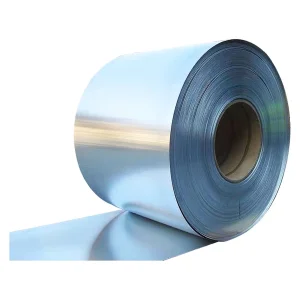
Direct factory supply of precision aluminum cans, ends, and lacquered coils engineered for continuous filling line stability.
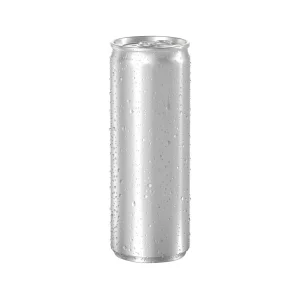

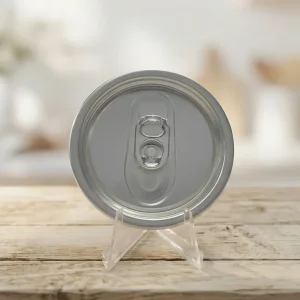

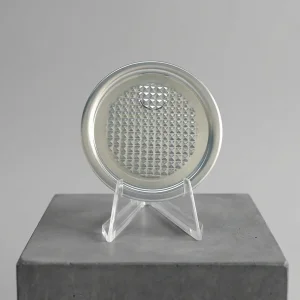
Analyzing alloy structural transitions, circular economic pressures, and high-velocity filling requirements in modern FMCG supply chains.
The global transition from traditional packaging materials to advanced aluminum alloys (3104-H19 for drawn can bodies, 5182-H48 for high-buckle end shells, and 8011/5052 for lid and tab stock) has redefined high-speed beverage line efficiency. Modern cold-rolling tolerances down to ±0.002 mm allow ultra-thin wall ironing without structural tear-offs.
Aluminum represents the pinnacle of closed-loop recycling. Generating 95% energy savings when using Post-Consumer Recycled (PCR) scrap compared to primary smelting, aluminum packaging meets strict European Union Packaging and Packaging Waste Regulation (PPWR) directives and North American ESG reporting frameworks.
High-speed lines running up to 3,000 cans per minute demand unyielding dimensional uniformity. Slight variations in end curl radius, countersink depth, or lacquer lubrication co-efficient result in mechanical jams or micro-channel leaks. Enterprise suppliers must provide double-seam teardown analytics for every batch.
Empirical performance metrics across global packaging exports and OEM high-velocity filling operations.
From coastal high-humidity storage to extreme pressure carbonated filling, explore how customized alloy tempers and lacquers solve real-world packaging challenges.
Microbreweries and Ready-To-Drink (RTD) spirit blenders face high internal pressure spikes during tunnel pasteurization (reaching up to 60–65°C). Standard beverage ends risk dome buckling or tab lifting under these thermal expansions.
Nutritional powders demand zero moisture vapor transmission (MVTR) and zero oxygen transmission (OTR) to prevent fat oxidation and preserve shelf life over 24–36 months under varying climatic zones.
Warehouse facilities located in humid, high-salinity coastal areas (e.g., Southeast Asia, Latin America, Middle East) suffer from atmospheric edge oxidation along cut rim ends of tinplate and lower-grade aluminum closures.
| Category | Alloy & Temper | Gauge Thickness | Coating / Lining | Internal Pressure / Barrier Standard |
|---|---|---|---|---|
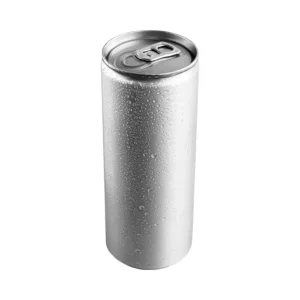
| 250ml / 330ml / 355ml Can Body | 3104-H19 | 0.245 mm – 0.265 mm | Modified Acrylic / Water-based Epoxy (BPA-NI) | Axial Load > 850 N; Dome Burst > 6.2 bar |
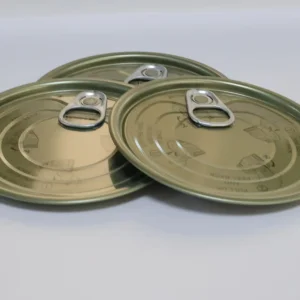
| 200# / 202# Beverage Ends (SOT/RPT) | 5182-H48 (Shell) / 5052 (Tab) | 0.208 mm – 0.220 mm | Organosol / Vinyl Epoxy Lacquer | Pop & Pull Force < 28 N; Buckle > 6.0 bar |
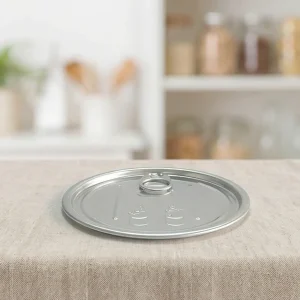
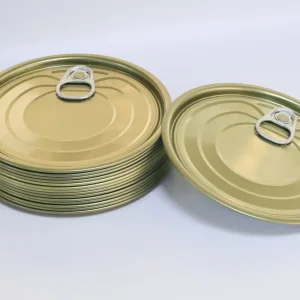
| 401# / 502# Powder Easy-Open Lids | 8011-O (Foil) / 5052-H32 (Ring) | 0.060 mm (Foil Membrane) | Heat-seal lacquer matching Tinplate/Alu cans | Hermetic Seal; Oxygen Permeability 0 cc/m²/day |
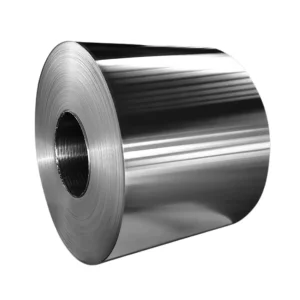
| Lacquered Aluminum Coil Stock | 8011 / 3104 / 5052 | 0.180 mm – 0.300 mm | Custom Clear/Gold/White Lacquer (One/Both Sides) | Erichsen Cupping Test > 7.0 mm without cracking |
Mapping key technological leaps in gauge reduction, AI-assisted vision inspection, bio-based barrier polymers, and decarbonized metallurgy.
Current research efforts focus on reducing mid-body wall gauge down to 0.082 mm while preserving axial crush resistance. Advanced Finite Element Analysis (FEA) allows simulation of metal flow during high-speed drawing to prevent microscopic neck wrinkling.
With global food safety authorities (FDA, EFSA, SAMR) accelerating restrictions on Bisphenol A (BPA) and legacy fluorinated surfactants (PFAS), our technical roadmap emphasizes 100% plant-based polyester and acrylic interior linings.
Integrating deep-learning vision sensors operating at 50 frames per millisecond on high-speed stamping presses. System flags sub-micron surface scratches, pinholes, micro-burrs, or lacquer void areas instantaneously, automatically diverting defective ends prior to packaging.
Leveraging Shanghai's world-class maritime logistical infrastructure, upstream alloy integration, and high-velocity batch flexibilities to secure global enterprise procurement.
Our direct operational linkages with primary aluminum rolling mills guarantee priority coil allocation even during global raw material crunches. We maintain vast reserves of 3104, 5182, and 8011 master coils, mitigating metal price volatility for contract clients.
Situated adjacent to Shanghai Port—the busiest container terminal globally—our dispatch hub facilitates rapid sea freight vessel bookings, simplified customs export documentation, and reduced inland drayage transit times.
Equipped with state-of-the-art computer-to-plate (CTP) dry offset metal decoration lines, our facility executes complex 6 to 8-color graphics, tactile matte varnishes, and spot-gloss finishes with low setup lead times.
Complete peace of mind through rigorous global food-contact certifications, standardized batch traceability, and hands-on seamer calibration assistance.
All finished products, raw aluminum coils, and internal lacquer systems strictly comply with major international health and food-contact mandates. Comprehensive dossier packages are issued with every export consignment.
Every palleted unit leaving our facility carries a unique barcode linking to raw coil mill heat numbers, press operator logs, lacquer batch lot numbers, and real-time enamel rater test data.
Achieving a leak-free, high-strength double seam requires precise matching between can end profiles and filling line seamer chucks/rolls. Our packaging engineers assist client technical teams with seamer setup.
Clear, technical answers to common procurement, metallurgical, regulatory, and logistics queries.
Explore specialized coastal storage lids, tinplate closures, and heavy-gauge aluminum coils ready for immediate export dispatch.