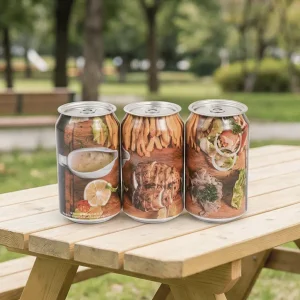
Explore our top-rated food-grade aluminum coils, easy-open lids, tinplate ends, and beverage cans manufactured under strict ISO/FSSC regulatory standards.
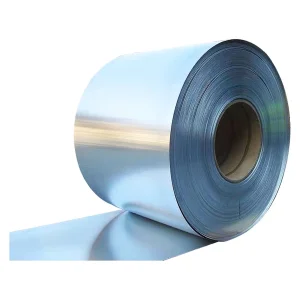
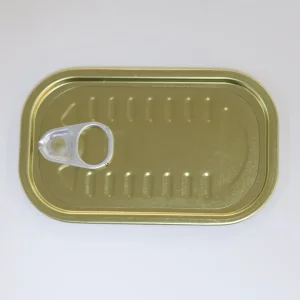
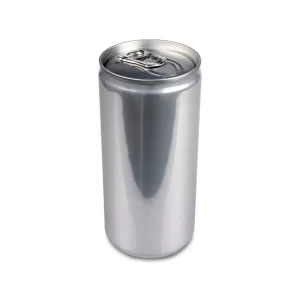
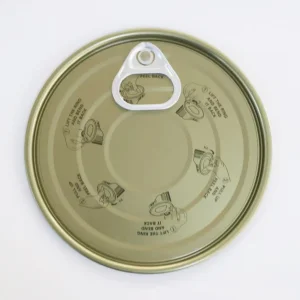
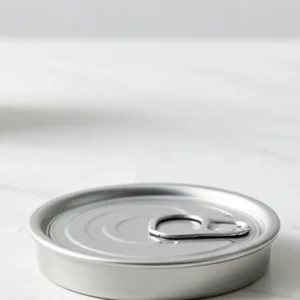
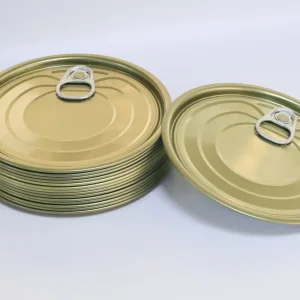
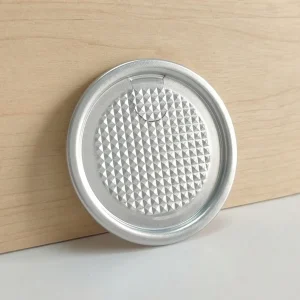
Evaluating the convergence of lightweight metallurgy, barrier integrity, and ultra-high-speed sealing compatibility across fast-moving consumer goods (FMCG) and pharmaceutical packaging ecosystems.
Executive Strategic Summary: The global transition toward infinitely recyclable rigid packaging has established aluminum closures—spanning ROPP (Roll-On Pilfer-Proof) caps, Stay-On Tab (SOT) beverage ends, Ring Pull Tab (RPT) lids, and foil foil-seal membranes—as the paramount closure medium for modern liquid and dry-powder containment. Achieving zero oxygen ingress, precise opening torque performance, and chemical inertness requires advanced metallurgical annealing and automated optoelectronic inline inspections.
Precision formulation utilizing 8011, 5052, 3104, and 5182 aluminum alloys tailored for specific mechanical stress profiles. Strict control over tensile strength (Rm) and yield strength (Rp0.2) minimizes earing percentage during drawing and stamping operations.
Advanced compound liner application ensuring zero gas transfer and moisture penetration. Ideal for preserving carbonation levels in sparkling beverages and shielding delicate nutritional powders from oxidation over extended shelf-lives.
Designed to interface seamlessly with modern high-speed automated canning lines, rotary capping machines, and double-seamer equipment operating at speeds up to 1,200 units per minute with minimal jam rates.
How multinational beverage conglomerates, pharmaceutical firms, and food processors quantify value, risk mitigation, and supply continuity when selecting closure manufacturers.
When global enterprise buyers evaluate aluminum closures, the purchase price represents only a fraction of the total operational equation. Microscopic defects in closure dimensioning can lead to line stoppages, micro-leaks, product recalls, and catastrophic brand erosion. Enterprise procurement teams demand suppliers who guarantee tight statistical process control (SPC) metrics.
By enforcing CpK > 1.67 across crucial dimensional tolerances—such as shell thickness, tab rivet strength, and liner weight—our manufacturing partners eliminate process variance, ensuring seamless compatibility across disparate global bottling and canning facilities.
Geopolitical volatility and fluctuating ingot prices make long-term supply chain predictability vital. Modern procurement contracts mandate end-to-end material traceability from prime aluminum smelting mills directly down to individual container shipments.
Suppliers must provide full material batch certifications, including chemical composition spectroscopy and mechanical tear-down reports, while maintaining strategic buffer stocks of coiled sheet metal in key alloys (such as 8011-H14/H16 and 5182-H48) to absorb market demand spikes.
| Closure Category | Primary Alloy | Key Temper | Core Specification Parameters | Target Applications |
|---|---|---|---|---|
| ROPP Wine & Spirits Caps | AA 8011 / AA 3005 | H14 / H16 | Deep drawability, controlled bridge break torque (0.8 - 1.4 Nm) | Premium Spirits, Fine Wines, Olive Oils |
| Beverage SOT / RPT Ends | AA 5182 / AA 5052 | H48 / H19 | High buckle pressure resistance (>6.2 bar), pop/pull optimized | Carbonated Soft Drinks, Craft Beer, RTD Teas |
| Pharmaceutical Foil Seals | AA 8011 / AA 1050 | O (Soft) / H18 | Non-magnetic properties, pinhole-free zero humidity transmission | Nutraceutical Powders, Vials, Syrups |
| Food Canned Lids (300/401/603) | Tinplate / Aluminum 5052 | T3 / H39 | Retort-capable coatings (121°C / 30 mins), compound double-seam | Canned Vegetables, Infant Formula, Pet Food |
Tailored closure architecture engineered to overcome specific physical, chemical, and thermal challenges across diverse packaging verticals.
Carbonated drinks require closures capable of resisting internal pressures exceeding 90 PSI while maintaining an airtight double seam. Our 200#, 202#, and 206# Stay-On Tab (SOT) ends utilize 5182 aluminum alloy coated with advanced Organosol or BPA-NI barrier resins that protect against beverage acidity while ensuring pasteurization stability.
Sensitive dairy and infant nutrition products demand complete gas and moisture barriers to prevent nutrient degradation and clump formation. Specialized 401# and 502# Easy-Open Lids (EOL) incorporate non-magnetic aluminum membranes with peelable foil structures, enabling smooth opening force and high safety during consumer dispensing.
Roll-On Pilfer-Proof (ROPP) aluminum caps offer secure anti-counterfeiting protection coupled with refined aesthetic appeal. Employing deep-draw 8011 alloy, these closures accommodate intricate side-embossing, hot-stamping, and custom liner inserts (Saran-Tin or EPE) for uncompromised wine oxidation control.
In medical packaging, non-magnetic aluminum closures ensure compatibility with cleanroom sealing lines and diagnostic equipment. Soft-temper alloys provide reliable crimping over glass vials, preventing contamination and ensuring drug stability under strict ambient and cold-chain storage conditions.
How artificial intelligence vision inspection, ultra-thin gauge metallurgy, and zero-solvents lacquers are reshaping closure manufacturing.
Transitioning entirely from traditional epoxy-phenolic coatings to cutting-edge Bisphenol-A Non-Intent (BPA-NI) polyorganosiloxane and acrylic interior lacquers. These water-borne systems drastically reduce Volatile Organic Compound (VOC) emissions during coil curing while guaranteeing strict compliance with European Chemicals Agency (ECHA) REACH protocols.
Integrating multi-camera AI optical inspection systems operating inline at high speeds. High-resolution sensors instantly capture sub-millimeter defects in tab curl, rivet alignment, lacquer continuity, and edge burrs—rejecting defective units automatically before final packaging.
Leveraging advanced cold-rolling processes to reduce coil sheet gauge (e.g., from 0.22mm down to 0.20mm and 0.18mm) without compromising buckling strength or seam integrity. Down-gauging directly reduces carbon intensity per million units while lowering shipping freight costs.
Analyzing the economic imperatives, sustainable recycling loops, and global market expansion driving the aluminum packaging sector.
Aluminum is uniquely positioned as a permanent material that can be infinitely recycled without loss of mechanical or barrier properties. Approximately 75% of all aluminum ever produced remains in active commercial use today. Re-melting post-consumer aluminum closures consumes only 5% of the energy required for primary extraction, preventing up to 95% of associated greenhouse gas emissions.
Global enterprise brands aiming for net-zero carbon targets rely heavily on aluminum closures to meet corporate ESG metrics and comply with incoming regional Extended Producer Responsibility (EPR) regulations.
While mature markets in North America and Western Europe continue to demand high volumes of sleek 202# and 200# beverage ends for craft beers and functional waters, emerging economies across Asia-Pacific, Latin America, and the Middle East are experiencing rapid growth in food-grade tinplate and aluminum easy-open ends for powdered milk, ready-to-eat canned goods, and pharmaceutical nutraceuticals.
Flexible supply chains capable of delivering custom localized end configurations are dominating international market shares.
Rigorous international compliance standards ensuring smooth cross-border customs clearance and food safety verification.
All internal coating and gasket compound formulations undergo comprehensive overall migration testing (OMT) and specific migration testing (SMT) conducted by third-party laboratories (such as SGS and Intertek). Materials strictly comply with US FDA 21 CFR 175.300 guidelines for resinous and polymeric coatings, as well as European Union Regulation (EC) No 1935/2004 and Regulation (EU) No 10/2011.
Manufacturing facilities maintain accredited ISO 9001 (Quality Management Systems), ISO 22000 (Food Safety Management), and FSSC 22000 certifications. Cleanroom stamping environments, controlled ambient humidity levels, and pest-free warehousing ensure zero contamination during long-distance ocean shipping.
To facilitate seamless import procedures, comprehensive documentation packages accompany every shipment—including Certificates of Analysis (CoA), material safety data sheets (MSDS), mill test certificates (MTC), phytosanitary certificates for wooden pallets, and full bill-of-lading (B/L) tracking.
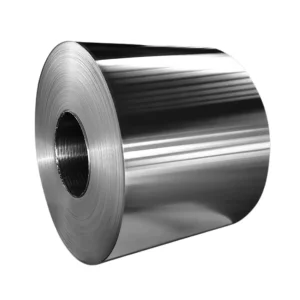
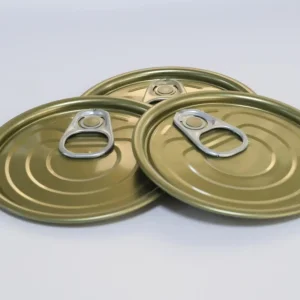
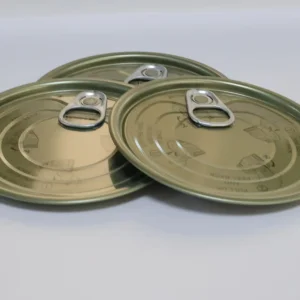
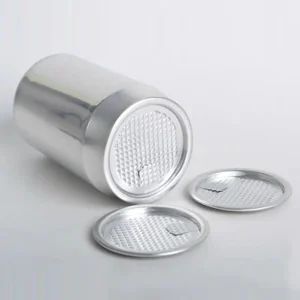
Explore our specialized high-performance aluminum coils, transparent powder lids, and easy-open end variants engineered for specialized manufacturing setups.
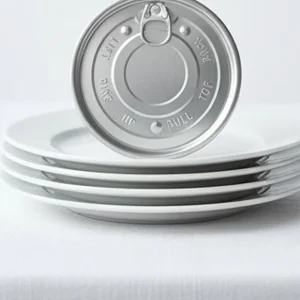
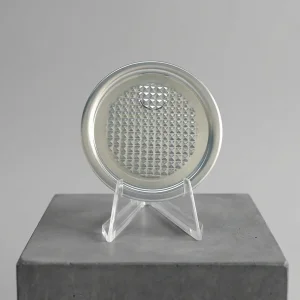
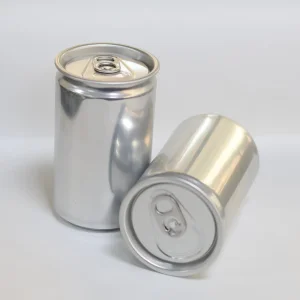
In-depth technical responses addressing metallurgy, coating compliance, seamer integration, and logistics parameters for enterprise buyers.
Each aluminum alloy possesses specific metallurgical properties tailored for distinct mechanical stress environments. AA 8011 (Al-Fe-Si family) offers superior ductility and deep-drawing characteristics, making it the industry standard for ROPP wine/spirit caps and pharmaceutical foil seals. AA 5182 (Al-Mg family) exhibits exceptionally high tensile strength (Rm up to 390 MPa in H48 temper) and buckle pressure resistance, rendering it ideal for carbonated beverage easy-open ends (SOT/RPT). AA 5052 provides an optimal balance of corrosion resistance and formability, commonly utilized for closure tab stock and food lid shells.
Our BPA-NI closure solutions utilize advanced organosol, modified polyester, or polyorganosiloxane internal lacquers that completely eliminate Bisphenol A, S, and F compounds from raw material formulations. Coating application is precisely controlled via electro-static spray or roller coater lines to achieve target dry film weights (typically 6-12 g/m²). Finished batches undergo rigorous Gas Chromatography-Mass Spectrometry (GC-MS) migration testing in food simulants (such as 3% acetic acid, 10% ethanol, and rectified olive oil) according to FDA 21 CFR 175.300 and EU Regulation 10/2011 protocols, ensuring zero detection limits down to parts-per-billion (ppb) thresholds.
Double-seam integrity depends on maintaining ultra-precise shell curl dimensions, countersink depth (typically 1.85mm - 2.10mm depending on end code), and lining compound weight distribution. Our technical support engineers work directly with clients to optimize seamer setup (including 1st operation roll profile, 2nd operation roll tightness, pin height, and lifter pressure). Providing standardized curl radii prevents nesting and jam issues in high-speed rotary feeders, while flexible Plastisol lining compounds ensure optimal seam thickness (ST) and body hook overlap (OL > 1.1mm) with zero micro-leakage.
Closures are automatically stacked and nested inside food-grade polyethylene sleeves, sealed in moisture-proof vacuum bags with integrated desiccant packs to prevent condensation damage (white rust). These sleeves are packed into heavy-duty corrugated cartons or fiber drums mounted on ISPM-15 compliant fumigated wooden or plastic pallets. The entire pallet is stretch-hooded and strapped to withstand marine vibrations, humidity fluctuations, and temperature extremes across multi-week ocean transport routes.
Standard plain/bright ends and stock aluminum coil sizes feature low MOQ thresholds starting at 200,000 units or 3 metric tons for coil products. Custom-printed, color-anodized, or side-embossed ROPP caps typically require an MOQ of 500,000 to 1,000,000 units depending on size, enabling efficient setup of offset printing plates and curing ovens. Standard production lead times range between 15 to 25 business days following final digital artwork approval and technical drawing sign-off.