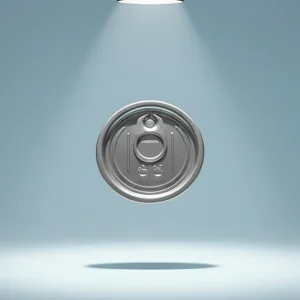
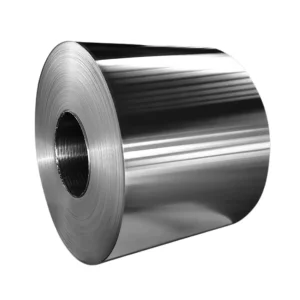
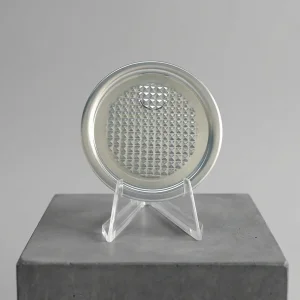
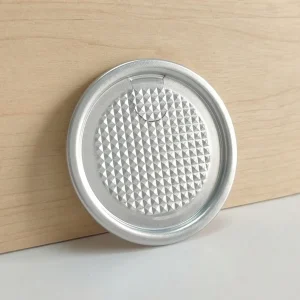
Explore our high-performance aluminium seals, easy-open ends, and specialized coil stocks manufactured under ISO 9001 and food-contact compliance frameworks.
An authoritative analysis of global metal packaging supply chains, regulatory frameworks, and market shift vectors.
The global market for aluminium seal caps, easy-open ends (EOE), and technical metal closures is experiencing a systemic evolution driven by sustainability mandates, fast-moving consumer goods (FMCG) premiumization, and strict international food safety standards. Historically viewed as a standardized commodity, the modern high-performance aluminium cap is an intricate piece of precision engineering. It operates as an absolute barrier against oxygen ingress, moisture absorption, light degradation, and microbial contamination while guaranteeing consumer-friendly opening mechanics across billions of units annually.
As international regulatory bodies intensify scrutiny on single-use plastics—exemplified by the European Union’s Single-Use Plastics Directive (SUPD) and stringent FDA 21 CFR food contact compliance guidelines—brand owners across North America, Europe, the Middle East, and Asia-Pacific are transitioning en masse toward infinitely recyclable metal substrates. Modern aluminium closures boast a recycling efficiency rate exceeding 75% in mature economies, consuming 95% less energy during secondary smelting compared to primary bauxite refining. Consequently, global procurement strategies are shifting from localized single-sourcing to robust, high-capacity international supply networks capable of guaranteeing mill-certified metal quality and uninterrupted high-speed line filling continuity.
Key operational metrics reflecting high-precision manufacturing parameters across automated global canning and bottling facilities:
Dissecting substrate alloy chemistry, temper selection, and internal barrier chemistry for severe operational environments.
The manufacturing of premium aluminium seal caps and easy-open ends requires a meticulous selection of specific aluminium alloys tailored to the mechanical demands of each package format. Choosing the correct substrate alloy governs tensile strength, elongation capacity, buckle resistance, and corrosion immunity against aggressively acidic, saline, or sulfur-rich contents.
Primary Application: SOT / RPT Beverage Ends & High-Pressure Closures.
Engineered with a high magnesium content (4.0% - 5.0%), temper H48 provides exceptional yield strength and work hardening capacity. This enables thin-gauge shells (down to 0.21mm) to withstand high internal carbonation pressures up to 6.2 bar during pasteurization without end doming or buckle failure.
Primary Application: Deep-Drawn Can Bodies & High-Formability Caps.
Alloyed with manganese and magnesium, 3104-H19 offers superior drawing behavior with tightly controlled earing characteristics (< 2.0%). It is ideal for seamless deep-draw operations, ensuring uniform wall thickness and excellent structural rigidity for rigid containers.
Primary Application: Food Powder Lids, Tear-Off Caps & Tab Stock.
8011 delivers superb ductility and foil-bonding compatibility for heat-sealed membrane caps. 5052-H32 features superior salt-spray corrosion resistance, making it the preferred alloy for pull-tabs and high-humidity marine shipping logistics.
Internal lacquer application represents a critical defense barrier preventing metal ion migration into sensitive food and pharmaceutical matrices. Traditional epoxy-amine lacquers containing Bisphenol-A (BPA) have been largely phased out by global leading fillers in favor of advanced BPA-NI (Bisphenol-A Non-Intent) Organosol and Acrylic-based systems.
These next-generation coatings are applied via automated roller-coaters with thickness tolerances controlled to within ±0.5 g/m² dry film weight. The lacquers are thermally cured in multi-zone gas ovens to achieve complete cross-linking density. This guarantees organoleptic neutrality—ensuring zero flavor scalp or taste alteration—while offering robust resistance against aggressive product formulations with pH values ranging from 2.5 (highly acidic soft drinks) to 8.5 (alkaline pharmaceutical powders).
Engineered closure configurations designed to solve distinct preservation challenges across diverse market segments.
Infant formula, specialized medical milk powders, and nutritional supplements demand an absolute hermetic seal with zero oxygen and moisture transmission rates (OTR/WVTR). Our 401# (99mm) and 502# (127mm) easy-open aluminium lids are combined with non-solvent compound gaskets and nitrogen-flushing readiness, keeping residual internal oxygen levels strictly below 0.5% to prevent lipid oxidation and extend shelf life up to 36 months.
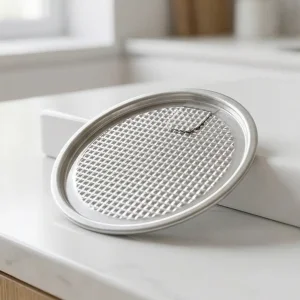
Beverages containing alcohol and dissolved CO2 or nitrogen demand specific score-line opening forces and pasteurization thermal resilience. Our 202# Stay-On-Tab (SOT) and Resealable (RPT) ends feature optimized score residuals that prevent accidental venting during shipping vibration while delivering low opening pop and pull forces (< 22 N) for end-consumers.
High-purity laboratory chemicals and sterile active pharmaceutical ingredients (APIs) require 305# and 307# sterilisable aluminium lids capable of undergoing autoclaving and thermal sterilization up to 121°C for 45 minutes without lacquer blistering or compound degradation. Anti-static lacquer options minimize particle adhesion during filling line operations.
Volatile organic compounds (VOCs) giving gourmet spices, truffles, and coffee powders their distinct aromas can easily permeate standard plastic caps. Specialized odor-proof aluminium easy-open lids create an impenetrable metallic barrier that seals essential oils inside, ensuring full flavor retention and preventing aroma cross-contamination in retail distribution.
Examining down-gauging breakthroughs, carbon-neutral manufacturing, and digital traceability integration.
The global metal packaging landscape is undergoing rapid technological transformation focused on three core pillars: ultra-lightweighting (down-gauging), carbon footprint reduction, and digital supply chain integration.
Through finite element analysis (FEA) and computer-modeled stress profiling, packaging engineers have successfully reduced end shell gauge thickness from historical 0.24mm standards down to 0.208mm—and actively moving toward 0.180mm. Thinning the substrate without compromising buckle resistance requires re-engineering the countersink radius, anti-peel panel geometry, and curl profile. This gauge reduction decreases raw metal usage by over 12%, significantly lowering transport carbon intensity while conserving primary aluminium supplies.
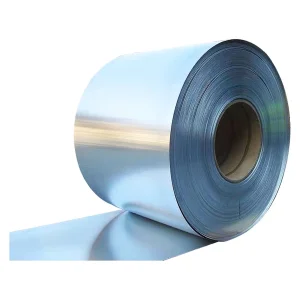
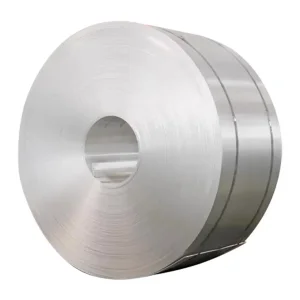
Leading global suppliers are increasingly utilizing hydro-powered primary aluminium coils possessing a certified carbon intensity under 4.0 kg CO2e/kg Al (compared to global coal-powered averages of 16.6 kg CO2e/kg). Furthermore, closed-loop scrap recovery systems return stamping skeleton waste directly to re-melting furnaces, achieving zero-waste manufacturing loops that align with international ESG mandates and the EU Carbon Border Adjustment Mechanism (CBAM).
The modern seal cap is evolving into an interactive digital touchpoint. High-precision fiber laser etching on pull-tabs and end shells enables high-density Matrix and QR coding beneath or on top of the tab. This supports direct-to-consumer engagement campaigns, anti-counterfeiting verification for premium milk powders and luxury beverages, and full batch traceability back to the specific mill coil heat number.
A strategic projection of emerging engineering benchmarks and manufacturing paradigms over the next decade.
Global rollout of 100% water-borne acrylic and polyester internal lacquers, completely replacing solvent-based systems and eliminating all bisphenol compounds across all food-grade production lines.
Integration of multi-camera 8K AI optical inspection arrays operating at 3,500 parts per minute, instantly isolating sub-micron coating pinholes, score-line micro-cracks, and edge deformation prior to packaging.
Deployment of novel high-yield 5000-series alloy compositions featuring elevated manganese-iron ratios, permitting high-pressure shell stamping at ultra-light gauges without loss of structural integrity.
Full transition to renewable green-hydrogen powered coil annealing furnaces and 100% recycled scrap integration, realizing net-zero embodied carbon closure products for the global packaging industry.
Rigorous multi-stage laboratory testing ensuring every batch complies with strict global filling parameters.
Demonstrating technical excellence and absolute reliability requires a rigorous testing architecture. Before any lot of aluminium caps or coil leaves the manufacturing floor, it undergoes a battery of destructive and non-destructive laboratory evaluations:
Measures micro-amp (mA) electrical current flow through an electrolyte solution to detect invisible lacquer voids. Standard threshold must be strictly < 0.1 mA across tested samples.
Optical microscopic evaluation of seam length, body hook, end hook, overlap percentage (> 75%), and tightness rating (> 80%) to ensure absolute seal integrity on customer filling lines.
Continuous 5% neutral salt spray exposure at 35°C for 96+ hours to verify that tab rivets and score lines resist atmospheric oxidation during trans-oceanic shipping container transport.
Explore our additional range of food-grade tinplate ends, specialized aluminium coils, and standard beverage container solutions.
Addressing engineering specifications, regulatory compliance, MOQs, and seam matching for global buyers.
Beverage easy-open ends (such as 202# SOT or RPT formats) utilize high-tensile Aluminium Alloy 5182 in H48 temper to withstand high internal carbonation pressures up to 6.2 bar. In contrast, dry powder lids (like 401# or 502# formats) and tear-off seal caps often utilize Aluminium Alloys 8011-O/H14 or 5052-H32, which offer higher elongation and superior heat-sealing compatibility for foil membranes and compound sealing gaskets.
All internal coatings applied during coil coating are explicitly certified as BPA-NI (Bisphenol-A Non-Intent). Formulations consist of modern acrylic or organosol resin matrices tested rigorously according to FDA 21 CFR 175.300, EU Regulation 1935/2004, and Chinese GB 4806.10 standards. Full overall migration and specific migration test reports (SML) are issued by third-party laboratories (SGS/TÜV) and accompany every production export shipment.
Yes. Our closure profiles adhere precisely to international standard dimensional profiles (including ISO, Can Manufacturers Institute CMI, and European standard formats). Prior to bulk production, our engineering team reviews your seamer model (e.g., Ferrum, Angelus, CFT) and provides exact chuck/roll profile drawings along with sample lots for double-seam teardown calibration on your line.
Aluminium caps and ends are vacuum-packed in heavy-duty polyethylene sleeve bags containing active desiccant packs, then packed inside heavy-duty corrugated fibre drums or wooden-framed pallets. Slit aluminium coils are wrapped in VCI (Vapor Corrosion Inhibitor) film and secured on wooden skids with eye-to-sky or eye-to-wall orientation, preventing condensation corrosion during long-transit tropical ocean voyages.
Standard plain/unprinted caps in stock sizes (e.g., 202#, 307#, 401#) start at trial MOQs from 200,000 pieces. Custom litho-printed caps or laser-etched tab closures require a minimum run of 500,000 pieces due to high-speed lacquer line set-ups. Standard production lead times range between 15 to 25 working days from artwork approval and mill coil assignment.