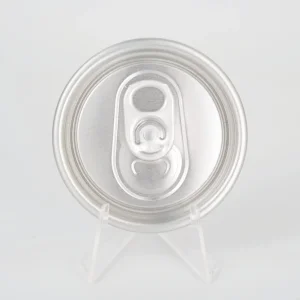
Engineered for seamless integration with high-speed automatic filling and double-seam closing lines worldwide.
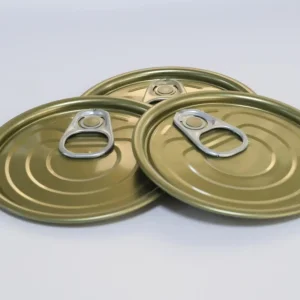
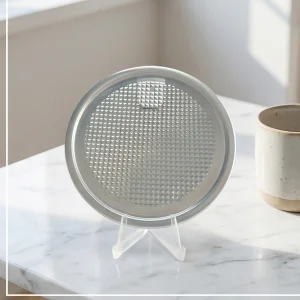
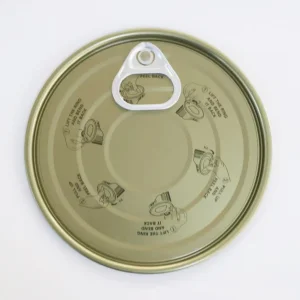
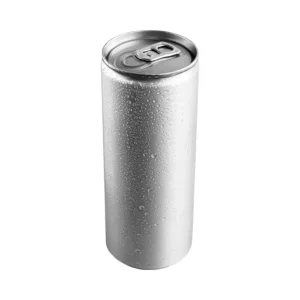
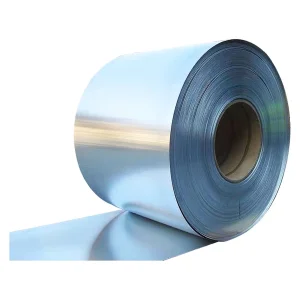
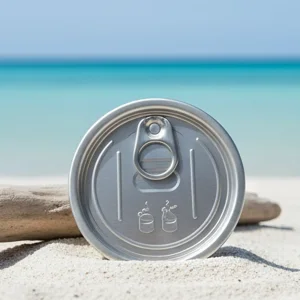
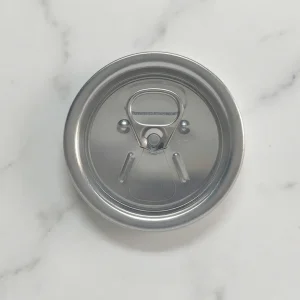
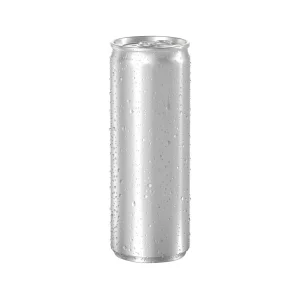
In the modern fast-moving consumer goods (FMCG), pharmaceutical, and specialty chemical sectors, packaging is no longer merely a passive containment vehicle. It is a highly engineered, active barrier system designed to safeguard product integrity, optimize shelf stability, enable circular sustainability, and facilitate continuous brand trust across global supply chains. At the core of this engineering transformation sits the Aluminium Closure—a sophisticated assembly of precision metallurgy, polymer barrier science, and micrometer-accurate mechanical scoring.
As global regulatory frameworks tighten regarding single-use plastics and Extended Producer Responsibility (EPR), international brand owners, commercial canners, and contract packagers are aggressively transitioning toward infinite circular metal packaging. Aluminium closures—encompassing Stay-On Tab (SOT) ends, Resealable Pull Tab (RPT) closures, Easy-Open Ends (EOE), Peel-Off Foils, and Roll-On Pilfer-Proof (ROPP) caps—provide an unrivaled 100% barrier against light, oxygen, moisture, and microbial ingress while offering infinite recyclability without property degradation.
Shanghai Friend Metals Technology Co., Ltd. operates at the nexus of metallurgical research, high-precision tool manufacturing, and advanced surface chemistry. By controlling the entire manufacturing value chain—from specialized 3104, 5182, and 8011 aluminium coil slitting to multi-die conversion presses—we deliver closures that meet strict international standards including FDA 21 CFR 175.300, EU Regulation 1935/2004, and GB 4806.10 compliance.
The global closures market is experiencing structural demand shifts driven by consumer preferences for on-the-go convenience, premiumization in beverage categories (such as ready-to-drink craft cocktails, cold-brew coffee, and functional beverages), and stringent regulatory mandates targeting food safety and shelf-life extension.
Demands rigorous adherence to ANSI and Can Manufacturers Institute (CMI) dimensional specs. Focus is heavily placed on lightweighted 202 SOT ends, 200 RPT profiles, and BPA-NI (Bisphenol A Non-Intent) organosol coatings capable of withstanding acidic beverage formulations over extended logistics corridors.
Driven by the EU Packaging and Packaging Waste Directive revisions. Importers require complete traceability, low embedded carbon footprints, ISO 14064 GHG verification, and 100% compliance with REACH/RoHS regulations alongside non-fluorinated internal food contact lacquers.
Rapidly expanding middle-class populations require high-barrier 300#, 401#, and 502# aluminium easy-open ends and peel-off foil membranes for infant formula, milk powder, functional health supplements, and retort-processed canned foodstuffs exposed to elevated tropical humidity.
Achieving zero-defect operational stability across high-speed filling lines running up to 1,500 cans per minute requires microscopic control over metal tempering, score line residual depth, compound lining weight, and internal lacquer cross-linking.
The choice of aluminium alloy dictates tensile strength, elongation, burst resistance, and formability. Shell stock and tab stock require distinct mechanical properties to withstand localized stress during tab lift and rivet formation without micro-fracturing.
| Alloy Grade | Temper | Key Metallurgical Application | Tensile Strength (MPa) | Yield Strength (MPa) | Elongation (%) |
|---|---|---|---|---|---|
| AA 5182 | H48 / H19 | High-Stress Beverage End Shell Stock (SOT / RPT) | 360 - 410 | 310 - 360 | 5 - 8% |
| AA 5052 | H32 / H34 | Stay-On Tab & Resealable Pull Tab Stock | 210 - 260 | 160 - 210 | 10 - 14% |
| AA 8011 | O / H14 / H16 | Deep-Draw Foil Membranes & Screw Closures | 140 - 190 | 110 - 150 | 15 - 22% |
| AA 3104 | H19 | DWI Can Body Stock (330ml, 355ml, 500ml) | 270 - 310 | 250 - 290 | 4 - 6% |
Internal lacquers serve as an impermeable barrier preventing direct chemical reaction between beverage/food acids (such as phosphoric, citric, or acetic acid) and the raw aluminium substrate. Modern closure manufacturing demands high-fidelity internal coatings that eliminate organoleptic alteration (flavour scalping) while resisting pasteurization thermal shocks up to 131°C.
Formulated without the use of Bisphenol A or its derivatives. Utilizes advanced modified acrylic or polyester resins that pass stringent EU 10/2011 specific migration limits (SML). Ideal for beer, soft drinks, sparkling waters, and functional tea preparations.
Engineered specifically for aggressive food products containing high salt, acid, or sulfur levels (e.g., canned tomatoes, fish, pet food). Delivers maximum flexibility over extreme double-seam bends and score line contours without cracking.
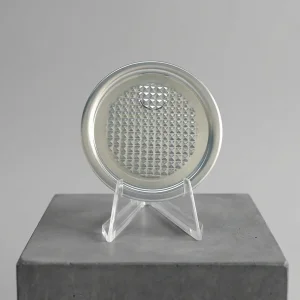
The mechanical performance of an Easy-Open End is governed by the score line residual thickness—typically calibrated between 0.055 mm and 0.070 mm depending on end size and pressure rating. If the score residual is too thick, consumer pop and pull force requirements exceed ergonomics limits (pop force > 30 N); if too thin, spontaneous premature failure occurs under pressure spikes.
Our closures undergo automated optical inspection (AOI) measuring countersink depth, curl height, outer curl diameter, and compound lining weight to guarantee hermetic compliance with standard seamer chucks and rolls (e.g., Angelus, Ferrum, Continental Can tooling).
Aluminium closures are customized based on product viscosity, internal pressure, chemical aggressiveness, filling temperature, and secondary thermal processing. Below are the primary industrial application profiles:
Closure Profiles: 200#, 202# SOT (Stay-On Tab) & RPT Ends.
Engineering Challenge: Internal carbonation pressures up to 6.2 bar (90 PSI), pasteurization temperatures of 62°C to 68°C.
Solution Strategy: AA 5182-H48 shell stock with reinforced anti-buckle profile geometry, paired with zero-porosity water-borne PVC-free sealing compound applied in the curl.
Closure Profiles: 300#, 401#, 502# Easy-Open Lids & Foil Pull-Off Ends.
Engineering Challenge: Moisture sensitivity, oxygen oxidation of lipids, nitrogen gas flushing retention.
Solution Strategy: Hermetic foil membrane heat-sealed to aluminium ring shells, featuring smooth scoop-leveling rims and anti-static internal treatments to prevent powder clinging during dosing.
Closure Profiles: 300#, 307#, 401#, 603# Full-Aperture EOE & Tinplate Ends.
Engineering Challenge: Autoclave sterilization at 121°C to 131°C under external pressure overpressure.
Solution Strategy: Heavy-duty Organosol interior linings with high-flexibility score design preventing micro-cracking during metal expansion and contraction cycles.
Closure Profiles: Anti-Static 300# & 401# Specialty Aluminium Ends.
Engineering Challenge: Electrostatic discharge protection, volatile organic solvent containment.
Solution Strategy: Conductive surface passivations integrated into internal polymer layers preventing static buildup during pneumatic transport and filling.
Navigating complex global macro-economics requires a manufacturing partner capable of delivering consistent quality, raw material stability, cost efficiency, and fast ocean freight dispatch. Shanghai Friend Metals Technology Co., Ltd. leverages the world’s premier industrial ecosystem to provide decisive commercial advantages to global buyers:
Direct strategic partnerships with primary aluminium smelters and rolling mills in China ensure stable supply of high-purity 3104, 5182, and 8011 coil stock with rigid gauge tolerances (±0.002 mm), minimizing risk during global metal price volatility.
Our Shanghai conversion facilities house multi-station Minster and Stolle conversion presses capable of running at over 1,200 ends per minute per line. Real-time vision inspection systems catch microscopic tab or rivet anomalies instantly.
Situated adjacent to Yangshan Deep-Water Port and Waigaoqiao Port, we provide direct ocean shipping access to over 400 global ports. Short inland transport reduces container turnaround lead times to under 15 days from production to ocean vessel departure.
Ocean transit subjects metal packaging to mechanical vibration, temperature cycling, and sea-air moisture exposure. Every shipment leaving our facility follows strict protective protocols:
Quality assurance is embedded at every phase of production. We utilize Statistical Process Control (SPC) to track dimensional parameters, coating weight, and mechanical strength values across every batch.
In-depth responses covering tooling, metallurgy, MOQ, shelf stability, and line conversions.
In metal packaging industry nomenclature, diameter numbers represent standard industry measurements derived from inches and sixteenths of an inch. For example, 202# corresponds to 2 and 2/16 inches (approx. 52.3 mm outer diameter), widely used for standard beverage cans. 300# (approx. 73 mm) is standard for food cans and small powder containers; 401# (approx. 99 mm) is the international standard for milk powder and coffee cans; while 502# (approx. 127 mm) represents large-format infant formula and bulk food containers.
Our BPA-NI coatings are formulated using next-generation acrylic or polyester resins where Bisphenol A is neither intentionally added nor used in the synthesis of the raw materials. Every production lot undergoes independent third-party migration testing (SGS/Intertek) verifying compliance with FDA 21 CFR 175.300 and EU Regulation 10/2011, accompanied by a formal Certificate of Compliance (CoC).
Yes. For retort applications (e.g., canned meat, seafood, soups, and milk beverages), we supply specialized 300#, 307#, and 401# ends equipped with high-flexibility Organosol or modified polyester internal coatings. These coatings maintain 100% adhesion and zero micro-cracking during thermal sterilization up to 131°C (268°F) for up to 90 minutes.
For standard unprinted easy-open ends (e.g., 202 SOT / 200 RPT) held in buffer stock, trial orders start at 200,000 pieces with dispatch within 10 to 15 working days. Custom printed cans (330ml, 355ml, 500ml) or custom embossed lids require high-speed dry offset printing setup; MOQs start at 100,000 pieces per design variant, with initial artwork proofing completed within 7 days.
All export shipments feature a multi-layer protective packaging system. Ends are sealed in moisture-proof polyethylene sleeves with activated desiccant pouches inside heavy-duty corrugated outer cartons or fiber drums. Pallets are wrapped with UV-resistant stretch hood film and container interiors undergo pre-loading moisture inspections to prevent condensation damage during ocean transit.
Our technical team requires your seamer manufacturer and model (e.g., Angelus 60L, Ferrum, Automatic Canning), target line speed, can body wall thickness, flange width, and target countersink depth. We will supply precise 2D/3D engineering drawings and a physical sample lot for double-seam teardown evaluation prior to full-scale mass production.
Explore our comprehensive series of powder lids, anti-static closures, and beverage body stock.
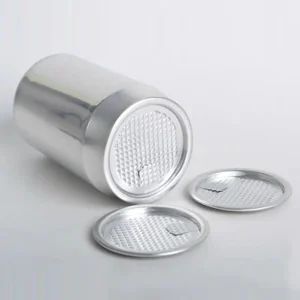
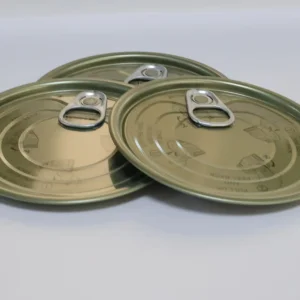
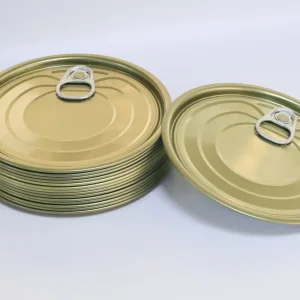
Whether you require custom score line calibration, line speed seam optimization, BPA-NI coating migration verification, or container loading plans, our engineering team in Shanghai is ready to support your technical evaluation.