Explore our top-tier precision-engineered cans, closures, and raw coil solutions manufactured under strict ISO/FSSC compliance standards.
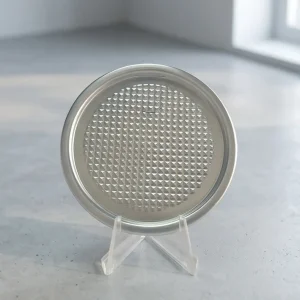
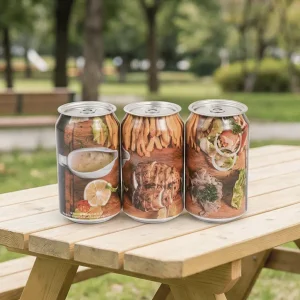
The global metal packaging and aluminium cap manufacturing sector is undergoing an unprecedented paradigm shift driven by stringent decarbonization policies, changing consumer preferences, and technological breakthroughs in metallurgy and surface coatings. As brand owners in beverage, pharmaceutical, dairy, and chemical sectors scramble to replace single-use plastics with infinitely recyclable alternatives, aluminium has emerged as the premier material choice worldwide.
Aluminium is 100% infinitely recyclable without quality degradation. Nearly 75% of all aluminium ever produced remains in productive use today, drastically cutting carbon footprints compared to PET and glass containers.
Global regulatory tightening across the EU and North America has expedited the complete transition from classic epoxy-phenolic liners to Next-Gen Bisphenol A Non-Intent (BPA-NI) organosol and acrylic lining matrices.
Advanced alloys like 5182-H48 and 3104-H19 allow manufacturers to reduce metal gauge down to micro-tolerances while boosting internal buckle resistance to over 6.2 bar for high-CO₂ carbonated drinks.
High-volume beverage brand managers, pharmaceutical packaging heads, and OEM canned food contract packers require absolute precision. A micro-millimeter deviation in cap curl diameter or scoring depth can lead to costly line jams, micro-leaks, or failure in double-seam integrity during thermal sterilization (retort).
| Component Category | Alloy & Temper | Thickness Standard | Internal Coating System | Target Applications |
|---|---|---|---|---|
| 200# / 202# SOT Lids | Alloy 5182 - H48 | 0.21mm – 0.24mm | BPA-NI Water-Based Organosol | Carbonated Soft Drinks, Craft Beer, Energy Drinks |
| 202# RPT Resealable Ends | Alloy 5182 - H48 / 5052 | 0.22mm – 0.25mm | High-Resistance Epoxy / Polyester | RTD Cocktails, Premium Waters, Juice Formats |
| 307# / 401# Food Ends | Alloy 8011 / 3003 - H14 | 0.23mm – 0.28mm | Retort-Grade Gold / Aluminumized Organosol | Wet Food, Canned Seafood, Vegetables, Pet Food |
| Powder Lids (209# to 502#) | Alloy 5052 / Tinplate T3/T4 | 0.20mm – 0.27mm | Anti-Static Dry Powder Coating | Infant Formula, Milk Powder, Pharmaceutical Powders |
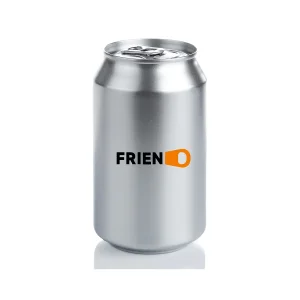
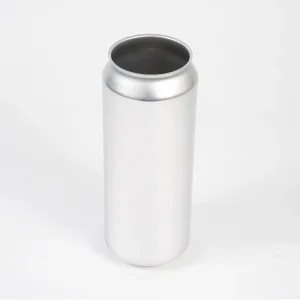
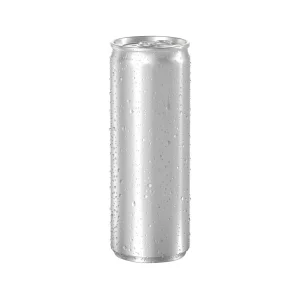
| DWI Can Body Stock | Alloy 3104 - H19 | 0.25mm – 0.28mm | Modified Acrylic Inner Spray (< 2mA Enamel Rater) | Standard (330ml/500ml), Sleek (355ml), Slim (250ml) |
Our automated production lines integrate online high-resolution visual inspection cameras and laser scoring checkers that inspect 100% of manufactured lids for burrs, tab defects, compound placement accuracy, and scoring depth tolerance within ±0.002mm.
As an end-to-end global manufacturer and supplier, we provide macro-level tailored packaging architecture across major commercial sectors:
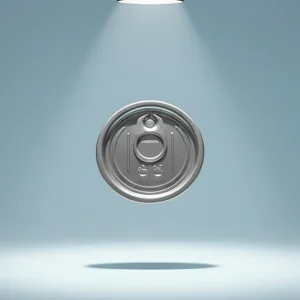
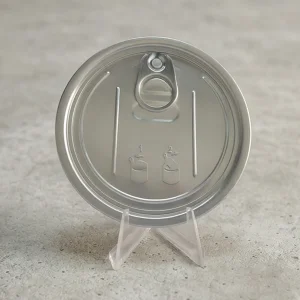
Designed for high-speed automated seaming machines (Ferrum, Angelus, KHS) operating at speeds up to 1,200 cans per minute. Our Stay-On Tab (SOT) and Ring Pull Tab (RPT) easy-open lids feature calibrated pop & pull forces ensuring smooth consumer opening while guaranteeing high-pressure seal integrity during pasteurization.
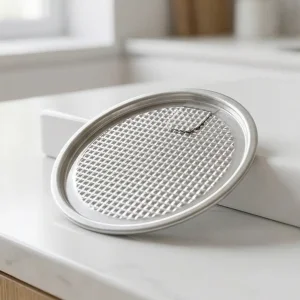
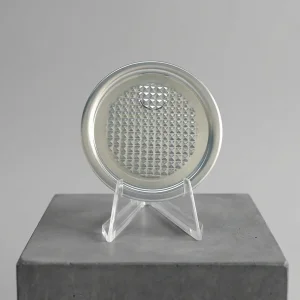
Hygiene-critical powder packaging demands absolute barrier protection against oxygen and water vapor ingress. Our non-magnetic 209FA#, 300#, and 502# aluminum easy-open ends feature scoop-holder options, smooth foil peelable membranes, and zero contamination risk tailored for clinical and infant nutrition products.
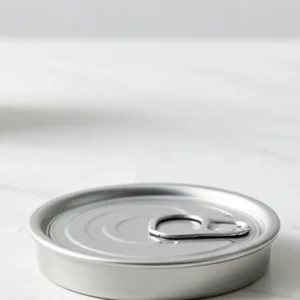
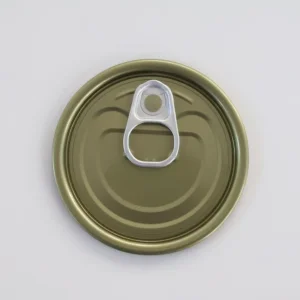
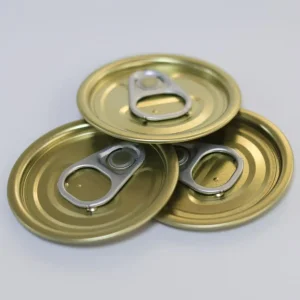
Engineered for heavy-duty thermal processing. Utilizing high-performance organosol coatings and food-grade tinplate or aluminum shells (200#, 211#, 307#), our food lids survive high-pressure cooking cycles (121°C for 30–60 mins) without coating blistering or micro-fracturing.
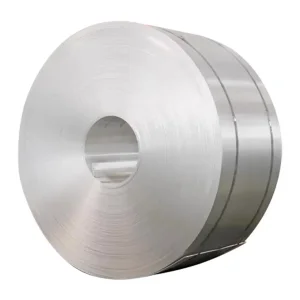
We supply premium lacquered, printed, and slit aluminum coil stock (Alloy 3104, 5182, 8011) directly to regional container makers. Backed by state-of-the-art slitting machines, coil surfaces are treated with electrostatic oiling for optimized metal flow during deep drawing.
Operating across international borders requires rigorous regulatory compliance and robust supply chain safeguards. Our manufacturing facilities are fully compliant with global food contact material protocols.
We provide complete end-to-end supply chain assurance. Aluminium cans are shipped using specialized corrugated pallets with rigid plastic top frames, slip sheets, and heat-shrink film to prevent transit deformation. Easy-open ends are packed in vacuum-sealed polyethylene sleeves inside heavy-duty corrugated export cartons.
Furthermore, our team of packaging engineers offers regional technical calibration services. We assist overseas plant managers with seamer chuck alignment, double-seam dimensional analysis (countersink depth, seam length, thickness, hook overlap), and pilot trial runs before mass production.
Looking toward the next decade, our engineering R&D team is actively advancing three core technology pillars designed to deliver maximum information gain and sustainable advantages to our global client base:
Direct laser coding under the tab (top or bottom side of lids) enables high-speed consumer engagement campaigns, anti-counterfeiting tracking, and real-time batch traceability across global supply chains.
Pioneering renewable plant-derived lacquer coatings that replace petroleum-based resins while retaining superior resistance against acidic contents like citrus juices, energy drinks, and carbonated wines.
Utilizing ultra-pure aluminium alloys and advanced cold-rolling processes to achieve a 0.20mm end shell thickness without sacrificing structural integrity or burst resistance under high carbonation levels.
Answers to critical engineering and procurement queries regarding global aluminium cap manufacturing, alloy selection, and seaming compatibility.
The numeric designation represents the standardized industry diameter code expressed in inches and sixteenths of an inch. For instance, a 202# end corresponds to 2 inches plus 2/16ths of an inch (approx. 52.5mm diameter), which is the standard neck size for modern beverage cans. A 307# end measures 3 inches and 7/16ths (approx. 83.3mm), commonly applied in food cans, milk powder tins, and low-profile snack containers. Choosing the correct diameter depends directly on your filling machine chuck geometry and container neck geometry.
Alloy 5182 contains a higher magnesium content (~4.0% to 5.0% Mg) which grants exceptional tensile strength, work-hardening capability, and ductility after H48 temper treatment. This makes 5182 ideal for forming complex rivet geometry, scoring lines, and tab attachments that can withstand internal CO₂ expansion without tearing or buckling. Conversely, Alloy 3104 contains higher manganese (~0.8% to 1.4% Mn) and is optimized for the Deep Drawing and Wall Ironing (DWI) process used to produce seamless beverage can bodies.
All internal lacquers are formulated to meet non-intent standards (BPA-NI) and undergo stringent migration testing certified by third-party laboratories (SGS, Intertek) in compliance with US FDA 21 CFR 175.300 and EU Regulation 1935/2004. During production, lacquered aluminum coil is cured in high-temperature tunnel ovens to achieve complete cross-linking. Finished ends undergo automated Enamel Rater testing (< 2 mA electrical conductivity check) to verify complete, pinhole-free barrier coating.
Aluminium ends should be stored in a climate-controlled warehouse at temperatures between 10°C and 30°C with relative humidity below 65%. Pallets must remain elevated off concrete floors and protected from direct sunlight or ambient humidity fluctuations. Under optimal conditions, sealed packaging ends maintain perfect seaming compound flexibility and coating integrity for up to 24 months from the date of manufacture.
We offer advanced multi-color high-definition dry offset printing directly onto the end shell surface prior to forming. Colored tabs (black, red, blue, gold) are achieved through anodic oxidation or high-adhesion colored lacquers. Sub-tab laser etching allows high-resolution text or 2D matrix QR codes to be etched into the metal surface, which remain protected and invisible until the tab is pulled open by the end consumer.
Browse our complete product lineup including specialized powder lids, non-magnetic pharmaceutical ends, and custom beverage can body options.