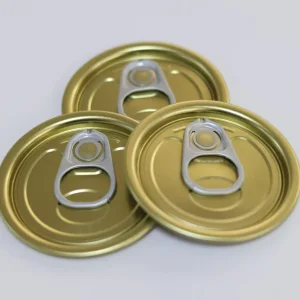
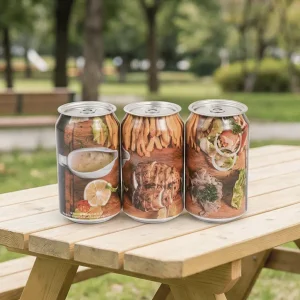
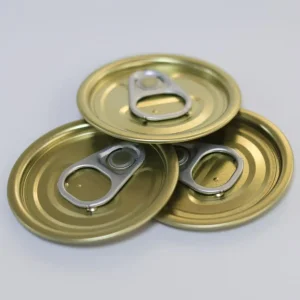
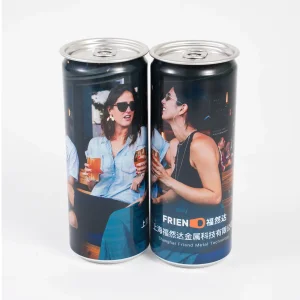
Direct factory supply of certified aluminum easy-open ends, food-grade tinplate closures, and engineered beverage can systems.
An authoritative technical guide into Cold-Formed Foil (Alu-Alu) laminates, metallurgical barrier properties, and zero-permeation packaging physics for global supply chains.
In the modern pharmaceutical, nutraceutical, and high-sensitivity food packaging domains, environmental factors such as moisture vapor, atmospheric oxygen, ambient light, and volatile organic compounds represent the primary causes of active chemical degradation. Alu Alu packaging, technically categorized as Cold-Formed Foil (CFF), represents the apex of flexible high-barrier material engineering. Unlike traditional thermoformed plastic blisters (such as PVC/PVDC or Aclar) which merely retard moisture vapor transmission, engineered multi-layer Alu-Alu laminates establish a mathematically total physical barrier.
The standard architecture of a high-performance cold-formed Alu-Alu foil structure consists of three core functional layers joined by high-shear polyurethane adhesive systems:
The manufacturing threshold of premium Alu-Alu factories relies heavily on the surface tension matching and inter-layer bond strength (peel strength > 4.5 N/15mm) across the OPA/AL/PVC interfaces. Inferior lamination leads to micro-delamination under deep-draw cold forming, exposing the aluminum core to tension stress and creating micro-pinholes invisible to the naked eye. Advanced Chinese Alu Alu packaging facilities deploy inline laser pinhole detection technology operating at 100% inspection frequency on high-speed slitting lines.
| Laminate Layer | Standard Thickness | Primary Engineering Function | Critical Performance Metric |
|---|---|---|---|
| Outer OPA Film | 25 Micron (µm) | Printability, Mechanical Toughness, Deep-Draw Expansion | Tensile Strength > 200 MPa |
| Core Aluminum Foil | 45 - 60 Micron (µm) | Absolute Barrier against Gas, Moisture, Light & UV Rays | Zero Pinholes at 100% Inspection |
| Inner Sealing PVC Layer | 60 Micron (µm) | Heat Seal Bonding with PTP Lidding Foil, Formability | Heat Seal Strength > 7.0 N/15mm |
How Chinese integrated metal processing clusters deliver unmatched cost-efficiency, technical precision, and raw material security to international buyers.
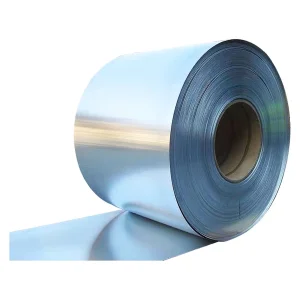
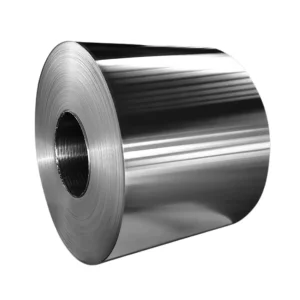
China controls over 55% of global primary aluminum smelting and rolling capacity. Direct integration between primary aluminum smelters and precision cold-rolling foil mills (processing 8011, 8021, 3104, and 5182 alloys) minimizes raw material cost volatility. This guarantees consistent grain structure, ultra-low iron/silicon impurity ratios, and uniform tensile elongation properties required for deep-draw packaging applications.
Leading Chinese packaging factories operate ultra-large Class 100,000 (ISO Class 8) cleanrooms equipped with automated high-speed dry lamination units, solvent-free adhesive applicators, and optical video inspection systems. Massive operational scale allows continuous 24/7 production, reducing fixed overhead costs by 25–40% compared to European or North American converters.
With localized die-making, CNC machining centers, and cylinder engraving clusters, Chinese suppliers offer lead times of 7 to 10 days for custom printing cylinders and precision cold-forming dies. This rapid turnaround significantly accelerates time-to-market for pharmaceutical brand owners launching new drug dosages or specialty beverage lines.
Strategically positioned near major container terminals like Shanghai, Ningbo, and Qingdao, Chinese packaging factories maintain streamlined ocean freight corridors. Vacuum-sealed protective packaging with humidity indicator cards and heavy-duty fumigated wooden skids ensure long ocean transit without oxidation, moisture ingress, or edge telescoping.
Global procurement directors evaluate suppliers based on Total Cost of Ownership (TCO), risk mitigation, compliance auditability, and operational continuity.
Enterprise buyers sourcing Alu Alu packaging products, easy-open ends, and aluminum coils operate in highly regulated, high-volume environments where line downtime or packaging failure incurs catastrophic financial penalties. Procurement decisions are no longer made purely on unit price per kilogram or thousand units; instead, enterprise risk management governs vendor evaluation.
True packaging cost includes machine runnability, scrap rates, and seal failure downtime. Factory suppliers must provide precise foil temper control (tensile elongation 15–22%) to ensure seamless feeding on high-speed blister machinery operating at >800 strokes per minute, keeping machine scrap rates below 0.1%.
Multinational pharmaceutical corporations mandate secondary geographic manufacturing sites to buffer against geopolitical disruptions or localized regional disasters. Audited Chinese packaging manufacturers with multi-line facilities serve as robust anchor suppliers within global dual-sourcing strategies.
Every roll of Alu-Alu foil, aluminum coil, or batch of easy-open lids must carry end-to-end digital genealogy. From raw ingot melt heat numbers to dry lamination operator logs, robust ERP traceability guarantees rapid investigation in the event of customer quality deviations.
Navigating regional food contact regulations, pharmacopoeial standards, and localized technical on-site integration.
A primary friction point for international buyers sourcing packaging materials from global factories is ensuring strict alignment with regional regulatory authorities. Leading export-oriented packaging factories invest heavily in global regulatory registrations and local technical support structures.
In addition to regulatory documentation, top-tier global suppliers provide localized technical field services. Field application engineers are deployed to client filling plants across North America, Europe, Southeast Asia, and Latin America to calibrate heat-sealing temperatures, dwell times, sealing roller pressures, and seamer chuck clearances during initial trial runs.
Key technological shifts in sustainable lamination, down-gauging, smart functional features, and circular economy integration.
Traditional Alu-Alu (OPA/AL/PVC) presents recycling challenges due to its multi-material composition. Future R&D focuses on ultra-thin PP/AL/PP or PE/AL/PE monomaterial structures that maintain absolute barrier protection while allowing mechanical recycling within mono-polyolefin streams. Additionally, water-based, solvent-free adhesives eliminate volatile organic compound (VOC) emissions during factory converting.
Metallurgical advancements in alloy chemistry (e.g., transition from 8011 to higher tensile 8021 and 8111 alloys) permit aluminum core down-gauging from 50 µm to 40 µm without increasing pinhole density or sacrificing burst strength. In beverage packaging, down-gauging can bodies to 0.24mm and end shell thickness reduces carbon footprint per thousand units significantly.
Pharmaceutical counterfeiting poses global public health risks. Modern Alu-Alu lid print lines integrate laser micro-engraved 2D DataMatrix codes, overt/covert holographic foil stamping, and thermo-chromic functional inks directly on the packaging surface. This facilitates instant smartphone authentication and supply chain verification at the point of dispensing.
Innovations in pressure-sensitive adhesive coating formulations reduce required heat-sealing temperatures by 20–30°C. Lower sealing energy speeds up automated packaging equipment while protecting heat-sensitive active pharmaceutical ingredients (APIs), vitamins, and probiotic cultures from thermal degradation during sealing.
Tailored packaging specifications engineered for specific climatic, regulatory, and industrial operational conditions.
Challenge: Pharmaceutical products distributed in WHO Climate Zone IVb regions (Hot & Very High Humidity: 30°C / 75% RH) experience rapid hydrolysis and active ingredient degradation when packaged in standard PVC or PVDC blisters.
Solution: Heavy-duty Alu-Alu 25µ OPA / 50µ AL / 60µ PVC cold-formed blisters paired with 20µ hard temper aluminum lidding foil, guaranteeing a 36-to-60 month shelf life stability without drug potency loss.
Challenge: Premium infant nutrition and specialized medical powders require inert gas flushing (N₂/CO₂ mix) to maintain O₂ headspace < 0.5% and prevent lipid oxidation.
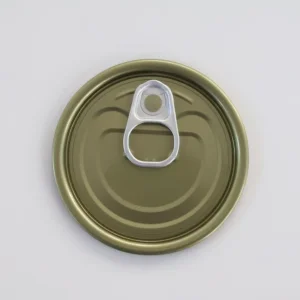
Solution: Precision-stamped 401# and 502# Easy-Open Aluminum Lids featuring score line residual control (< 0.07mm) to withstand internal pressure differentials while providing smooth, low-pull-force opening for consumer convenience.
Challenge: Microbreweries and specialty beverage brands operating automated counter-pressure filling lines face lid double-seam leaks or buckle failures under high pasteurization pressures.
Solution: Certified 202# Stay-On-Tab (SOT) and Resealable (RPT) 5182-H48 aluminum ends engineered with 6.2 bar minimum burst buckle pressure ratings, ensuring total seam integrity across pasteurization tunnels.
Challenge: Highly hygroscopic effervescent health supplements absorb micro-moisture, triggering premature effervescence during transit.
Solution: Deep-draw cold-formed Alu-Alu cavity pockets engineered with zero draft angles, incorporating desiccant-embedded polymer lamination layers to actively absorb residual interior moisture.
Direct technical answers addressing metallurgy, regulatory compliance, quality control metrics, and global shipping standards.
Validation requires a combination of mechanical and optical testing. Tensile elongation testing (ASTM E8) verifies that the OPA/AL layers elongate between 18% and 25% without necking. Cold-forming trial dies perform deep-draw test pockets (up to 10mm cavity depth). Formed pockets undergo 100% pinhole inspection via high-sensitivity optical light table testing (>10,000 Lux) or vacuum methylene blue dye penetration test (ASTM D3078) to confirm absolute zero dye ingress across the blister cavities.
Delamination resistance is determined by adhesive selection and curing conditions. Premium factories use two-component polyurethane (PU) solvent-free adhesives applied at precise coat weights (3.5 to 4.5 g/m²). Curing takes place in dedicated thermal rooms at 50°C–60°C for 72 to 96 hours to achieve complete cross-linking. Peel strength is tested at 180° according to ASTM D903, requiring >4.5 N/15mm before lot release. Thermal aging tests subject samples to 60°C / 90% RH for 30 days to guarantee zero edge delamination.
Different packaging components require specialized aluminum alloys:
• Pharmaceutical Cold-Formed Foil: Uses Alloy 8021-O or 8011-O (fully annealed, soft temper) for maximum ductility, high formability, and zero spring-back during die shaping.
• Beverage Can Bodies: Drawn from Alloy 3104-H19 (manganese-magnesium alloy) providing ultra-high yield strength, enabling wall ironed thickness down to 0.09mm while withstanding high axial column loads.
• Easy-Open Lids / Shells: Stamped from Alloy 5182-H48 or 5052-H38 (magnesium alloy) offering high tensile buckle strength, required to maintain score integrity under internal carbonation pressure (>6.0 bar).
Standard documentation packets include:
1. Certificate of Analysis (COA) detailing physical dimensions, gauge thickness, coat weight, and peel strength per roll/pallet batch.
2. Food Contact Compliance Statement (FDA 21 CFR 175.300 / EU Regulation 1935/2004).
3. Overall and Specific Migration Test Reports issued by accredited third-party laboratories (SGS / Intertek).
4. Heavy Metals & SVHC / REACH Compliance Declarations.
5. Complete Bill of Lading, Packing List, Certificate of Origin (Form E/CO), and Container Loading Photo Reports.
Technical sample rolls (width 100mm–500mm, length 50m–100m) for machine testing are available within 3 to 5 business days. Buyers provide filling line specifications, seamer chuck dimensions, or blister cavity CAD drawings. Factory engineering teams review drawing tolerances, issue 3D tool proofs, and produce initial sample trial lots prior to full commercial scale production.
Explore our complete product catalog featuring certified raw aluminum coils, slim cans, and high-performance closures.