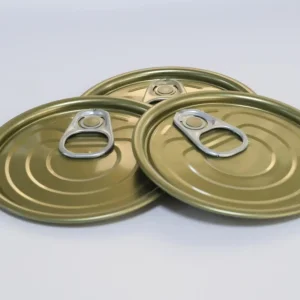
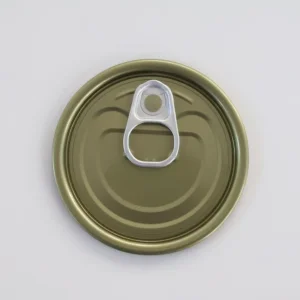
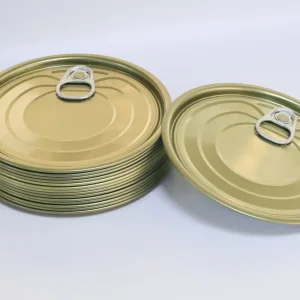
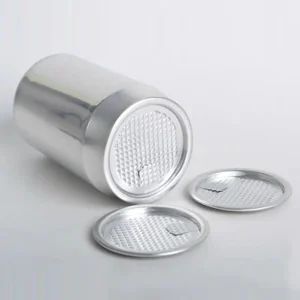
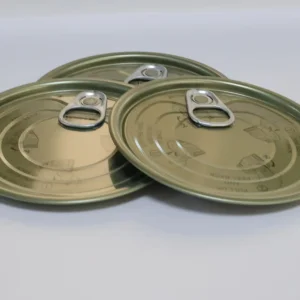
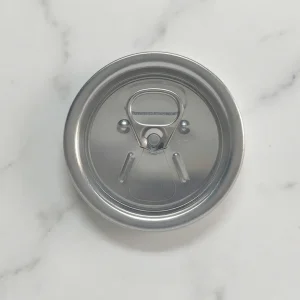
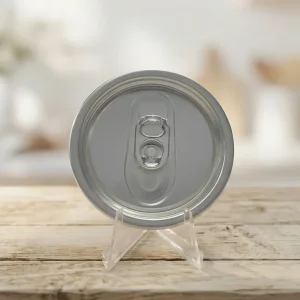
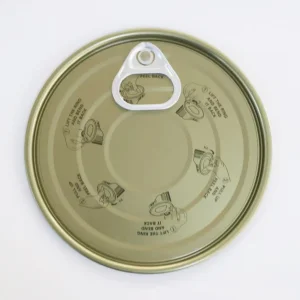
Precision-engineered 3104/5182 aluminum coils, 330ml/250ml beverage cans, and food-grade airtight 202 lids designed for high-speed automated filling lines.
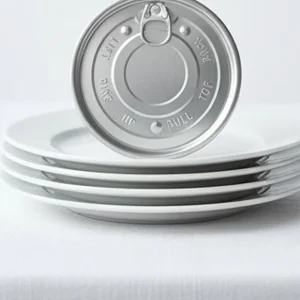
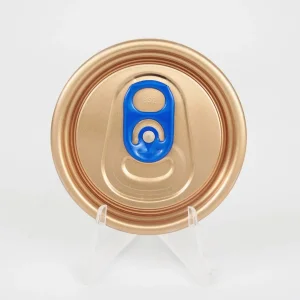
The global metal beverage packaging ecosystem is undergoing a structural transition toward standardized, highly recyclable 330ml aluminum cans coupled with high-performance 202 (52.5mm aperture) Stay-On Tab (SOT) and Ring-Pull Tab (RPT) easy-open lids.
Driven by stringent ESG mandates, corporate net-zero pledges, and shifting consumer preferences away from single-use plastics (PET), the global demand for 330ml aluminum cans with 202 lids exceeded 280 billion units in 2025. The 330ml capacity represents the golden international volumetric benchmark across Europe, Asia-Pacific, Latin America, and the Middle East, balancing single-serve portability with optimized shipping cube utilization.
Europe remains the largest individual market for the 330ml Standard and Sleek can formats, where strict EU Packaging and Packaging Waste Regulation (PPWR) directives require maximum recycled aluminum content. In Asia-Pacific, fast-growing RTD (Ready-To-Drink) tea, functional beverages, and craft beer sectors are driving compound annual growth rates (CAGR) of 6.8% for 202 ends.
The 202 lid dimension (202 neck specification corresponding to a finished double seam flange size suitable for 202-diameter closures) has become the de facto international standard. Compatibility across high-speed seaming lines (such as Ferrum, Angelus, and Pneumatic Scale) requires strict gauge uniformity, preventing line jams during filling speeds up to 1,200 cans per minute (CPM).
| Global Region | Primary 330ml Can Profile | Dominant 202 Lid Format | Key Market Drivers | Projected CAGR (2025-2030) |
|---|---|---|---|---|
| Europe (EU-27 & UK) | Standard (66mm Body) / Sleek (58mm) | 202 CDL SOT (BPA-NI) | Deposit Return Schemes (DRS), Circular Economy Laws | 4.5% |
| Asia-Pacific (APAC) | 330ml Sleek & Slim Formats | 202 SOT / RPT (Stay-On & Ring-Pull) | RTD Cold Brew, Functional Energy, Craft Beer Growth | 6.8% |
| North America | Standard 330ml / 12oz (355ml) | 202 B64 & CDL Ends | Hard Seltzers, Canned Cocktails, Microbreweries | 3.9% |
| Middle East & Africa (MEA) | Standard 330ml Heavy-Wall | 202 SOT High-Buckle Pressure | Non-Alcoholic Malt Drinks, Carbonated Soft Drinks | 5.4% |
Engineered to strict dimensional tolerances, 330ml can bodies and 202 lids rely on tailored aluminum alloys with customized mechanical temper profiles to withstand internal pressure, axial load, and aggressive chemical pasteurization.
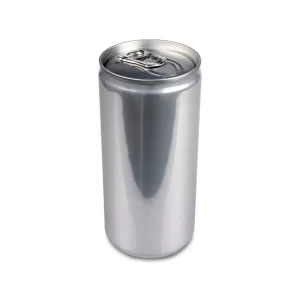
The 330ml can body is drawn and wall-ironed (DWI process) from manganese-magnesium alloy AA3104-H19. This alloy delivers ultimate tensile strength (≥290 MPa) and yield strength (≥265 MPa), allowing extreme wall-thinning down to 0.088mm at the mid-body while preserving structural integrity against column collapse during pallett stacking.
The 202 lid shell demands high ductility and tensile resistance to survive the end-stamping score line forming. High-magnesium alloy AA5182-H48 stabilized with specialized pre-treatment ensures a minimum buckle resistance of 6.2 bar (90 PSI) while keeping gauge thickness down to 0.208mm–0.218mm for optimized material weight.
The opening tab requires intense mechanical stiffness to prevent tab bending or rivet pop failure during leverage action. Alloy AA5052-H19 provides high yield strength (≥310 MPa), enabling smooth pop-and-pull mechanics with pop forces under 26N and pull-open forces under 38N.
Modern beverage production utilizes two major lid geometries for 202 apertures: the traditional B64 profile and the modernized CDL (Contour Design Lightweight) profile. The CDL geometry features a modified countersink wall angle and refined curl radius, yielding a 10% weight reduction over B64 while maintaining identical internal pressure resistance and seaming chuck compatibility.
| Technical Parameter | 330ml Standard Can Body | 330ml Sleek Can Body | 202 SOT B64 End | 202 CDL Easy-Open End |
|---|---|---|---|---|
| Outer Diameter (mm) | 66.0 mm ± 0.2 | 58.4 mm ± 0.2 | 59.4 mm ± 0.15 (Curl OD) | 59.1 mm ± 0.15 (Curl OD) |
| Nominal Lid Aperture | N/A (202 Neck Fit) | N/A (202 Neck Fit) | 202 (52.5 mm) | 202 (52.5 mm) |
| Metal Gauge / Thickness | 0.245 mm (Mid-wall: 0.088mm) | 0.250 mm (Mid-wall: 0.092mm) | 0.220 mm ± 0.005 | 0.208 mm ± 0.005 |
| Buckle Resistance Pressure | ≥ 6.2 bar (90 PSI) | ≥ 6.5 bar (94 PSI) | ≥ 6.2 bar (90 PSI) | ≥ 6.4 bar (93 PSI) |
| Axial Load Capacity | ≥ 1.20 kN (120 kgf) | ≥ 1.35 kN (135 kgf) | N/A | N/A |
| Internal Enamel Rating | ≤ 2.0 mA (1% NaCl solution) | ≤ 2.0 mA (1% NaCl solution) | ≤ 0.5 mA (1% NaCl solution) | ≤ 0.5 mA (1% NaCl solution) |
| Pop & Pull Force | N/A | N/A | Pop < 26N / Pull < 38N | Pop < 24N / Pull < 35N |
China’s modern metal packaging manufacturing ecosystem offers global beverage brands, co-packers, and importers an unbeatable combination of extreme scale, high-precision automated quality assurance, and end-to-end supply chain integration.
Leading Chinese manufacturing facilities operate state-of-the-art Cupping Presses, Wall Ironers, and Stolle/Belvac conversion modules operating at continuous speeds up to 3,000 ends per minute per line. Automated vision systems detect micro-defects down to 0.02mm, instantly ejecting non-compliant units.
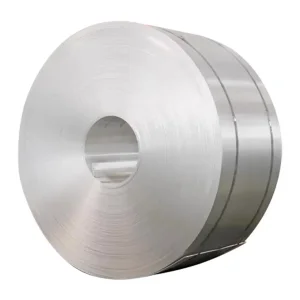
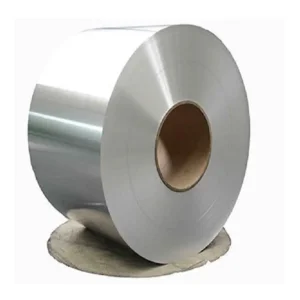
Direct vertical integration with major aluminum rolling mills ensures consistent supply of certified 3104-H19, 5182-H48, and 8011 coil stock. Cold-rolling, degreasing, passivation, and coil lacquering are executed under strict climate-controlled environments, guaranteeing stable coating adhesion and exact gauge tolerances.
Through advanced robotics, energy-efficient curing ovens, and high OEE (Overall Equipment Effectiveness) metrics exceed 92%, Chinese factories significantly reduce per-unit production costs. This cost advantage is passed directly to global buyers without compromising structural or chemical performance.
Different beverage formulations place vastly distinct chemical and physical stresses on the container. Selecting the correct internal liner coating and end configuration prevents product degradation, off-notes, and shelf-life failure.
Craft beer and hard cider require 202 SOT lids that can withstand tunnel pasteurization pressures (up to 15-20 Pasteurization Units at 60°C-65°C). Micro-oxygen ingress must be held under 20 ppb to prevent staling. Internal coatings rely on high-crosslink epoxy acrylic or organosol liners to safeguard delicate hop aromas.
Carbonated soft drinks and sparkling waters generate high internal pressures reaching 4.0 to 4.5 volumes of CO2 (equivalent to ≥4.2 bar at room temperature). 202 SOT high-buckle ends prevent lid dome distortion and seam unravelling during hot weather transit.
Low pH beverages (pH 2.4 - 3.2) containing organic acids (citric, phosphoric, taurine) require specialized, heavy-duty double-coat BPA-NI (Non-Intent) lacquer systems. This prevents pinhole corrosion, aluminum ion leaching into the product, and lacquer blistering over a 24-month shelf life.
Nitrogen-infused drinks and canned wines demand exact internal pressure balancing via liquid nitrogen dosing prior to seaming. Lids require high-integrity rivet seals and specialized compound gaskets (water-based or solvent-free PVC-free compounds) to seal inert nitrogen gas effectively.
As technology evolves, metal packaging is advancing rapidly toward ultra-lightweighting, advanced eco-friendly coating chemistries, digital printing customization, and anti-counterfeiting tracking.
Transitioning from standard 202 B64 gauge (0.220mm) to ultra-light CDL202 (0.208mm) or 200 neck down profiles saves thousands of metric tons of aluminum raw material annually, reducing freight carbon footprint.
Global compliance requires complete elimination of Bisphenol-A. Next-generation BPA-NI (Non-Intent) polyester and acrylic-organosol coatings are now standard for European and North American retail distribution.
Direct-to-can high-definition digital printing enables small-batch craft beverage runs with variable graphics, matte/gloss contrast varnishes, and tactile raised embossing without costly printing plate set-ups.
Laser-etched QR codes on the underside of 202 SOT tabs enable direct consumer engagement, anti-counterfeit product verification, and automated supply chain traceability.
Sourcing metal packaging internationally requires rigorous adherence to technical quality assurance protocols, seamer setup parameters, and export shipping protections.
During factory stamping and drawing, automated vision inspection systems perform 100% optical checks on shell curl geometry, rivet integrity, tab alignment, and compound gasket distribution. Physical laboratory testing is conducted every 30 minutes on:
A perfect hermetic seal relies on exact double seam geometry. Overseas buyers must conduct routine seam teardowns measuring key parameters against engineering specs:
330ml cans and 202 lids are sensitive to transport vibration and maritime humidity. Standard export packaging utilizes robust hardwood/plastic bulk pallets separated by layer pads, covered with top frames, fully stretch-hooded, and secured with PET strapping. Polyethylene-lined sleeves with active desiccant packs are integrated inside lid cartons to prevent oxidation and moisture ring formation during containerized transport across ocean routes.
Expert technical answers compiled by metal packaging engineers to address critical procurement, regulatory, and mechanical concerns.
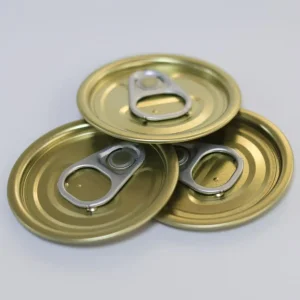
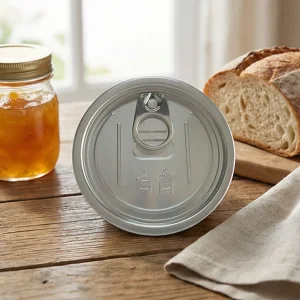
Explore our expanded collection of food-grade tinplate lids, specialized easy-open ends, and high-performance packaging components.