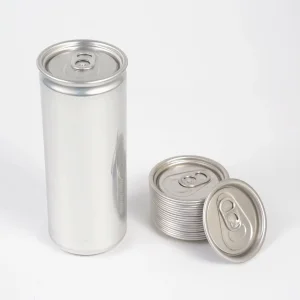
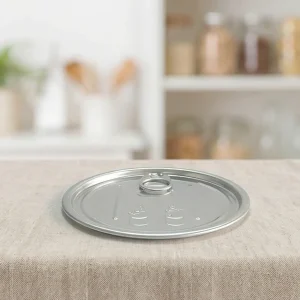
Explore high-precision tinplate lids, aluminum cans, alloy coils, and specialty easy-open ends engineered for high-speed filling lines.
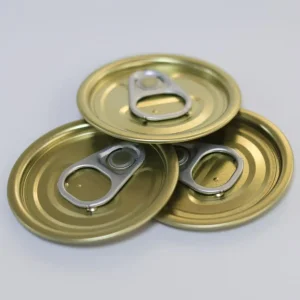
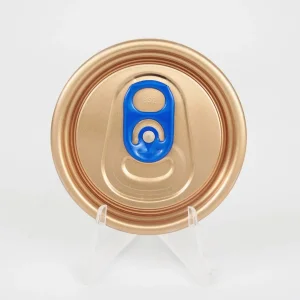

A comprehensive examination of market drivers, thermal performance parameters, and circular economy compliance reshaping modern rigid metal packaging.
The global packaging landscape is undergoing a structural transition. Accelerated by stringent environmental mandates such as the European Union’s Single-Use Plastics Directive (SUPD) and global Extended Producer Responsibility (EPR) frameworks, procurement directors are aggressively replacing legacy expanded polystyrene (EPS) and polyolefin food trays with advanced rigid aluminum foil containers and sealed metal systems.
Aluminum foil containers stand at the nexus of metallurgical science and functional packaging design. Unlike polymers, which suffer from molecular degradation during thermal recycling and permit micro-permeation of oxygen and moisture over extended shelf-life cycles, aluminum provides an absolute physical barrier. Operating across an extreme thermal window—from deep cryogenic freezing at -40°C to high-heat commercial convection roasting and dual-ovenable rethermalization reaching +350°C—foil packaging maintains its structural rigidity without plasticizer leaching, volatile organic compound (VOC) off-gassing, or deformation.
From an supply-chain economics perspective, aluminum's thermal conductivity (approximately 237 W/m·K) cuts chilling, blast-freezing, and baking cycle times by up to 30% compared to plastic or paperboard alternatives. This thermal efficiency translates directly into reduced energy consumption during automated food processing, commercial catering preparation, and cold-chain distribution logistics.
Aluminum foil containers eliminate light transmission, UV degradation, oxygen intrusion, and moisture loss. This extends shelf life for fresh, frozen, and retort-processed foods while preserving aroma and nutrition without chemical preservatives.
Aluminum is infinitely recyclable without loss of material integrity. Remelting post-consumer aluminum requires only 5% of the energy used in primary smelting, dramatically lowering Scope 3 carbon footprints for global brands.
Engineered to transition seamlessly from freezer (-40°C) directly to high-temperature baking or microwave rethermalization (when paired with appropriate smooth-wall geometry and rim contours).
Analyzing cross-regional purchasing specifications for commercial food processors, airline caterers, quick-service restaurant (QSR) chains, and industrial packaging distributors.
Commercial buyers do not simply source containers; they procure systematic packaging performance designed to integrate into high-speed automated denesting, filling, gas-flushing (MAP), and heat-sealing lines. Major enterprise procurement requirements fall into distinct operational verticals:
Enterprise buyers evaluate suppliers against key mechanical and chemical standards to prevent costly line stoppages:
Prevents micro-leaks during film heat-sealing and double-seaming operations.
Ensures frictionless denesting while guaranteeing zero sensory impact on food taste.
Critical for gas barrier performance in Modified Atmosphere Packaging (MAP).
Calculated top-load resistance ensuring pallet integrity during sea freight export.
How automated high-speed press lines, optical quality control vision systems, and integrated aluminum coil slitting establish an unbeatable cost-to-quality advantage.
Utilizing high-speed pneumatic presses operating at up to 60–120 strokes per minute. Multi-cavity precision dies enable high-volume output with micro-gauge accuracy, maximizing yield and minimizing raw material waste.
In-line high-resolution CCD camera vision systems inspect 100% of manufactured containers and easy-open lids for micro-pinholes, rim burrs, surface scratches, grease contamination, and dimensional variances in real time.
Situated in Shanghai's primary industrial corridor, our manufacturing infrastructure provides direct access to deep-water shipping terminals. Automated pallet packing and stretch-hood wrap systems safeguard freight during transatlantic transit.
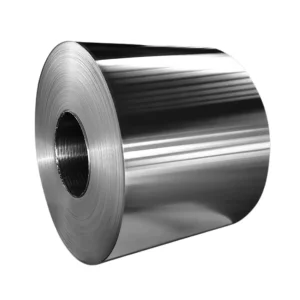
The competitive moat of China’s advanced metal packaging industry stems from complete vertical integration. From primary aluminum ingot refining to precision coil slitting (utilizing 3003, 8011, 8006, 5052, and 5182 alloys), custom roller coating, high-speed progressive die stamping, and automated cartoning, every manufacturing node is monitored by centralized ERP/MES software. This guarantees batch-to-batch traceability, rapid tooling turnaround for custom OEM geometries, and robust resilience against global raw material price volatility.
A technical guide to alloy selection, temper designation, surface lacquers, and wall construction parameters for packaging engineers.
| Alloy Grade | Temper Designation | Thickness Range | Tensile Strength (MPa) | Primary Application Field |
|---|---|---|---|---|
| Alloy 8011 | O / H22 / H24 | 0.030mm – 0.090mm | 95 – 145 MPa | Standard wrinkle-wall food containers, household foil, dairy lids |
| Alloy 3003 | H14 / H24 | 0.050mm – 0.150mm | 140 – 180 MPa | Deep-draw smooth-wall containers, high-rigidity airline meal trays |
| Alloy 8006 | O / H22 | 0.035mm – 0.080mm | 100 – 150 MPa | Extra-deep wrinkle-wall containers requiring high ductility & burst resistance |
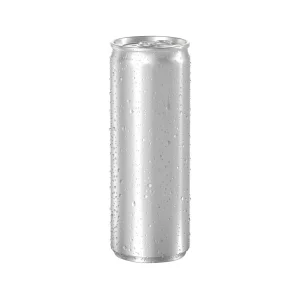
| Alloy 3104 | H19 | 0.230mm – 0.280mm | 270 – 310 MPa | Two-piece Drawn & Wall-Ironed (DWI) beverage can bodies |
| Alloy 5182 | H48 | 0.200mm – 0.240mm | 310 – 360 MPa | High-buckle carbonated beverage easy-open shell stock (200#/202#) |
| Alloy 5052 | H32 / H34 | 0.220mm – 0.350mm | 210 – 260 MPa | Pull-tab stock, industrial containers, marine-grade corrosion covers |
Wrinkle-Wall Containers: Produced using single-action or double-action mechanical dies where the foil folds naturally along the corners. Economical, lightweight, ideal for bakery products, take-out catering, and roasted poultry.
Smooth-Wall Containers: Formed under hydraulic pressure with precise rim-curling. Provides a flat sealing surface ideal for hermetic film lid heat-sealing, Modified Atmosphere Packaging (MAP), and vacuum skin packaging (VSP) for extended meat and seafood preservation.
BPA-NI (Bisphenol A Non-Intent) Epoxy & Organosol: Protects food from acid corrosion (pH < 3.8) in tomato sauces, citrus juices, and pickled products while passing stringent EU 1935/2004 migration tests.
Polypropylene (PP) Lamination: Applied to smooth-wall containers for direct heat-sealability with PP-based film structures, providing robust peelable or permanent seals capable of surviving 121°C retort sterilization.
Real-world operational environments where specialized aluminum foil containers deliver measurable supply chain advantages.
Multi-cavity smooth-wall containers designed to standardized Atlas meal tray dimensions. Ensures fast, uniform convection oven heating on commercial aircraft without flavor migration between food compartments.
Heavy-duty full-curl wrinkle-wall containers with matching board or dome plastic lids. Retains heat during delivery transit, prevents grease bleed-through, and allows consumers to reheat meals directly in the oven.
Sterilizable aluminum foil cups sealed with high-barrier easy-open lids. Withstands intense pressure differentials in autoclaves, offering an unbreakable, lightweight alternative to traditional tinplate cans.
Expert answers to critical procurement, engineering, regulatory, and logistics queries from B2B packaging buyers.
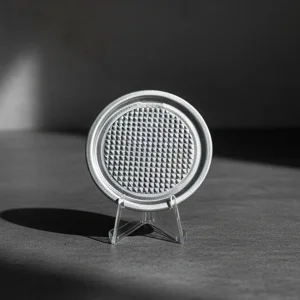
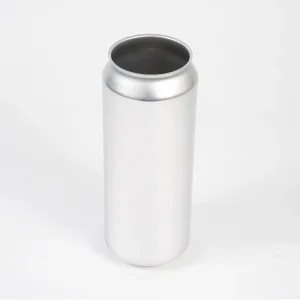
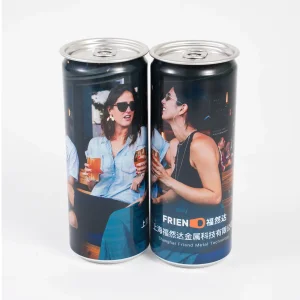
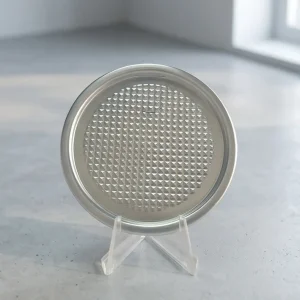
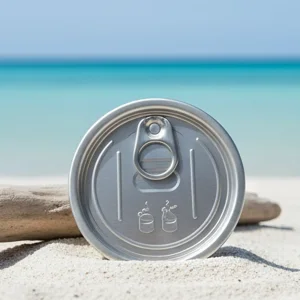
Explore specialized large-capacity aluminum cans, low-profile easy-open ends, anti-static powder lids, and high-durability closures.
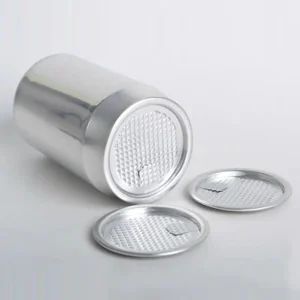
Partnering with global brand owners to achieve net-zero Scope 3 carbon targets through closed-loop aluminum recycling initiatives.
Aluminum is widely recognized as the most sustainable packaging substrate in the global circular economy. Over 75% of all aluminum ever produced in human history remains in active use today. Unlike plastics, which experience downcycling and molecular chain scission during thermal reprocessing, aluminum containers can be recycled indefinitely back into identical high-spec rigid packaging without performance loss.
By switching from legacy multi-layer polymer trays to light-gauge 3003/8011 aluminum containers, enterprise brand owners achieve a measurable reduction in packaging-related greenhouse gas (GHG) emissions. Secondary remelting consumes only 0.5 kWh per kg of metal produced—saving 95% of the carbon footprint compared to primary electrolytic smelting.