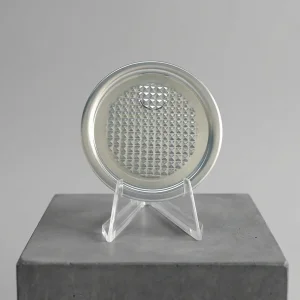
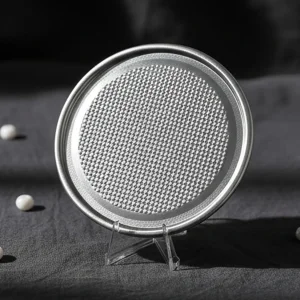
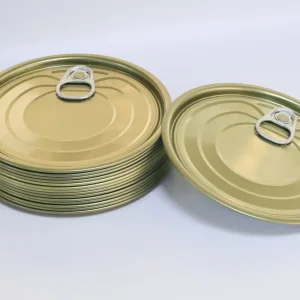
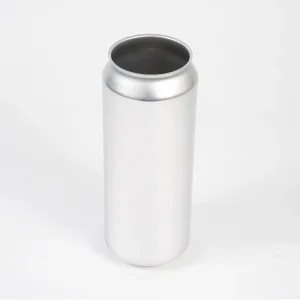
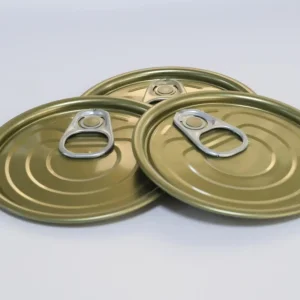
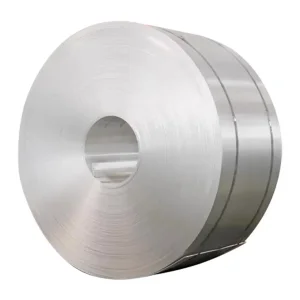
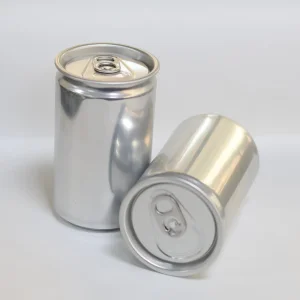
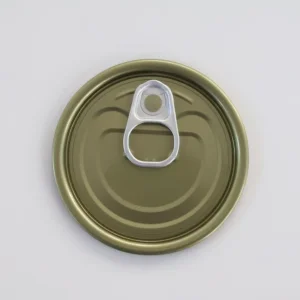
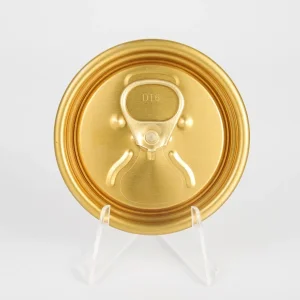
Explore our top-tier selection of aluminum and tinplate easy-open lids, lightweight can bodies, and high-tensile packaging coils engineered for high-speed filling lines.
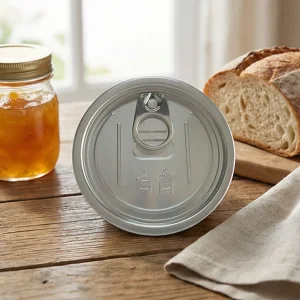
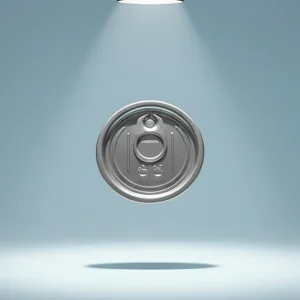
The global metal packaging market is undergoing an unprecedented structural transition driven by stringent environmental mandates, rising consumer preference for sustainable rigid packaging, and the technical necessity for extended product shelf-life. At the focal center of this evolution is the Easy Open End (EOE)—a highly sophisticated, micro-engineered closure component designed to deliver complete hermetic sealing while ensuring effortless human opening via calibrated score lines and integrated pull-tabs.
As modern packaging demands shift away from single-use polymers, aluminum and tinplate Easy Open Ends have expanded far beyond traditional carbonated soft drink (CSD) applications. Today, specialized EOE variants are critical components in the global logistics chains of infant formula nutrition, specialty processed foods, craft beverages, medical powders, and aggressive chemical formulations. The global Easy Open Ends market value, projected to surpass $14.5 Billion with a compound annual growth rate (CAGR) exceeding 5.2%, reflects deep industrial reliance on precision metal stamping.
From a manufacturing leadership standpoint, achieving high-quality production of Easy Open Ends requires strict alignment with global quality raters guidelines and international regulatory protocols. Modern high-speed filling lines running at up to 1,500 cans per minute tolerate zero dimensional variance. A microscopic flaw in the end curl, a variance in score residual thickness, or micro-fracturing of the internal protective lacquer during tab riveting can lead to catastrophic line stoppages, oxidation, microbial ingress, or brand recall. Thus, partnering with a technologically advanced supplier offering full-traceability manufacturing is essential for modern procurement leads.
Discover how advanced material science, next-generation organosols, laser-etching anti-counterfeiting, and extreme lightweighting are re-defining rigid packaging standards.
By transitioning from conventional tempers to ultra-thin, high-magnesium aluminum alloys such as 5182-H48 and 5052-H19, manufacturers can reduce shell gauge from 0.22mm down to 0.20mm or lower without compromising internal pressure burst resistance (> 6.2 bar). This yield optimization directly reduces raw material transport costs and scope 3 carbon emissions.
Global food contact compliance mandates (FDA 21 CFR 175.300, EU 10/2011, and China GB 4806.10) have driven the total obsolescence of traditional bisphenol-A (BPA) epoxy coatings. Modern EOE manufacturing utilizes advanced polyester, acrylic, and polyorganosol lining systems that preserve flavor profile purity across acidic, saline, and fatty food matrices.
High-value industrial powders, premium infant formulas, and craft beverages utilize direct-on-tab laser etching. High-resolution matrix QR codes etched onto the underside or top-side of the pull tab enable consumer engagement, supply chain origin verification, and anti-tamper tracking across global distribution networks.
Precision seaming and long-term shelf safety require strict physical parameter management. Below is an engineering comparison matrix detailing standard industry EOE diameter designations, substrate selections, score opening mechanics, and thermal pressure thresholds:
| Format Code | Nominal Diameter | Substrate Material | Pop Force (N) | Tear Force (N) | Internal Pressure Rating | Target Application |
|---|---|---|---|---|---|---|
| 200# SOT/RPT | Ø 50 mm | Alloy 5182-H48 | 12 - 18 N | 22 - 30 N | ≥ 6.2 bar | Sleek & Slim Beverage Cans |
| 202# SOT/RPT | Ø 52 mm | Alloy 5182-H48 | 14 - 20 N | 24 - 32 N | ≥ 6.2 bar | Standard CSD, Beer & Hard Seltzers |
| 209# Full Aperture | Ø 63 mm | Alloy 5052 / Tinplate | 16 - 22 N | 26 - 36 N | ≥ 2.5 bar | Nuts, Coffee Beans, Pet Foods |
| 300# Powder End | Ø 73 mm | Alloy 8011 / 3104 | 18 - 24 N | 28 - 38 N | Airtight Vacuum Seal | Nutraceuticals, Dairy Powders |
| 401# Foil/Full Aperture | Ø 99 mm | Tinplate / Aluminum | 20 - 28 N | 32 - 45 N | Retort Capable (121°C) | Processed Meat, Coffee, Canned Foods |
| 502# Large Format | Ø 127 mm | Tinplate T3/T4 / Al 5052 | 22 - 32 N | 35 - 50 N | Deep Vacuum / N2 Flush | Infant Formula, Bulk Dry Foods |
The operational key to flawless double-seam formation lies in the mechanical geometry of the end curl radius, countersink depth, and chuck wall angle. When seamed with standard Chuck and Roll tooling (e.g., Angelus, Ferrum, Continental Can compatible setups), our Easy Open Ends achieve consistent hook overlaps exceeding 55%, preventing slow atmospheric micro-leaks across multi-year storage cycles.
Engineered to excel in demanding thermal, chemically aggressive, and moisture-rich processing environments worldwide.
For carbonated energy drinks, sparkling waters, and pasteurized beers, ends must withstand high thermal expansion during tunnel pasteurization (60°C–65°C) and maintain high internal dome pressure up to 90 PSI. Our 202# Stay-On-Tab (SOT) ends incorporate reinforced rivet geometries and anti-feathering score profiles that prevent premature venting under high thermal cycles.
Infant nutritional formulas demand zero oxygen ingress (< 0.5% residual O2 after nitrogen flushing) and zero moisture transmission to avoid powder clumping and nutrient degradation. Our 401# and 502# Peel-Off Foil Membrane Lids combined with tinplate or aluminum outer ring structures deliver 100% tamper-evident, hermetic security under extreme cold-chain or tropical storage conditions.
Canned vegetables, tomatoes, tuna, and pet foods undergo steam retort sterilization at temperatures ranging from 121°C to 130°C for up to 90 minutes. Our sulfur-resistant organosol lacquers prevent internal metal staining ("black spots") caused by free sulfur ions in meat proteins, preserving visual aesthetic quality upon opening.
Logistics routes passing through tropical port zones subject cargo to salt spray and high humidity. Our outer curl edges feature optional liquid-compound side-wall waxing or clear over-varnish layers that inhibit edge-corrosion and oxidation along cut raw edges during long ocean transit shifts.
For high-volume beverage enterprise brands and canning plant network directors, procurement cost calculation goes far beyond the FOB per-thousand unit price. The true operational benchmark is the Total Cost of Ownership (TCO), which encompasses downtime penalties, seamer chuck wear, spoilage scrap rates, and freight volume packing efficiency.
Every single manufactured end passes through 360-degree online vision inspection cameras operating at line speed. System algorithms instantly eject ends displaying curl deformities, score line anomalies, tab misalignments, or microscopic lacquer scratches before automated packing into sleeves.
Our packaging engineering support team provides precise seam teardown dimension guides (body hook, cover hook, seam thickness, seam length, countersink). We supply pre-production sample lots specifically for your seamer calibration to guarantee zero double-seam wrinkling or flange crushing.
To eliminate shipping damage, ends are enclosed in protective heavy-duty polyethylene sleeves, packed inside rigid corrugated cartons or fiber drums, desiccated against condensation, and secured on heat-treated ISPM-15 wooden or plastic pallets wrapped with heavy stretch hood film.
Direct engineering answers to technical queries regarding alloys, double-seam integrity, compliance, and logistics optimization.
Discover specialized freeze-resistant lids, sterilizable powder closures, aroma-proof caps, and standard aluminum beverage containers.