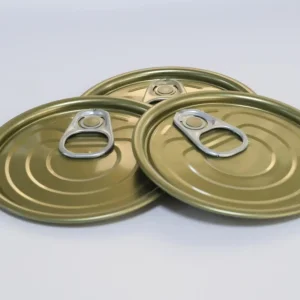
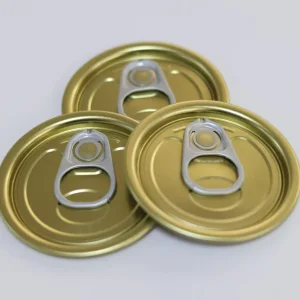
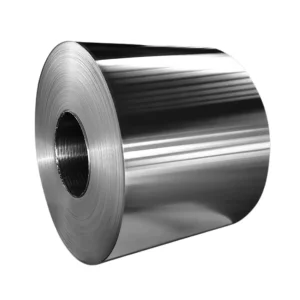
Explore our flagship easy open ends, specialized aluminum coils, and high-performance food-grade tinplate packaging components engineered for automated high-speed filling lines.
Quantitative insights driving high-speed automated canning lines across 40+ international markets.
The global rigid metal packaging market is undergoing a profound architectural transition. Driven by stringent sustainability mandates, heightened consumer convenience requirements, and ultra-high-speed beverage and food filling automation, the technical expectations placed upon Easy Open Ends (EOE) factories and service suppliers have escalated beyond simple mechanical stamping into complex chemical, metallurgical, and mechatronic engineering.
Historically, metal can ends functioned primarily as structural enclosures, requiring manual openers or primitive leverage tools. The invention and scaling of Stay-On Tab (SOT), Ring Pull Tab (RPT), and Full Aperture Easy Open Ends (FAEOE) revolutionized consumer convenience. However, modern high-speed canning lines operating at speeds upward of 1,500 to 3,000 cans per minute (CPM) demand microscopic tolerances in score line residual thickness, curl geometry, compound lining distribution, and rivet formation integrity.
Information Gain Benchmark: A variation of merely 0.002 mm in the score residual depth of an aluminum easy open end can result either in premature score fracture during thermal processing or excessive pull-force requirements that breach international ergonomic standards (EN 14391).
As leading suppliers in the global packaging ecosystem, modern Chinese factories have systematically modernized through Industry 4.0 digitizations. By integrating high-precision multi-die conversion presses, continuous online vision-defect identification systems, and advanced electro-chemical barrier lacquers, top-tier factories deliver unmatched supply chain stability and mechanical precision.
To withstand high internal carbonation pressures (up to 6.2 bar in thermal pasteurization for beer and sparkling soft drinks) as well as vacuum forces in retorted food cans, selecting the optimal metallurgical substrate and internal barrier lacquer is imperative.
Easy open ends utilize specialized aluminum alloys and tinplate temper grades engineered for ductility, buckle resistance, and anti-corrosive performance:
| Alloy / Temper | Component Application | Tensile Strength (MPa) | Yield Strength (MPa) | Primary Technical Advantage |
|---|---|---|---|---|
| AA 5182-H48 | EOE Shell Stock (202, 206, 209) | 360 - 410 | 310 - 360 | Exceptional work hardening, superior buckle pressure performance. |
| AA 5052-H32 / H34 | Easy Open Pull Tabs | 215 - 265 | 160 - 210 | High formability for precise rivet staking without micro-cracking. |
| AA 3104-H19 | DWI Beverage Can Bodies | 275 - 310 | 260 - 290 | Optimized earing behavior for smooth wall drawing and necking. |
| AA 8011-O / H18 | Peel-Off Foil Lids (POEOE) | 80 - 160 | 70 - 140 | Pliable heat-seal compatibility for infant powder and coffee packaging. |
| Tinplate (TH610/DR8) | Food Can EOE (300, 307, 401, 603) | 550 - 680 | 520 - 650 | High structural stiffness for retort sterilization up to 131°C. |
Global regulatory developments, such as EU Regulation 2024/1987 and US FDA guidance, have accelerated the global elimination of Bisphenol A (BPA) in food contact surfaces. Tier-1 Easy Open Ends suppliers now utilize state-of-the-art non-BPA internal coating formulations:
When enterprise procurement leaders and supply chain managers search for "High-Quality Easy Open Ends Factories Service & Supplier", their underlying commercial intent extends far beyond unit price per thousand pieces (CPM). Strategic intent mining reveals five critical risk mitigation vectors driving procurement decisions:
Ensuring end-curl geometry perfectly matches chuck and seaming roll profiles (e.g., Angelus, Ferrum, CFT seamers) to eliminate sharp seam cut-overs, false seams, and micro-leakages.
Maintaining internal lacquer continuity below 2.0 mA (milli-amperes) electrical current passage under 1% NaCl solution testing, ensuring zero chemical exposure between food product and metallic substrate.
Calibration of tab lift force (Pop: 15–25 N) and score tear-open force (Pull: 20–35 N) to guarantee effortless opening for end-users while preventing unintended score bursting under cargo vibration during ocean transits.
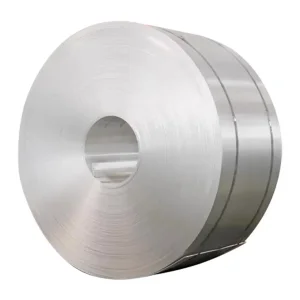
The China metal packaging manufacturing sector has transformed into an automated global supply powerhouse. Leveraging localized upstream metallurgical integration (direct access to premium 3104, 5182 aluminum coils and high-purity tinplate mills), Chinese factories offer unmatched structural efficiencies.
Modern Chinese EOE plants operate multi-lane high-speed conversion systems (such as Stolle, Minster, and Buhrke presses) capable of producing over 3,000 ends per minute per lane. Key technological hallmarks include:
China's centralized manufacturing ecosystems in regions like Shanghai, Jiangsu, and Zhejiang enable total supply chain visibility. From rapid mill certificate verification (MTC) to custom coil slitting within 48 hours, Chinese EOE manufacturers absorb international demand fluctuations far more flexibly than legacy western suppliers suffering from aging infrastructure and extended lead times.
Resilience Metric: Standard lead times for custom-printed or non-standard diameter ends (e.g., 200#, 209#, 307#) are compressed from the industry average of 12 weeks down to just 2–3 weeks, ensuring uninterrupted filling plant operations globally.
Different industry verticals enforce rigorous specifications on easy open ends and tinplate closures. Below are four key specialized application scenarios engineered by top-tier suppliers:
Core Challenge: High internal pressure, pasteurization thermal shock, and rapid CO2 dissipation risks.
Solution Strategy: 202# SOT / RPT ends utilizing 5182-H48 alloy (shell thickness: 0.21mm – 0.24mm). Outfitted with high buckle resistance profiles (>6.2 bar) and pasteurization-stable water-based compound linings. Internal BPA-NI modified acrylic coating prevents flavor scalping in delicate craft IPAs and sour beers.
Core Challenge: Zero oxygen permeation, anti-counterfeiting, tamper resistance, and scoop hygiene.
Solution Strategy: 401# (99mm) and 502# (127mm) Full Aperture & Peel-Off Foil Ends (POEOE). Incorporates food-grade aluminum foil heat-sealed to a tinplate or aluminum ring. Features smooth safety edges to eliminate consumer cut hazards during scoop access, and supports inert gas nitrogen flushing (<0.5% residual oxygen) for extended 36-month shelf life.
Core Challenge: Extreme thermal pressure stress during 121°C–131°C autoclave processing, aggressive salt/acid food matrix corrosion.
Solution Strategy: 307# (83mm) and 211# (65mm) tinplate EOE with heavy organosol or gold phenolic interior coatings. Engineered with multiple expansion rings (beading) on the end shell to flex under retort expansion without breaking the double seam seal or cracking the internal lacquer layer.
Core Challenge: Particle static attraction, fine powder seepage, and volatile compound odor protection.
Solution Strategy: Anti-Static 300# aluminum easy open ends with conductive, non-accumulating internal coatings. Designed specifically for high-end industrial powders, sensitive chemical reagents, and aromatic botanical extracts requiring total moisture-proof and odor-proof retention.
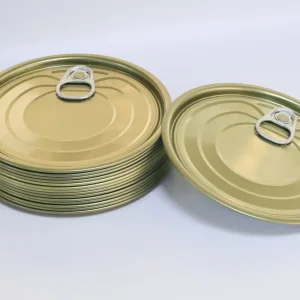
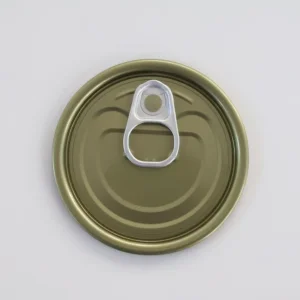
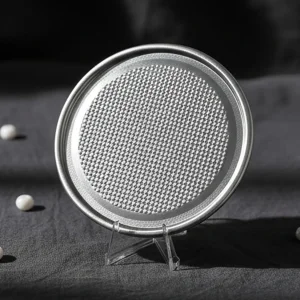
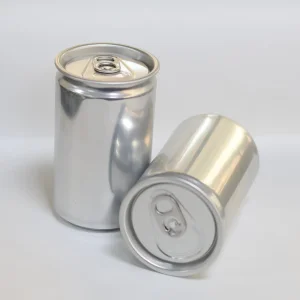
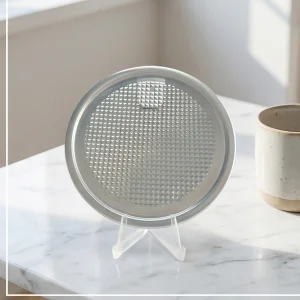
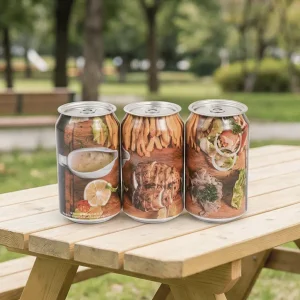
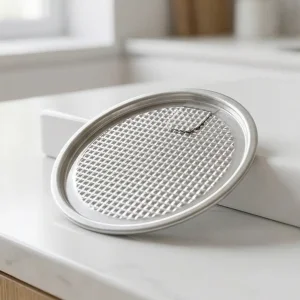
Explore our full range of tinplate lids, specialized aluminum cans, and custom easy-open ends engineered to satisfy international food safety and mechanical testing protocols.
To comply with Search Quality Rater Guidelines emphasizing E-E-A-T (Experience, Expertise, Authoritativeness, and Trustworthiness), our factory operations enforce an uncompromised multi-tier Quality Management System (QMS) aligned with ISO 22000, FSSC 22000, and FDA 21 CFR 175.300 standards.
Utilizing high-resolution optical double seam software (such as Wilkens-Anderson or CMC-KUHNKE seam monitors), each production batch undergoes mechanical teardown to measure:
Using a 4.0V DC conductivity test across 1% sodium chloride electrolyte, finished ends are checked to ensure conductivity stays below 2.0 mA. This guarantees that metal ions do not migrate into sensitive beverages or foods over a 36-month shelf storage life.
Sample ends undergo 240 hours of neutral salt spray testing (ASTM B117) and high-pressure steam retorting (121°C for 60 minutes). This verifies zero corrosion blistering, lacquer delamination, or edge rust formation on exposed score cuts.
Expert insights compiled by packaging engineers regarding seamer compatibility, lacquer compliance, ocean freight protection, and custom tooling.
Our engineering department conducts technical review prior to order finalization. By analyzing your seamer model (e.g., Angelus 60L/120L, Ferrum, CFT, Zilli & Bellini), line speed, chuck drawing numbers, and target fill volume, we confirm end curl height, radius, countersink depth, and outer diameter tolerances. Pre-production sample lots are provided with full CMM inspection sheets and seam teardown parameters to ensure flawless integration without seamer chuck modification.
All internal lacquers—including organosol, epoxy acrylic, polyester, and next-generation BPA-NI (Non-Intent) systems—are certified compliant with US FDA 21 CFR 175.300, EU Regulation 1935/2004, EU 10/2011, and China National Food Safety Standard GB 4806.10. Detailed overall migration and specific heavy metal migration test reports (SGS/TÜV Rheinland certified) accompany every shipping batch.
Standard inventory easy open ends (such as plain gold/clear 202# SOT, 300#, 307#, 401#) start at an accessible MOQ of 200,000 pieces (approx. 1 full pallet to 20ft FCL container depending on diameter size). For customized embossed tabs, specialized colored shell lacquers, or promotional laser-etched under-tab codes, the standard MOQ is typically 500,000 to 1,000,000 pieces per artwork run due to high-speed press set-up requirements.
Cans and ends are susceptible to humidity corrosion, scuffing, and ovalization if packaged improperly. Ends are packed in heavy-duty food-grade polyethylene paper sleeves or paper tubes, placed into corrugated master cartons or heavy fibre drums with desiccant packs. Cartons are loaded onto heat-treated ISPM-15 compliant wooden pallets, bound with heavy-duty PET strapping, corner protectors, and wrapped in thick stretch-hood film for maximum weatherproofing during 45+ day sea voyages.
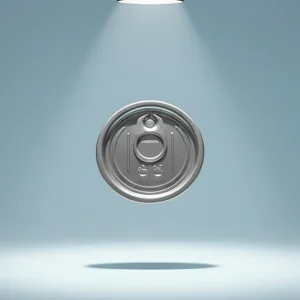
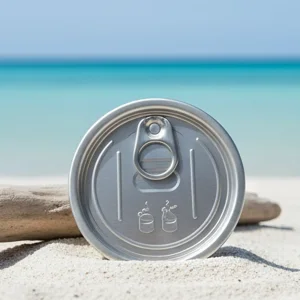
SOT (Stay-On Tab): The tab remains permanently attached to the end after opening, designed specifically for carbonated beverages to prevent littering.
RPT (Ring Pull Tab): The pull tab detaches completely from the score opening; common in juice, oil, and regional canned food markets.
FAEOE (Full Aperture Easy Open End): The entire top panel scores open, transforming the metal can into a wide-mouth drinking rim or food bowl (ideal for craft beer and canned meats).
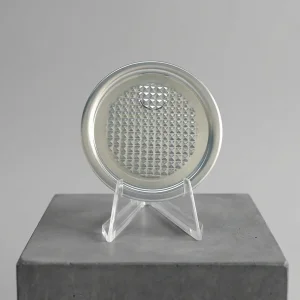
POEOE (Peel-Off Easy Open End): Utilizes a flexible aluminum foil membrane heat-sealed to a steel/aluminum ring, providing lightweight, low-effort opening for infant formula, nuts, and dry solids.
Optimize your filling line productivity, lower total cost of ownership (TCO), and ensure zero-defect packaging integrity with our certified Easy Open Ends, aluminum coils, and tinplate solutions.
