Engineered for absolute hermetic seal integrity, international food-contact compliance, and seamless operational OEE.
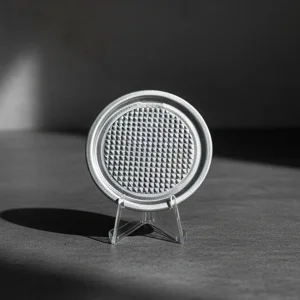
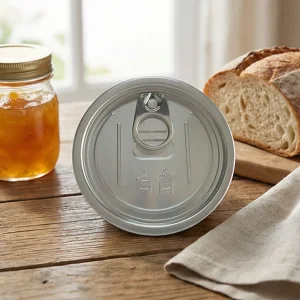
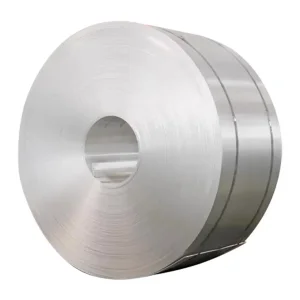
In the highly competitive global food processing landscape, the canned food lid is far more than a passive metallic closure; it represents a critical engineering component that safeguards food hygiene, extends shelf-life stability, and dictates filling line Overall Equipment Effectiveness (OEE). As a premier canned food lid supplier, our manufacturing matrix is underpinned by advanced metallurgical science, precise mechanical forming, and ultra-consistent polymer lining technology.
Selecting the optimal substrate depends directly on the physical chemistry of the food product, thermal processing requirements, and mechanical stress profile during shipping and storage:
| Material Type | Common Alloy / Temper | Tensile Strength (MPa) | Primary Industrial Applications | Corrosion Resistance |
|---|---|---|---|---|
| Aluminum Shell Stock | Alloy 5182-H48 / 5052-H19 | 310 - 360 | Easy-Open Ends (EOE), Powder Cans, Beverages | Exceptional atmospheric & moisture resistance |
| Electrolytic Tinplate (ETP) | TH435 / CA T3 / T4 | 340 - 450 | Sanitary Ends, Processed Meat, Pet Food, Seafood | High resistance to sulfur staining (with Organosol) |
| Tin-Free Steel (TFS/ECCS) | DR8 / DR9 Double Reduced | 520 - 620 | Deep Draw Closures, General Line Canning | Requires dual-sided lacquer for rust prevention |
Internal lacquer systems serve as an impermeable barrier preventing electrochemical interaction between food acids, salts, and the underlying metal matrix. We utilize high-performance internal coating chemistries customized for specific fill media:
Formulated using advanced Polyester or Acrylic resins that completely eliminate Bisphenol A. Engineered to comply with strict EU Regulation 2018/213 and US FDA 21 CFR 175.300 standards without sacrificing flexibility or retort stability.
Ideal for aggressive, high-sulfur protein foods like tuna, salmon, pet food, and acidic tomato pastes. Prevents black iron-sulfide staining through special zinc-oxide additives embedded within the polymer matrix.
Precision-injected liquid synthetic rubber compounds deposited automatically along the lid curl channel. Ensures elastic compression during double-seaming to guarantee zero gas or fluid bypass under pressure differential.
Global B2B food packaging procurement managers, QA directors, and plant operations engineers require transparent, quantifiable vendor evaluation frameworks. Sourcing canned food lids is not merely a price-per-thousand transaction; it is a critical supply chain risk management decision.
Modern filling and seaming lines operate at speeds ranging from 300 to over 1,500 cans per minute. Our lids undergo rigorous dimensional profiling to guarantee exact countersink depth (CSD), curl diameter, and panel flatness, virtually eliminating line jams, micro-scratches, and costly downtime.
We provide complete double-seam dimensional parameter guidelines for every lid configuration—including seam length, seam thickness, body hook, end hook, and overlap percentages (>85% minimum recommendation)—enabling your QA staff to quickly recalibrate seaming rolls.
Every pallet exported features high-resolution barcoded and serialized tracking metrics referencing raw coil heat numbers, lacquering lot IDs, press operator shifts, and automated vision system test logs for complete recall prevention.
Leveraging China's world-class industrial ecosystem, our manufacturing facilities integrate upstream aluminum and steel coil sourcing with state-of-the-art multi-cavity high-speed stamping technology (utilizing world-class Minster and Stolle presses). This guarantees consistent mechanical precision alongside unequaled cost competitiveness.
Automated conversion lines equipped with high-resolution 100% optical camera inspection systems detect score defects, tab misalignment, or liner voids at speeds exceeding 1,200 ends/minute.
Direct proximity to Shanghai and Ningbo deep-water shipping terminals enables streamlined container loading, flexible FOB/CIF/DDP shipping terms, and rapid global delivery cycles.
From custom tab colors, embossed logo branding, and QR-code laser engraving to non-standard diameter tooling, our engineering team turns prototypes into mass production in record time.
Navigating stringent international food safety legislation is non-negotiable for food brands entering North American, European, and Asia-Pacific markets. Every shipment of our canned food lids is accompanied by complete regulatory documentation and independent lab verification certificates.
Fully compliant with US FDA 21 CFR 175.300, European Regulation EC 1935/2004, EU 10/2011, and China GB 4806.10 standards. Heavy metal migration testing (Pb, Cd, Cr, Ni) is conducted routinely to ensure absolute compliance.
Our manufacturing facilities maintain strict ISO 9001:2015 Quality Management and FSSC 22000 / HACCP Food Safety System Certifications, operating dust-controlled cleanroom packaging lines for sensitive applications.
To eliminate ocean-transit humidity damage and transit oxidation, lids are vacuum-sealed in heavy-duty polyethylene sleeves with active desiccant packs, wrapped in protective corrugated collars, and wood-palletized.
The metal packaging market is undergoing rapid evolution driven by sustainability mandates, convenience demand, and smart packaging integration. Understanding these macro trends helps food brand owners future-proof their packaging architectures.
Down-gauging shell thickness from 0.22mm down to 0.18mm reduces carbon footprint and material cost while utilizing advanced structural anti-buckle bead designs to maintain burst pressure integrity under retort thermal expansion.
While full-aperture steel/aluminum Easy-Open Ends (EOE) offer high burst resistance and total retort durability for meats and fish, flexible Peel-Off Foil (POF) ends are rapidly replacing traditional lids in infant milk powder, coffee, and dry snack cans due to safe, burr-free consumer opening.
High-precision laser engraving on the underside of pull tabs or QR-code printing on the lid surface provides brand owners with real-time supply chain tracking, anti-channel conflict controls, and direct-to-consumer digital engagement.
Our product line addresses the distinct mechanical, chemical, and barrier challenges posed by diverse food categories:
Requires high-retort stability (121°C - 128°C for 60-90 minutes) and specialized organosol sulfur-resistant lacquers to prevent sulfide blackening caused by meat protein breakdown during thermal processing.
Utilizes 100% airtight aluminum peel-off or easy-open lids designed for nitrogen-flushed cans, maintaining residual oxygen levels below 0.5% to prevent nutrient oxidation and extend shelf stability to 36 months.
Demands robust multi-layer inner lacquers capable of withstanding low pH environments (pH 3.0 - 4.5) found in tomatoes, pineapple, and citrus fruits without coating degradation or aluminum migration.
Detailed answers to common engineering, quality assurance, and international sourcing inquiries.
Explore our full range of easy-open ends, powder packaging lids, tinplate closures, and aluminum cans.