Premium aluminum beverage cans, high-performance easy-open lids, and precision aluminum coils tailored for high-speed filling lines.
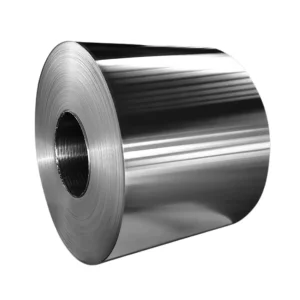
A comprehensive technical deep dive into high-speed drawn and wall-ironed (DWI) aluminum container manufacturing, alloy metallurgy, and internal barrier polymers.
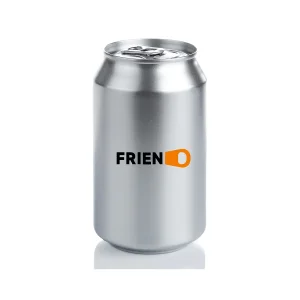
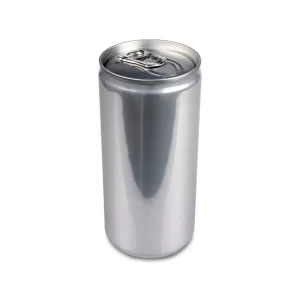
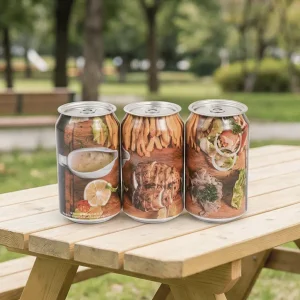
In the contemporary global beverage landscape, the 500ml aluminum beer can (frequently referred to as the European Pint standard or metric half-liter format) has evolved into the definitive vessel for craft breweries, commercial lagers, hard seltzers, and ready-to-drink (RTD) alcoholic beverages. Transitioning away from traditional glass bottling lines toward lightweight 500ml aluminum cans yields substantial structural, thermal, and supply-chain efficiencies. However, securing a reliable supply of premium 500ml beer cans requires an in-depth understanding of metal alloys, high-speed container drawing dynamics, internal coating integrity, and seam sealing physics.
The structural strength and formability of a 500ml aluminum beer can depend on precise metallurgical formulations. Can bodies are manufactured primarily from 3104-H19 aluminum alloy, a strain-hardened aluminum-manganese-magnesium matrix engineered specifically for deep drawing and wall ironing (DWI). Manganese provides solid-solution strengthening and grain refinement, while magnesium enhances work hardening rate during high-speed ironing stages. The H19 temper indicates that the metal has undergone full strain-hardening without subsequent annealing, resulting in maximum tensile strength (typically 270–310 MPa).
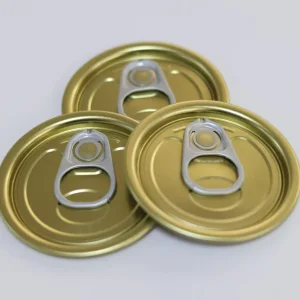
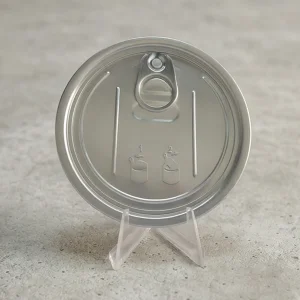
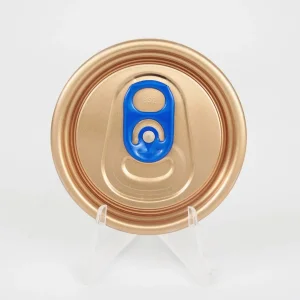
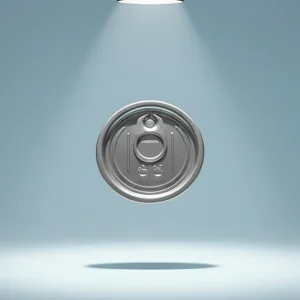
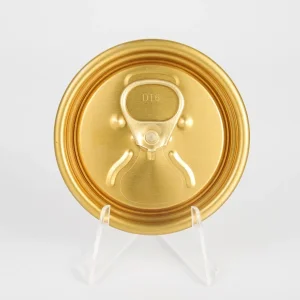
Conversely, easy-open ends (EOEs) such as the 202 SOT (Stay-On Tab) or 202 RPT (Ring Pull Tab) require a different alloy specification: 5182-H48 aluminum alloy. Rich in magnesium (4.0–5.0%), 5182 offers superior ductility and workability required to form complex double-countersink geometries, score lines, and rivet heads without micro-fracturing under elevated pressure loads.
| Component | Alloy Standard | Temper | Yield Strength (MPa) | Ultimate Tensile Strength | Primary Function |
|---|---|---|---|---|---|
| Can Body (500ml) | AA 3104 | H19 | 260 - 295 | 275 - 310 MPa | Deep drawing, necking & sidewall ironing |
| Shell End (202 SOT) | AA 5182 | H48 | 310 - 345 | 360 - 395 MPa | High-buckle resistance under CO2 pressure |
| Opening Tab | AA 5052 | H19 / H38 | 210 - 240 | 260 - 290 MPa | Ergonomic leverage and score rupture force |
Because beer is an acidic beverage (pH typically ranges between 3.8 and 4.5) containing dissolved carbon dioxide, organic acids, and alcohol, direct contact between raw aluminum and beer must be completely prevented. Uncoated aluminum can leach metallic ions (Al³⁺) into the liquid, skewing flavor profiles and causing premature haze formation. Furthermore, acidic beverages can corrode the aluminum matrix, leading to pinhole leaks and integrity degradation over extended shelf lives.
To prevent interaction, 500ml beer cans utilize state-of-the-art internal spray coating systems. Historically, epoxy-based coatings derived from Bisphenol-A (BPA) dominated the industry. Today, global compliance standards (including EU Directive 1935/2004 and US FDA 21 CFR 175.300) have driven a rapid shift toward BPA-NI (Bisphenol-A Non-Intent) internal liners. Modern coating formulations include:
Leveraging high-speed automation, vertically integrated aluminum processing, and strategic port logistics for global procurement.
Equipped with state-of-the-art Schuler and Stolle cupping presses and bodymakers operating at speeds over 2,200 cans per minute. Laser-guided wall gauge measurement ensures uniform sidewall thickness across 100% of production runs.
Custom 8-color high-definition dry offset printing presses deliver vibrant graphic replication. Capability includes specialized tactile varnishes, matte finishes, metallic sheens, and UV-reactive inks to maximize shelf appeal.
Inline light testers, enamel rater checks, and high-resolution camera vision systems inspect 100% of manufactured 500ml cans for flange dents, internal coating voids, pinholes, and print misalignments prior to palletization.
The strategic advantage of sourcing 500ml beer cans from leading Chinese packaging manufacturers lies in the complete integration of the aluminum value chain. From raw aluminum ingot smelting and continuous casting of 3104/5182 coil stock to high-speed line manufacturing and automated palletizing, Chinese manufacturing hubs provide unmatched economies of scale. Direct access to major ocean freight hubs like Shanghai Port allows international buyers to benefit from reduced inland logistics costs and reliable containerized shipments.
Precise geometric tolerances engineered for seamless integration with high-speed filling lines and automated seamers (Ferrum, Angelus, Krones).
The standard 500ml aluminum beverage can utilizes a 211 body diameter with a 202 neck design, ensuring compatibility with standard filling valves, depalletizers, and cartoning machinery worldwide.
Achieving a hermetic gas-tight seal during high-speed seaming requires precise alignment between the can flange and the 202 SOT lid curl. Our technical team supports customers with detailed seam teardown parameters:
Structuring commercial contracts, landed cost optimization, and quality assurance protocols for high-volume beverage producers.
Procuring 500ml beer cans at an enterprise scale requires balancing logistics density, artwork management, minimum order quantities (MOQs), and regulatory compliance across destination markets. Sourcing directors and packaging engineers must evaluate several operational dimensions when establishing long-term supply agreements:
500ml cans are packed on heavy-duty, heat-treated bulk wooden pallets (1120mm x 1420mm or 1000mm x 1200mm) separated by solid kraft slip sheets. Pallets are secured with plastic top frames, edge corner boards, and automated stretch hood film to prevent tilt during sea transit.
Every shipped batch is supplied with a comprehensive Quality Assurance Certificate of Analysis (CoA), verifying raw material mill batch numbers, internal coating enamel rater values, axial load crush tests, and food-grade migration test reports (FDA, EU 10/2011).
Pre-press color matching utilizes digital proofing combined with master steel printing plate preparation. Specialized inks ensure precise Pantone color reproduction even on curved metal surfaces under high application temperatures.
Exploring how 500ml aluminum cans deliver distinct advantages across varied beverage categories and global distribution channels.
In Europe, the UK, North America, and Australia, the 500ml (and 16.9 oz equivalent) standard pint format has become the premier packaging choice for craft breweries introducing India Pale Ales (IPAs), Double IPAs, Imperial Stouts, and seasonal lagers. The larger volume commands a higher retail price point while offering consumers a standard pub-pour volume in a single convenient container.
Aluminum cans block 100% of light, eliminating UV-induced "skunking" (the photo-oxidation of hop alpha acids into 3-methyl-2-butene-1-thiol) that frequently plagues green or clear glass bottles.
The global surge in Ready-to-Drink (RTD) spirit-based cocktails and hard seltzers has significantly increased demand for 500ml cans. These beverages often feature aggressive fruit acids, high carbonation, and varying alcohol concentrations. Customized internal BPA-NI liners are mandatory to withstand acid-catalyzed degradation and prevent flavor alteration over extended distribution lifecycles.
Non-alcoholic (NA) beers lack the natural microbial protection provided by ethanol, making ultra-clean, sterile packaging essential. 500ml aluminum cans support high-temperature tunnel pasteurization (typically achieving 25 to 40 Pasteurization Units / PUs) without risk of thermal thermal-shock breakage associated with glass bottles.
Contract copackers and mobile canning line operators rely on standard 500ml cans with consistent dimensional tolerances. Uniformity in body wall gauge, flange height, and neck curl ensures zero line jamming on automated rinse, fill, nitrogen-dosing, and seaming machinery operating at speeds over 500 cpm.
Pioneering eco-friendly aluminum packaging solutions to meet corporate ESG mandates and global net-zero targets.
The aluminum beverage container industry is undergoing a significant transformation focused on circular economy principles and carbon footprint reduction. Key technological trends driving the future of 500ml beer cans include:
Advanced finite element analysis (FEA) allows packaging engineers to optimize dome geometry and wall thickness profiles. Reducing body stock gauge by just 0.005 mm eliminates thousands of metric tons of raw aluminum consumption annually while preserving vertical crush strength.
Increasing the proportion of recycled post-consumer scrap (PCR aluminum) in 3104 coil production reduces embodied energy by up to 95% compared to primary smelting, drastically lowering Scope 3 carbon emissions for beverage brands.
On-demand digital printing technologies enable ultra-short production runs for limited-edition craft brews, eliminates minimum order quantity barriers, and removes plastic shrink sleeves, vastly improving overall packaging recyclability.
Direct answers from our senior packaging engineers regarding specifications, MOQs, logistics, and quality assurance.
Explore our full range of aluminum easy-open ends, specialty tinplate lids, and raw material coils available for global delivery.