Explore our top-rated, food-grade aluminum cans and precision lids manufactured in certified ISO 9001 & FSSC 22000 smart facilities.
Strategic analysis of the shifts driving high-speed two-piece metal packaging adoption across beverage and industrial sectors worldwide.
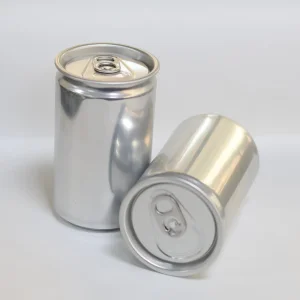
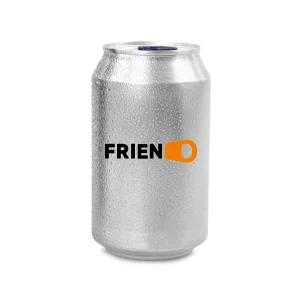
The global rigid packaging ecosystem is witnessing an unprecedented paradigm shift toward infinitely recyclable metal containers. Positioned at the apex of this transition is the 330 ml aluminum can—the global standard format for single-serve carbonated soft drinks (CSDs), craft beers, functional energy drinks, sparkling waters, and ready-to-drink (RTD) alcoholic beverages. Driven by stringent international sustainability directives, such as the European Union's Packaging and Packaging Waste Regulation (PPWR) and global Extended Producer Responsibility (EPR) mandates, procurement executives are systematically phasing out single-use Polyethylene Terephthalate (PET) and single-use glass in favor of aluminum beverage packaging.
From a commercial standpoint, 330ml aluminum cans provide an unyielding barrier against oxygen, UV light, and microbiological contaminants, thereby expanding ambient product shelf life without necessitating synthetic preservatives. Furthermore, the light weight and exceptional cube efficiency of the 330ml cylinder format drastically reduce transport-related scope 3 carbon emissions per hectoliter distributed compared to traditional glass bottles.
Aluminum is infinitely recyclable without loss of material integrity. Over 75% of all aluminum ever produced remains in productive use today, giving 330ml cans an unrivaled circular credentials score.
Available in Standard (66mm diameter), Sleek (58mm diameter), and Slim (53mm diameter) profiles, allowing brand owners to achieve precise shelf differentiation across premium and mass-market segments.
Next-generation internal lacquers (BPA-NI Epoxy Acrylic & Polyester) protect sensitive beverage matrices against flavor scalping, aluminum ion migration, and acidity-induced corrosion.
Through advanced cold-rolling processes and multi-stage Draw and Wall Ironing (DWI) technology, leading Chinese 330ml aluminum can manufacturers have reduced target wall thickness from historical 0.110mm gauges down to 0.088mm–0.092mm while preserving axial column crush resistance above 850 Newtons. This reduction directly translates to lower freight costs and minimized virgin raw material utilization.
Rigorous mechanical tolerances, alloy chemistry breakdown, and double-seam double-safety criteria engineered for ultra-high-speed filling lines running at up to 3,000 cans per minute.
| Specification Parameter | Standard 330ml Body | Sleek 330ml Body | Slim 330ml Body |
|---|---|---|---|
| Nominal Liquid Capacity | 330 ml (11.2 fl. oz.) | 330 ml (11.2 fl. oz.) | 330 ml (11.2 fl. oz.) |
| Body Outer Diameter (Ø) | 66.0 mm | 58.4 mm | 53.3 mm |
| Can Overall Height | 115.2 mm ± 0.25mm | 146.0 mm ± 0.25mm | 174.0 mm ± 0.25mm |
| Neck Opening Code / Diameter | 202 Neck (52.3 mm) | 202 Neck (52.3 mm) or 200 Neck | 200 Neck (50.8 mm) |
| Aluminum Alloy (Can Body) | AA 3104-H19 Temper | AA 3104-H19 Temper | AA 3104-H19 Temper |
| Aluminum Alloy (Shell End / Tab) | AA 5182-H48 / AA 5052 | AA 5182-H48 / AA 5052 | AA 5182-H48 / AA 5052 |
| Internal Coating System | BPA-NI Epoxy Acrylic / Polyester | BPA-NI Epoxy Acrylic / Polyester | BPA-NI Epoxy Acrylic / Polyester |
| External Varnish Finish | Gloss, Matte, Tactile, Metallic CMYK | Gloss, Matte, Tactile, Metallic CMYK | Gloss, Matte, Tactile, Metallic CMYK |
How Chinese 330ml aluminum can manufacturers leverage fully integrated supply chains, automated robotics, and deep-water export logistics to deliver unmatched B2B value.
The global metal packaging supply chain requires an uninterrupted harmony between raw material refining, continuous coil coating, high-speed stamping, and international maritime logistics. Modern Chinese 330ml aluminum can factories operate at the forefront of Industry 4.0 smart manufacturing. By integrating upstream aluminum coil rolling mills (utilizing high-purity AA3104 and AA5182 ingots) with downstream automated cupping presses, bodyformers, and light testers, Chinese manufacturing clusters eliminate raw material bottlenecks and mitigate regional price volatility.
State-of-the-art facilities in Shanghai and eastern industrial hubs house automated DWI production lines capable of outputting up to 3,000 cans per minute per line. Every stage of the manufacturing sequence—from initial cupping, wall ironing, trimmer edge conditioning, to internal lacquer spray washing and oven curing—is monitored by closed-loop artificial intelligence systems. Automated Optical Inspection (AOI) cameras scan 100% of manufactured bodies for pinholes, flange cracks, neck wrinkles, and print registration deviations at real-time line speed.
Chinese factories achieve superior economies of scale by consolidating raw coil sourcing, in-house printing plate etching, and high-speed multi-color dry offset printing (up to 8-color high-definition CMYK decoration plus spot tactile varnishes). This horizontal integration reduces overall production cost per unit, allowing global procurement managers to optimize their Total Cost of Ownership (TCO) without sacrificing quality metrics certified under ISO 9001, FSSC 22000, and FDA 21 CFR 175.300 compliance.
Located in immediate proximity to major port infrastructure like the Port of Shanghai—the world's busiest container seaport—Chinese manufacturers guarantee seamless export packaging solutions. 330ml cans are packed on heavy-duty, reusable plastic or wooden pallets, bound with automated stretch-hood films, and top-framed to ensure complete structural stability during ocean freight. This supply chain agility allows overseas fillers to maintain lean safety stock while benefiting from fast lead times on both plain (bright) and custom-printed cans.
Every export shipment from leading Chinese suppliers includes a full Mill Test Certificate (MTC), enamel rater conductivity logs, axial load test data, and food-grade migration test reports verified by third-party laboratories (SGS / Intertek / TÜV Rheinland).
Tailoring 330ml can specifications to specific liquid matrices, carbonation pressures, and regional filling environment demands.
Procuring 330ml aluminum cans is not a one-size-fits-all process. The internal lining chemistry, end style, and seam profile must be precisely matched to the target liquid matrix:
Global beverage contract packers (co-packers) and brand owners must address three critical friction points when establishing supplier agreements with 330ml can manufacturers:
Ensuring the target 330ml can flange width, curl height, and 202/200 neck specifications align perfectly with existing high-speed seamer equipment (e.g., Ferrum, Angelus, Pneumatic Scale Angelus) to prevent seamer jams and micro-leaks.
Balancing high factory MOQs for custom-printed cans (typically 100,000+ units) against brand inventory hold costs. Leading Chinese suppliers offer digital proofing, sleeve-labeled short runs, or plain bright cans for craft regional fillers.
Securing complete analytical certificates including heavy metal non-detection (RoHS/REACH), global food contact compliance (FDA 21 CFR 175.300, EU 1935/2004, GB 4806.10), and BPA-NI non-intent verification.
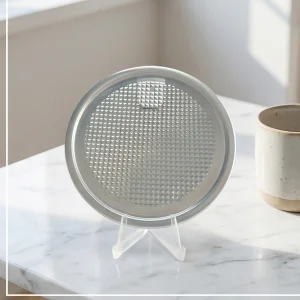
Explore our comprehensive array of powder lids, easy-open aluminum ends, and specialized food-grade packaging solutions.
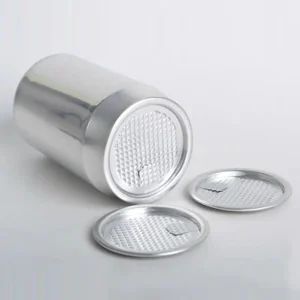
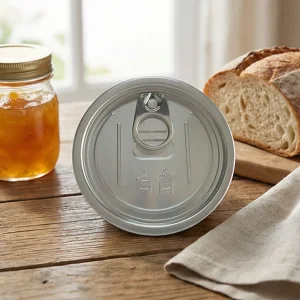
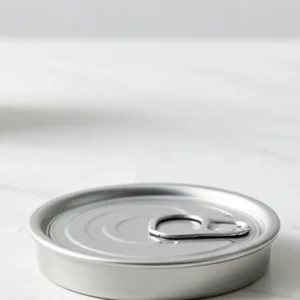
Detailed technical solutions regarding alloy grades, seamer setup, coating compliance, MOQs, and international shipping protocols.
