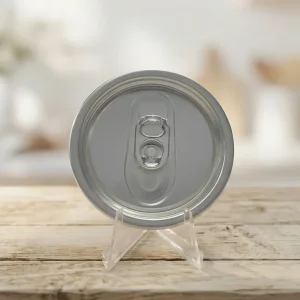
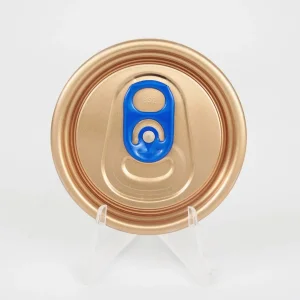
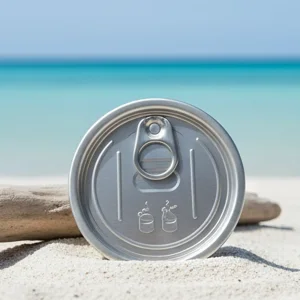
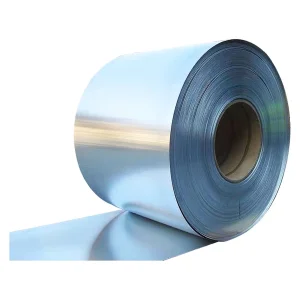
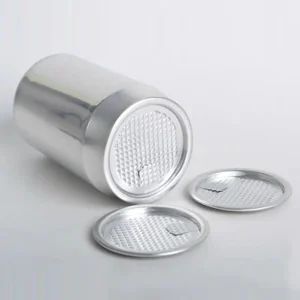
Engineered food-grade aluminum bodies, easy-open ends, and high-tensile coil stock designed for seamless high-speed canning line compatibility.
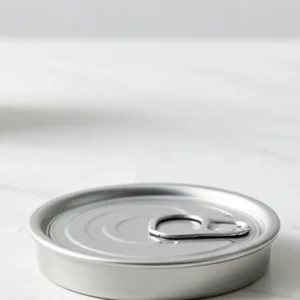
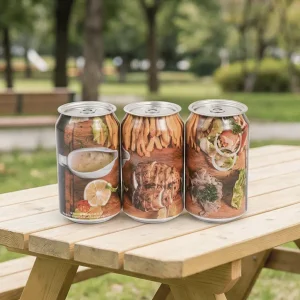
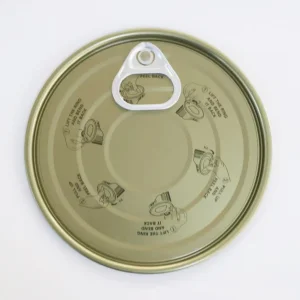

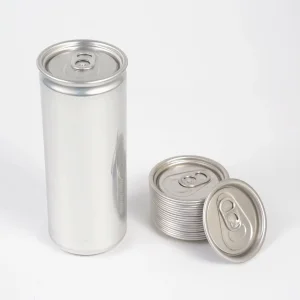
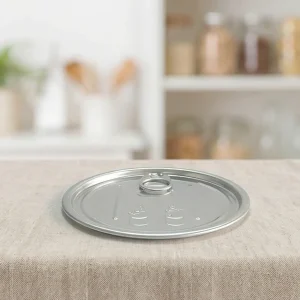
The global specialty coffee supply chain is currently undergoing a structural transformation in secondary and tertiary packaging engineering. While flexible laminate bags (comprising PET, aluminum foil, and PE layers) historically dominated retail shelves, commercial buyers, industrial roasters, and brand owners face increasing pressure regarding volatile organic compound (VOC) retention, gas permeability, structural durability during transatlantic transit, and circular economy compliance. Vintage coffee cans—engineered from premium food-grade tinplate (ETP) or lightweighted aluminum alloys—have re-emerged not merely as nostalgic marketing instruments, but as the gold standard for long-term aroma preservation and atmospheric barrier protection.
Freshly roasted coffee beans represent a dynamic, chemically active substance. Following the pyrolysis phase during roasting, coffee beans undergo continuous off-gassing, emitting between 2 to 10 liters of carbon dioxide (CO2) per kilogram over a 14-day window. If packaged immediately in rigid, non-vented containers without engineered head-space consideration or precision degassing mechanisms, internal pressure spikes can compromise structural seam integrity. Conversely, exposure to atmospheric oxygen levels above 0.5% triggers rapid lipid oxidation, degrading delicate coffee volatiles such as aldehydes, pyrazines, and furans into rancid fatty acids.
A primary driver for the adoption of vintage metal coffee cans across North American, European, and Asia-Pacific markets is the requirement for absolute light barrier protection. Light-induced photo-oxidation accelerates the degradation of roaster-specific aroma profiles. Unlike clear PET or translucent composite structures, tinplate and aluminum present an absolute transmission rate of zero (0.00 g/m²/24h water vapor transmission rate; 0.00 cc/m²/24h oxygen transmission rate). Modern vintage coffee cans manufactured in China integrate precision double-seam technology with modified atmosphere packaging (MAP)—injecting food-grade liquid nitrogen or high-purity CO2 to drive residual oxygen down to micro-levels (<0.1%).
Zero permeability to oxygen, humidity, and UV light radiation prevents flavor staling and extends roasted coffee shelf-life up to 24 months without synthetic preservatives.
High axial load strength (>1,500 N) eliminates side-wall crushing and vacuum collapsing during transcontinental maritime and high-altitude air freight.
Metal packaging boasts global recycling rates exceeding 75% in major industrial jurisdictions, drastically lowering Scope 3 carbon metrics compared to multi-layer plastic pouches.
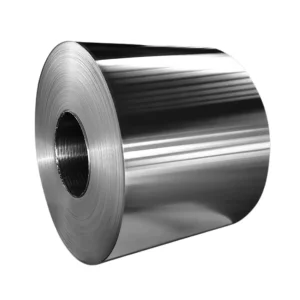
The competitive advantage of sourcing vintage coffee cans and metal components from primary Chinese manufacturing hubs lies in the tight vertical integration of metallurgical supply chains, automated high-speed stamping infrastructure, and advanced internal lacquer formulation. From raw substrate selection—such as electrolytically coated tinplate (MR grade, temper T3/T4/DR8) and high-formability aluminum coils (Alloy 3104-H19, 5182-H48, 8011-O)—Chinese factories deliver unparalleled dimensional consistency at scale.
In high-volume manufacturing environments, overall equipment effectiveness (OEE) is maintained via automated, camera-based visual inspection systems operating at speeds upwards of 1,200 ends or cans per minute. Key process parameters include:
| Material / Component Spec | Alloy Grade / Temper | Thickness Range | Tensile Strength (MPa) | Barrier Efficiency | Primary Application |
|---|---|---|---|---|---|
| Vintage Tinplate Can Body | ETP / MR Grade (T3/DR8) | 0.18 mm – 0.28 mm | 340 – 520 MPa | Hermetic (O2, H2O, Light) | Whole Bean & Ground Vintage Tins |
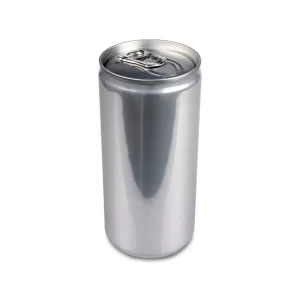
| 3104 Can Body Stock | Al-Mn-Mg (3104-H19) | 0.24 mm – 0.28 mm | 270 – 310 MPa | 100% Light & Gas Block | RTD Cold Brew & Nitro Coffee Cans |
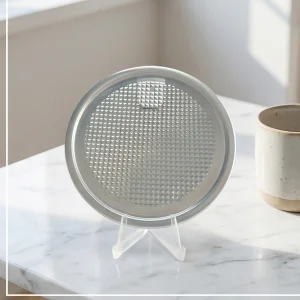
| 5182 End Shell Stock | Al-Mg (5182-H48) | 0.21 mm – 0.25 mm | 360 – 410 MPa | High Buckle Pressure (>6.2 bar) | 202# / 209# SOT & EOE Lids |
| 8011 Foil & Lid Coil | Al-Fe-Si (8011-O / H14) | 0.15 mm – 0.30 mm | 130 – 180 MPa | Puncture-Resistant Seal | Peel-off Foil Membranes & Caps |
Deployment of vintage coffee packaging requires customized engineering solutions aligned with distinct geographical, climatic, and retail environments. Chinese suppliers optimize can geometry and lid specifications to address real-world operational challenges:
Scenario: Coffee roasted at sea level and air-freighted or transported over mountain passes experiences significant atmospheric pressure drops.
Engineering Solution: Incorporation of 209# or 401# easy-open lids with specialized score lines and internal one-way degassing valves to equalize head-space differential without seam rupture.
Scenario: Ocean container freight and tropical distribution centers present extreme salt-spray and relative humidity (>85% RH), leading to external rust.
Engineering Solution: Double-pass clear or metallic outer varnish application paired with rust-proof 401# aluminum lids, subjected to 72-hour neutral salt-spray (NSS) testing.
Scenario: Premium boutique roasters requiring tactile visual differentiation for limited-run single-origin beans.
Engineering Solution: Multi-level 3D embossing/debossing on tinplate bodies, matte/gloss combination varnishes, and secondary airtight plastic plug lids for consumer re-sealability.
The convergence of strict global environmental directives and advanced digital manufacturing is driving four primary innovation vectors across Chinese metal packaging facilities:
Through advanced finite element analysis (FEA), wall gauge profiles on aluminum cans and tinplate ends have been reduced by 8–12% while maintaining critical column crush load specifications, reducing carbon impact per unit shipped.
Transitioning 100% of internal coatings to next-generation polyester, acrylic, or polyorganosol resins that strictly comply with European Regulation (EC) No 1935/2004, US FDA 21 CFR 175.300, and California Proposition 65.
Direct-to-metal high-resolution laser etching on easy-open tabs or high-speed inkjet printing on container bases enables batch-level traceability, anti-counterfeiting verification, and direct consumer engagement.
Explore specialized industrial aluminum components, coastal-grade powder lids, and high-speed coil stock manufactured to exacting international tolerances.
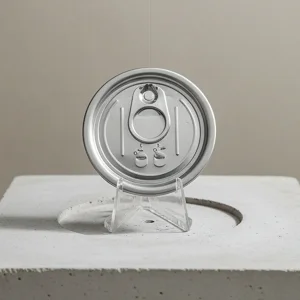
Enterprise buyers managing international procurement contracts require robust quality assurance protocols to guarantee that incoming metal components integrate seamlessly into high-speed automated filling lines without causing downtime or seal failures. China-based factories adhering to global E-E-A-T benchmark standards enforce rigorous multi-stage quality control mechanisms throughout the manufacturing lifecycle.
Technical guidance compiled by factory packaging engineers addressing common procurement, compliance, and custom tool parameters.