Engineered for seamless double-seaming compatibility, oxygen-barrier retention, and structural durability across global filling lines.

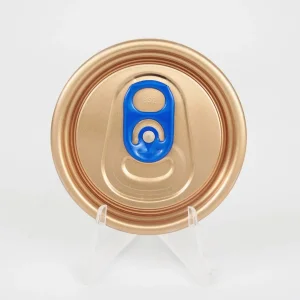

An engineering analysis of China’s tinplate fabrication ecosystems, global supply chain dynamics, and structural metal container innovation.
China has firmly established itself as the global epicentre for high-precision metal stamping, cold-rolled steel conversion, and electrolytic tinplate (ETP) manufacturing. Modern industrial facilities utilize fully automated multi-stage transfer presses and high-speed rotary coil slitters capable of producing millions of dimensionally uniform metal containers daily. For international buyers—ranging from municipal infrastructure procurement teams to Fortune 500 commercial brand developers—sourcing from China provides unmatched economies of scale without sacrificing metallurgical rigor or tolerance consistency.
Recent shifts in global supply chains have placed a premium on material traceabilty, automated seam geometry verification, and non-reactive internal lacquers. Chinese manufacturers lead this transformation through integrated manufacturing hubs, combining steel coil cold-rolling, electroplating, precision lithographic printing, and progressive deep-drawing under certified ISO 9001 and ISO 14001 Quality Management Systems.
The global transition from single-use polymers to infinitely recyclable metals has reshaped both the trash container and general packaging sectors. Tinplate steel (ETP) and tin-free steel (TFS/ECCS) offer a closed-loop recycling efficiency exceeding 80% worldwide. Magnetic separation technologies deployed in municipal waste systems ensure that discarded tinplate containers and structural metal bins are effortlessly recovered, remelted, and re-introduced into the industrial supply chain without loss of structural integrity.
Furthermore, ESG imperatives are forcing procurement officers to evaluate total lifecycle carbon footprints. Metal containers—whether heavy-duty industrial waste receptacles or sealed food/powder packaging ends—deliver absolute barrier performance against volatile organic compounds (VOCs), ultraviolet light, moisture ingress, and kinetic impacts, offering shelf and service lifespans far exceeding synthetic polymers.
Understanding substrate selection, tin-coating weights, surface passivation, and anti-corrosion barrier coatings for industrial metal containers and packaging ends.
In high-stress municipal trash cans and sealed structural metal packaging, selection between ETP (ASTM A624) and TFS/ECCS (ASTM A657) dictates yield strength, corrosion resistance in saline/coastal environments, and lacquer adhesion during high-temperature deep drawing or retort processes.
| Material Grade | Tin/Chromium Coating Weight | Tensile Strength (MPa) | Primary Industrial Application | Corrosion Resistance Level |
|---|---|---|---|---|
| ETP Single Reduced (SR) | 1.1 / 2.8 / 5.6 g/m² per side | 330 - 450 MPa | Aerosol cans, decorative tin bins, powder lids | High (Atmosphere & Mild Acid) |
| ETP Double Reduced (DR) | 2.8 / 5.6 g/m² per side | 520 - 680 MPa | High-pressure can bottoms, structural bodies | Very High (Structural Rigid) |
| TFS / ECCS | 50-100 mg/m² Chromium oxide | 340 - 480 MPa | Trash can lids, deep-drawn component shells | Excellent Lacquer Adhesion Required |
| Aluminum Alloy 5182-H48 | Magnesium/Manganese Alloy | 290 - 360 MPa | Easy-open ends, beverage ends, RPT/SOT tabs | Exceptional (Rust-Proof / Coastal) |
| Aluminum Alloy 3104-H19 | Manganese Alloyed Matrix | 270 - 310 MPa | DWI Beverage Cans, Lightweight Bins | High Oxidation Stability |
To prevent yellowing during storage and ensure optimal lacquer wetting, electrolytic tinplate undergoes 311 chemical passivation (dichromate treatment). A microscopic film of food-grade dioctyl sebacate (DOS) or acetyl tributyl citrate (ATBC) lubricant is applied at 5–10 mg/m² to prevent scuffing during high-speed stamping press operations.
Modern commercial tin trash cans and internal lid liners require internal organosol, acrylic, or polyester protective coatings. These non-reactive barrier layers resist chemical corrosion from organic waste acids, cleaning detergents, and high-humidity ambient environments, maintaining aesthetic and structural integrity under prolonged exposure.
Progressive die stamping converts flat lacquered tin coils into seamless cylindrical container bodies or double-seamable lid profiles. Precise control over earing percentages (< 1.5%) prevents thin-wall fracturing during drawing, while automated double-seaming curves provide airtight hermetic seals tested up to 100 kPa burst pressure.
An inside look at the automated engineering stages deployed by leading Chinese metal packaging and tin trash can manufacturers.
Master steel or aluminum coils undergo optical defect scanning, ultrasonic thickness checking, and precision slitting to target strip widths with micrometer tolerances.
High-speed 6-color offset UV lithography lines apply custom brand designs, protective varnishes, and internal corrosion-resistant lacquers, followed by thermal curing ovens.
High-tonnage CNC transfer presses punch, draw, curl, and score tin bodies or easy-open lid ends at speeds exceeding 1,200 parts per minute.
Optoelectronic vision inspection systems verify score line depth, tab alignment, bead dimensions, enamel continuity, and double-seam teardown parameters in real time.
Tailoring metal container geometry, opening mechanisms, and surface finishes to stringent commercial, industrial, and municipal environments.
Requirement: Quiet pedal operation, smudge-proof fingerprint-resistant clear coat, sleek aesthetic profiles, fire-retardant metal enclosures.
Technical Solution: Brushed stainless or lacquered ETP tinplate bodies with soft-close hydraulic damper lids and removable galvanized iron interior liner buckets. Built to comply with European Class A1 fire safety standards in public spaces.
Requirement: Hands-free waste disposal, hermetic vapor containment, resistance to aggressive chemical disinfectants (bleach, IPA, autoclaving).
Technical Solution: High-grade epoxy-phenolic coated tin cans or stainless pedal bins featuring seamless double-beaded wall reinforcement and rubber gasket lid seals, certified under medical biohazard containment guidelines.
Requirement: Resistance to heavy mechanical impacts, high-temperature slag, oil contamination, and corrosive chemical spills.
Technical Solution: Heavy-gauge (0.35–0.50mm) corrugated double-reduced tinplate or hot-dip galvanized steel drums with reinforced bottom chimb rings, side handles, and flame-arrestor safety lids.
How leading Chinese tinplate container OEMs mitigate supply chain risk, guarantee lot-to-lot consistency, and streamline global customs clearance.
Sourcing custom dimensions for industrial waste receptacles or branded packaging lid systems requires rigorous CAD/CAM engineering. Top-tier Chinese manufacturers utilize 3D finite element analysis (FEA) to simulate wall collapse pressures and score line tear forces prior to cutting tool steel.
Pilot tooling lots (5,000–10,000 units) are tested on high-speed seaming and filling lines to measure critical parameters: flange width, curl height, countersink depth, and rivet integrity. Once validated, full-production progressive carbide dies guarantee multi-million cycle tool life with minimal dimensional drift.
Navigating global regulatory landscapes requires comprehensive compliance documentation. Standard quality assurance dossiers delivered with export shipments include:
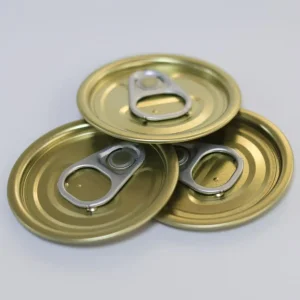
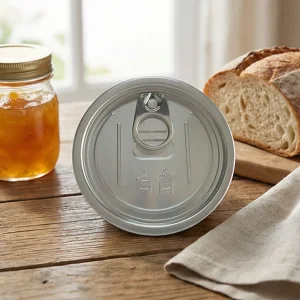
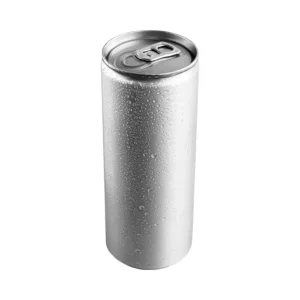
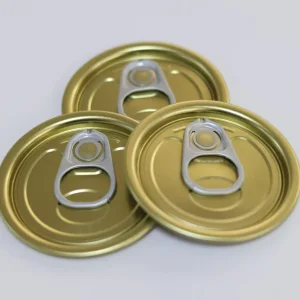
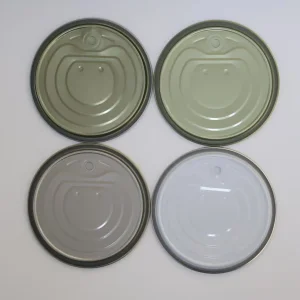
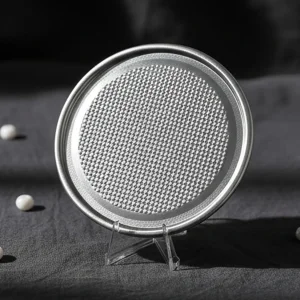
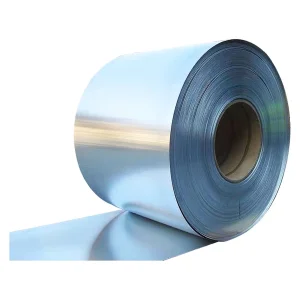
Explore our full line of factory-direct metal packaging components, hermetic seal lids, and specialized aluminum coils.

Expert responses addressing intent-specific questions regarding metal container manufacturing, material selection, and global shipping logistics.
