Precision-engineered easy-open ends, anti-static powder lids, and food-grade tinplate components certified for automated high-speed filling lines.
Navigating regulatory compliance, circular economy mandates, and advanced metallurgy in high-speed industrial packaging.
The global metal packaging market is undergoing a seismic shift driven by strict decarbonization goals, strict plastic-substitution directives, and rigorous food safety mandates. Industrial procurement teams are no longer evaluating suppliers based solely on piece-unit cost. Instead, purchasing criteria have evolved to prioritize total cost of ownership (TCO), alloy purity, coating integrity, and supply chain resilience.
As global brands transition from multi-layer flexible plastics to infinitely recyclable substrates, Chinese manufacturers specializing in stainless steel componentry, electrolytic tinplate (ETP), tin-free steel (TFS), and specialized aluminum alloys (3104-H19, 5182-H48) have emerged as essential engineering partners. The strategic alignment of high-speed stamping technologies with stringent international standards (FDA 21 CFR 175.300, EU Regulation 1935/2004) positions modern Chinese OEM/ODM hubs at the epicenter of sustainable industrial packaging.
Regulatory pressures such as Europe's Packaging and Packaging Waste Regulation (PPWR) and Carbon Border Adjustment Mechanism (CBAM) are redefining technical packaging requirements. Global buyers require full traceability of raw materials—from primary smelting down to coil slitting and end-curl compounding.
Stainless steel and tinplate packaging stand out due to their exceptional barrier properties against light, oxygen, moisture, and micro-contaminants. By integrating BPA-Non-Intent (BPA-NI) internal organosol and acrylic spray systems, leading Chinese facilities guarantee non-reactive contact surfaces suitable for aggressive beverage acidities, high-fat infant formulas, and volatile chemical reagents.
Analysis of search patterns, technical procurement intent, and critical operational KPIs demanded by enterprise buyers across North America, Europe, LATAM, and APAC.
Automated high-speed canning lines operating at up to 2,000 cans per minute require extreme dimensional precision. High-volume procurement directors demand thickness tolerances within ±0.002mm across aluminum coils and tinplate sheets to prevent machine jams, split flanges, and premature die wear.
Carbonated soft drinks, energy beverages, and retorting applications generate significant internal pressure. Technical specifications mandate buckle resistance exceeding 6.2 bar (90 PSI) for 202# SOT/RPT ends and retorting integrity up to 121°C thermal cycles without seam deformation.
For coastal distribution and long-haul maritime shipping, exposure to high humidity and salt spray leads to external oxidation. Buyers seek specialized passivated tinplate coatings and anti-rust lacquers that withstand over 96 hours of neutral salt spray testing (ASTM B117).
How automated smart factories, integrated metal supply chains, and advanced quality assurance yield unrivaled efficiency and reliability.
Modern Chinese metal packaging facilities feature integrated Draw-Redraw (DRD) and Drawn and Ironed (DWI) manufacturing equipment sourced from global leaders like Minster, Stolle, and Belvac. Operating at extreme precision, these lines execute multi-stage cupping, body ironing, necking, and end profiling with minimal material waste.
China's unmatched industrial clustering enables raw coil supply, coating synthesis, tooling production, and container shipping within ultra-tight geographical radiuses. Situated adjacent to deep-water maritime hubs such as Shanghai and Ningbo-Zhoushan, facilities drastically compress lead times from raw coil slitting to ocean port arrival.
Comparative engineering parameters for premium stainless steel, tinplate, and aluminum alloys utilized across industrial packaging solutions.
| Material Category | Alloy Grade / Specification | Yield Strength (MPa) | Coating / Finish Options | Primary Industrial Application |
|---|---|---|---|---|
| Aluminium Body Stock | 3104-H19 | 270 - 310 | Basecoat Varnish / Internal BPA-NI Lacquer | 200ml - 500ml Beverage Cans (Standard, Sleek, Slim) |
| Aluminium Shell Stock | 5182-H48 | 310 - 360 | Epoxy Ester / Vinyl / Acrylic Lacquer | Easy-Open Lids (SOT / RPT Ends: 200#, 202#, 206#) |
| Aluminium Tab Stock | 5052-H19 | 210 - 260 | Clear Varnish / Anodized Color Coatings | Pull Tabs & High-Tension Opening Mechanisms |
| Electrolytic Tinplate (ETP) | MR Temper T3 - T5 / DR8 | 340 - 550 | Tin Coating 1.1/1.1 to 5.6/5.6 g/m² + Gold Lacquer | Airtight Food Cans, Powder Lids (300#, 401#, 502#) |
| Tin-Free Steel (TFS) | ECCS (Chromium Coated) | 350 - 520 | Double-Sided Organosol / Polyester Film | Retort Lids, General Line Industrial Tins, DRD Cans |
| Stainless Steel Packaging | AISI 304 / 316 / 430 | 205 - 310 | 2B Finish / Electropolished / Brushed SS | Refillable Kegs, Hazardous Chemical Tins, High-End Cosmetics |
How customized metal packaging solutions resolve critical storage, barrier, and shelf-life challenges across global commercial sectors.
Craft breweries, energy drink co-packers, and soft drink bottlers demand ends capable of maintaining dynamic carbonation pressure up to 4.2 volumes of CO₂ under variable temperature conditions during ocean transit.
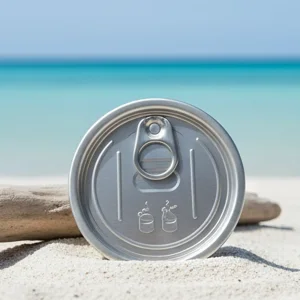
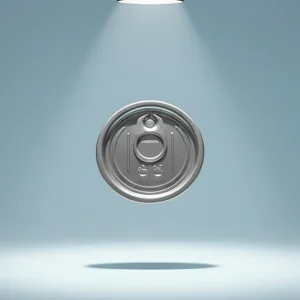
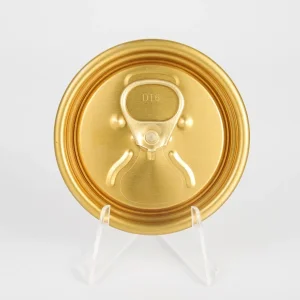
Solution: 202# SOT (Stay-On Tab) and RPT (Ring Pull Type) lids produced from 5182-H48 alloy featuring engineered countersink depths and specialized compound seals. Designed to withstand rapid temperature swings without buckle failure.
Nutraceutical, infant nutrition, and electronic chemical powders require zero moisture ingress, zero particle attraction via static electricity, and total preservation of volatile aroma compounds.
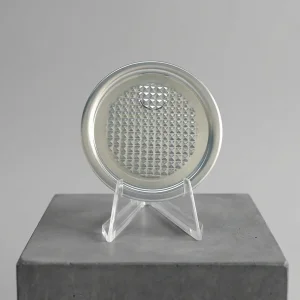
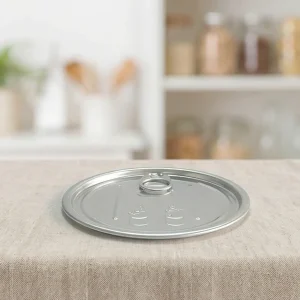
Solution: Anti-Static 300#, 401#, and 502# Easy-Open Aluminum/Tinplate Powder Lids integrated with nitrogen-flush capability and oxygen scavengers, achieving residual oxygen levels under 0.5% after seam closure.
Food processing facilities packing vegetables, soups, seafood, and pet food require packaging that survives high-pressure thermal sterilization cycles without corrosion or seal rupture.
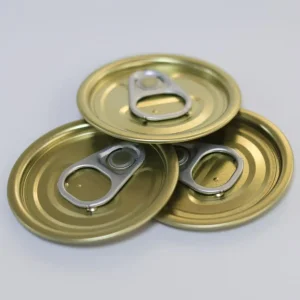
Solution: Retort-grade 307# and 401# ETP/TFS tinplate lids coated with heavy-duty organosol lacquers, certified to withstand 121°C autoclave cycles for 60 minutes while preserving organoleptic qualities.
Distributors shipping goods through tropical ports or storing inventory in non-climate-controlled coastal warehouses face severe surface rust risks on tinplate seams and edges.
Solution: Rust-Proof 401# passivated aluminum ends with anti-corrosion edge varnishes that pass rigorous 96-hour neutral salt-spray chamber trials without pitting oxidation.
Direct engineering answers to common procurement questions regarding minimum order quantities, lacquer compliance, seamer matching, and freight protection.
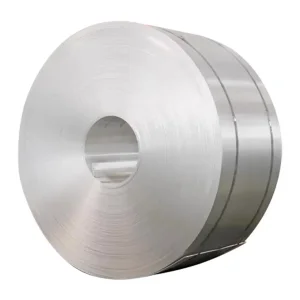
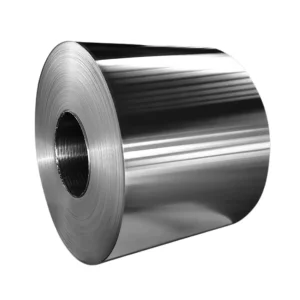
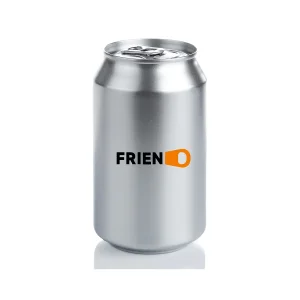
Can bodies are drawn from 3104-H19 aluminum coil engineered specifically for Deep Drawing and Ironing (DWI). Easy-open ends are stamped from 5182-H48 shell stock paired with 5052-H19 tab stock. Lacquered metal coils for powder and tinplate lids utilize Electrolytic Tinplate (ETP) in tempers T3 to DR8, or 8011/3104 aluminum alloys. Every shipment includes full Mill Test Certificates (MTC) detailing chemical composition, yield strength, tensile strength, and exact thickness tolerances.
Standard bright (unprinted) aluminum cans and stocked easy-open ends (200#, 202#, 206#, 300#, 307#, 401#, 502#) carry a low MOQ starting at one 20ft container or trial lots of 200,000 units. For fully customized 6-to-8 color dry offset printed cans or brand-embossed ends, MOQs typically start at 100,000 to 300,000 pieces per artwork design to optimize high-speed printing plate setup and lacquer line calibration.
Yes. All internal coatings are 100% BPA-Non-Intent (BPA-NI), epoxy-phenolic, or acrylic-organosol systems rigorously tested against FDA 21 CFR 175.300, EU Regulation 1935/2004, and China's GB 4806.10 standards. We provide batch-specific overall migration and specific migration limit (SML) test reports issued by independent laboratories (SGS, Intertek) alongside every production batch.
Cans are bundled on export-grade wooden or plastic pallets utilizing top frames, heavy-duty kraft slip sheets, and wrapped with automated stretch-hood film. Lids and easy-open ends are packed into moisture-impermeable polyethylene sleeves inside lined corrugated master cartons or fiber drums, accompanied by active desiccant packs. Prior to container sealing, high-resolution loading photographs and container seal verifications are issued directly to the buyer.
Absolutely. By providing your seamer brand (e.g., Ferrum, Angelus, Continental, CFT), line operating speed, and current tooling profile, our packaging engineers will confirm matching end curl radius, countersink depth, flange width, and compound weight. Sample lots are provided for pre-production double-seam teardown and seam projection analysis on your line prior to mass volume production.
Precision-engineered beverage cans, airtight tinplate covers, and high-performance metal packaging components.
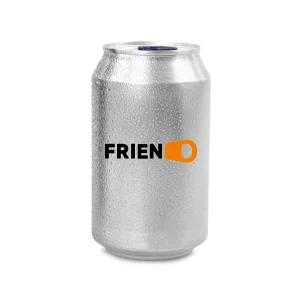
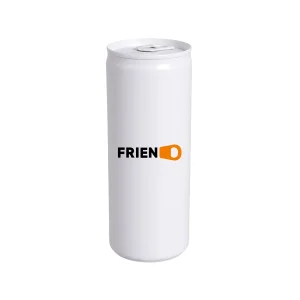
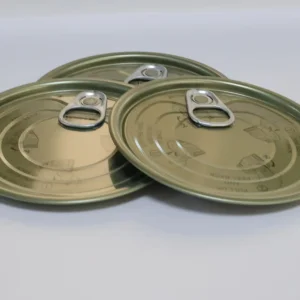
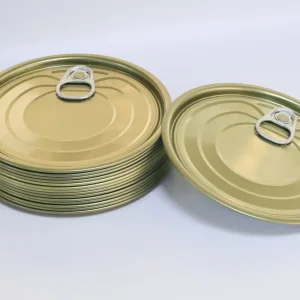
Securing a resilient, high-volume metal packaging supply chain requires partnering with an OEM/ODM manufacturer capable of delivering rigorous dimensional accuracy, superior coating safety, and predictable international delivery schedules. Our Shanghai-based engineering hubs combine 15+ years of metallurgical expertise with Industry 4.0 automated stamping precision.
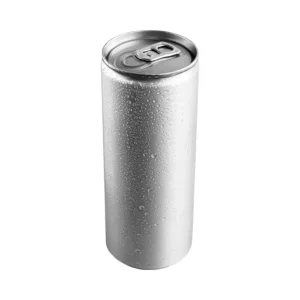
Whether your operations require specialized anti-static lids for electronic powders, retort-ready tinplate covers for food processing, or high-speed 330ml/355ml aluminum beverage cans, our engineering team provides end-to-end support—from initial CAD drawing approval and seam teardown validation to final ocean container dispatch.
