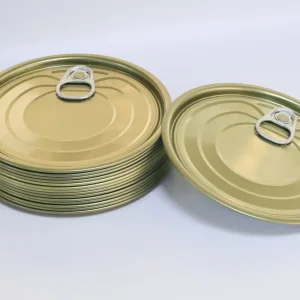
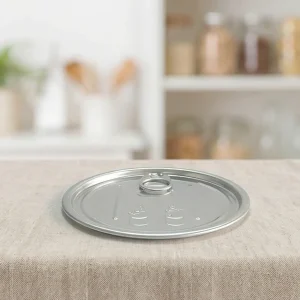
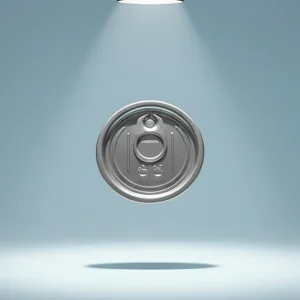
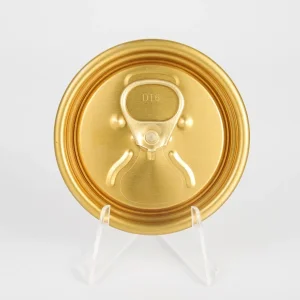
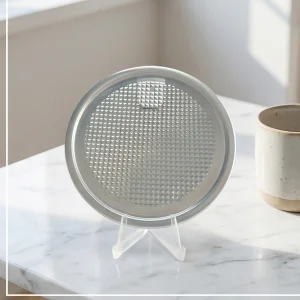
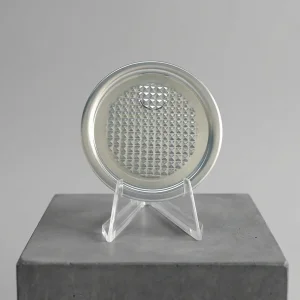
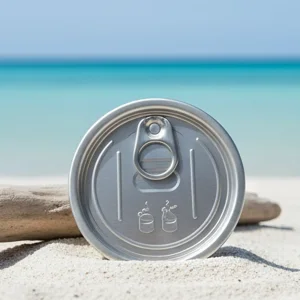
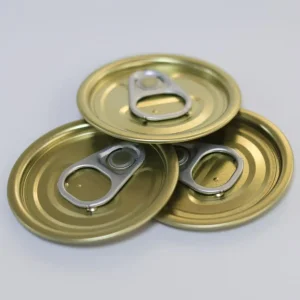
The global metal packaging and commercial food service ecosystem is undergoing a seismic shift driven by continuous material reduction (lightweighting), strict decarbonization mandates, and the rising demand for high-barrier, long-shelf-life packaging media. Within this macro matrix, China's global leading large foil containers and rigid metal closure suppliers occupy a central position in the global supply chain, serving food manufacturers, quick-service restaurant (QSR) networks, commercial bakeries, and pharmaceutical processors across more than 40 countries.
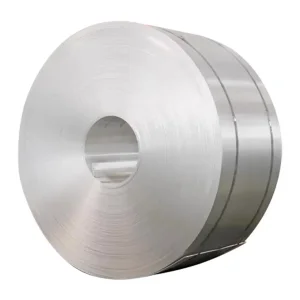
As enterprise procurement shifts from transactional unit-cost sourcing toward Total Cost of Ownership (TCO) optimization, technical evaluations must prioritize metallurgical purity, surface lacquering integrity, seam tear-down resistance, and micro-defect tolerances. Shanghai Friend Metals Technology Co., Ltd. operates at the intersection of advanced aluminum coil cold-rolling technology and high-speed stamping innovation, manufacturing everything from drawn-redraw (DRD) can components to ultra-thin aluminum foil substrates and food-grade easy-open ends (EOEs).
B2B procurement teams sourcing large foil containers, aluminum coils, and tinplate lids from Chinese manufacturing hubs are navigating complex operational trade-offs. Intent mining across international procurement searches reveals that buyer queries are concentrated around three primary performance pillars: process adaptability, barrier longevity, and supply chain continuity.
Commercial caterers and industrial food packers require large foil containers and lids capable of enduring extreme thermal cycles—from blast freezing at -40°C to high-temperature steam sterilization (retort processing) at 121°C–131°C without structural buckling, rim distortion, or lacquer delamination.
For sensitive dairy powders, infant formula, and dehydrated foods packaged under modified atmosphere packaging (MAP) or nitrogen flushing, oxygen transmission rates (OTR) and water vapor transmission rates (WVTR) must approach zero to prevent lipid oxidation and loss of bio-active potency.
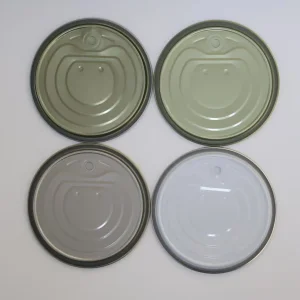
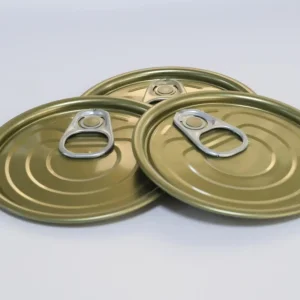
Large containers and lid ends (such as 300#, 307#, 401#, and 502#) must feature strict dimensional tolerance controls (curl thickness, countersink depth, and radius uniformity) to prevent jam-ups on high-speed automatic double-seaming machinery running at up to 1,200 cans per minute.
Achieving superior structural strength while reducing material thickness requires rigorous alloy engineering. Large foil containers and lid components rely on customized aluminum alloys and tinplate tempers, each tailored to specific mechanical loads and corrosive environments.
| Alloy / Temper | Primary Component | Tensile Strength (MPa) | Elongation (%) | Key Metallurgical Characteristics |
|---|---|---|---|---|
| 3104-H19 | Can Bodies & Large Foil Shells | 270 – 310 | ≥ 3.0 | Manganese-alloyed structure delivering ultra-high drawability, minimal earing, and excellent wall-ironing stability. |
| 5182-H48 | Easy-Open Shell Ends (SOT/RPT) | 360 – 410 | ≥ 5.0 | Magnesium-rich composition providing exceptional buckle pressure resistance under internal carbonation or thermal shock. |
| 8011-O / H14 | Lid Stock & Foil Containers | 140 – 190 | ≥ 15.0 | High ductile purity alloy optimized for deep-drawing, wrinkle-free rim folding, and thermal sealing flexibility. |
| 5052-H32 | Pull Tabs & Structural Handles | 210 – 260 | ≥ 7.0 | Superior stress-corrosion resistance ensuring robust tab rivet formation without micro-fracturing. |
| T2.5 - T4 Tinplate | Sanitary Steel Can Lids | 330 – 450 | ≥ 20.0 | Electroplated tin coating (2.8/2.8 g/m²) combined with passivated surface layers for acid-resistant wet food storage. |
Material selection is only half the engineering equation; surface chemistry determines chemical resistance and food safety compliance. Shanghai Friend Metals utilizes non-intent Bisphenol A (BPA-NI) organosol, modified polyester, and epoxy-phenolic coating systems applied via high-precision coil coating lines.
Designed for acidic products (pH < 4.5) such as tomato pastes, citrus beverages, and fermented items. Prevents metal ion migration and eliminates flavor alteration across a 36-month shelf life.
Formulated to withstand 121°C sterilization for 60 minutes. Features high cross-linking density that prevents blushing, feathering, or corrosion spot formation during pressure cooling.
Large aluminum foil containers, rigid metal cans, and specialty lids serve diverse operational mandates across global commercial sectors. Below is an overview of tailored solutions implemented for international buyers.
Challenge: Heavy-duty thermal loading, rapid convection heating, and multi-tier stacking stability without collapse.
Solution: Deep-drawn 8011 heavy-gauge aluminum foil containers featuring full-curl edges and custom vertical wall embossing for increased flexural rigidity.
Challenge: Maintaining strict oxygen barrier standards (<0.5% residual O₂) and preventing static powder accumulation on rim seals.
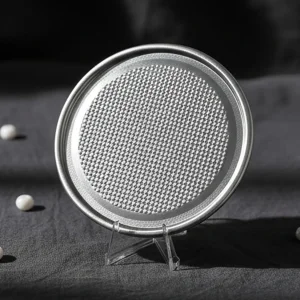
Solution: Precision 401# and 502# peelable foil ends paired with anti-static coated aluminum lids, engineered for clean tearing without metallic residue.
Challenge: Atmospheric salt-spray corrosion causing external rim rust during extended sea freight and tropical storage.
Solution: Specialized 401# rust-proof aluminum lids featuring electrochemically passivated outer rims and double-pass clear protective enamels.
Demonstrating high Experience, Expertise, Authoritativeness, and Trustworthiness (E-E-A-T) requires transparent testing protocols and verifiable international compliance documentation. Every production batch undergoes comprehensive laboratory verification prior to vessel dispatch.
Every shipment is accompanied by a complete compliance dossier designed for frictionless customs clearance and regional health authority validation:
Written by packaging engineers to clarify common procurement, mechanical compatibility, and logistical queries.
Answer: 3104 alloy contains higher manganese and magnesium additions, yielding tensile strengths up to 310 MPa compared to ~180 MPa for 8011. This structural advantage allows engineers to reduce container wall thickness by 10% to 15% while maintaining equivalent side-wall crush resistance, delivering material cost savings without compromising container stacking performance.
Answer: Leakage prevention relies on tight curl uniformity (±0.05mm tolerance) and high-consistency lining compound application. We utilize water-based synth-rubber sealing compounds placed inside the end curl via precision nozzle injection, creating a continuous elastic gasket that fills micro-imperfections in the double seam during seaming operations.
Answer: Yes. For retort applications, we apply specialized epoxy-phenolic or modified organosol internal lacquers cured at 200°C+. These coatings resist thermal degradation up to 131°C for 60 minutes. Additionally, the alloy temper is selected to prevent thermal softening under pressure.
Answer: Metal packaging components are vulnerable to condensation (white rust) caused by temperature swings during transit. We wrap all product lots in poly-laminated moisture-proof film, insert high-capacity silica gel desiccants, enclose packs in corrugated outer sleeves, and seal them on solid wood or plastic heat-treated pallets certified under ISPM-15 standards.
Answer: Plain, unprinted stock components (e.g., standard 202#, 307#, 401# ends) feature trial MOQs starting at 100,000 to 200,000 units. Custom lithographic printed components or non-standard foil container dimensions require dedicated setup runs, typically starting at 300,000 units depending on size and decoration specifications.