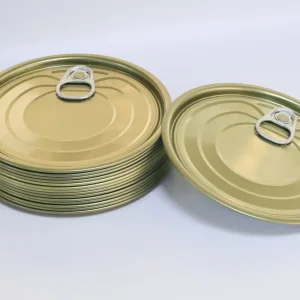
Engineered to exceed FDA, EU 1935/2004, and international food-contact performance standards.
Transforming the Global Packaging Paradigm through Metallurgical Precision and Sustainable Metal Can Engineering.
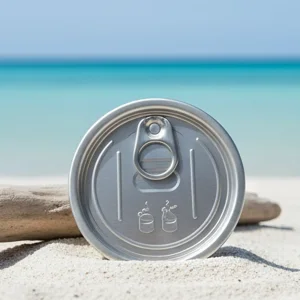
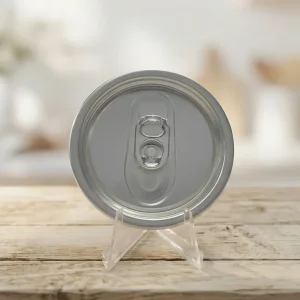
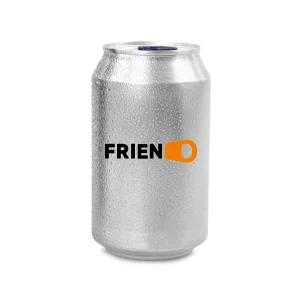
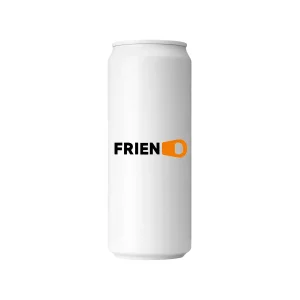
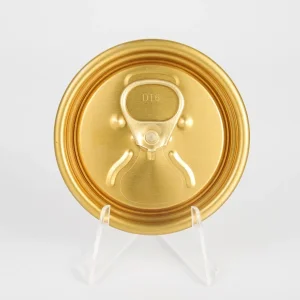
In the modern industrial ecosystem, rigid packaging represents far more than a simple containment vessel. It stands as the critical barrier protecting brand integrity, consumer health, product freshness, and supply chain viability. As a recognized global leader in full open easy open end (EOE) manufacturing and metal container customization, our advanced facility in China delivers an integrated suite of high-performance metal ends, aluminum beverage cans, and specialty tinplate closures engineered for ultra-demanding global operations.
The global shift away from single-use plastics toward infinitely recyclable aluminum and tinplate solutions is accelerating under strict legislative imperatives, such as the European Union’s Packaging and Packaging Waste Regulation (PPWR) and global ESG mandate frameworks. Metal packaging delivers unmatched oxygen barrier protection, total light occlusion, superior burst resistance, and structural stability across complex logistics networks. By integrating advanced alloys—specifically 5182-H48 shell stock, 5052-H19 tab stock, and 3104-H19 body stock—our factory sets the global standard for mechanical durability and featherlight material optimization.
Our aluminum easy-open ends and body cans are fully aligned with closed-loop recycling loops. Metal retains 100% of its physical properties regardless of how many times it is melted, re-rolled, and stamped, reducing carbon emissions by up to 95% compared to virgin metal extraction.
Full open ends and precise seaming geometry guarantee absolute protection against volatile organic compounds (VOCs), UV degradation, ambient moisture, and microbiological intrusion—extending shelf-life up to 36 months for sensitive food and chemical powders.
Engineered to operate seamlessly across high-speed automatic filling lines including Angelus, Ferrum, FMC, and Somme seamers. Precise end curl tolerances eliminate jamming, downtime, and double-seam defects at speeds exceeding 1,800 ends per minute.
Navigating Macroeconomic Shift, Regional Compliance Imperatives, and Packaging Supply Chain Resilience.
The global market for easy-open ends and aluminum containers is experiencing a structural revolution. Growth is driven by expanding urban populations, heightened consumer demand for ready-to-drink (RTD) premium beverages, functional nutraceutical powders, and strict food safety protocols governing processed foods. Understanding regional market dynamics enables us to supply tailored solutions across distinct industrial hubs:
| Global Region | Primary Market Drivers | Dominant Specifications | Compliance & Coating Requirements |
|---|---|---|---|
| North America (US & Canada) | Craft beer boom, RTD cocktails, premium sparkling waters, and strict BPA-free mandates. | 202 SOT / RPT Ends, 12oz (355ml) & 16oz (473ml) Standard Cans. | FDA 21 CFR 175.300 compliant, BPA-NI (Non-Intent) organosol interior coatings. |
| European Union (EU) | Strict PPWR recycling mandates, lightweighting pressure, and organic infant nutrition standards. | 200 SOT Sleek Ends, 300# & 401# Full Open Easy Open Ends for Powders. | EU Regulation 1935/2004, EU 10/2011, REACH certification, zero heavy metal migration. |
| Asia-Pacific & MEA | Rapid expansion of infant formula, dairy powders, canned seafood, and electronic chemical manufacturing. | 300# Anti-Static Aluminum Ends, 211#/307#/401# Tinplate EOE, 502# Membrane Ends. | Halal certification, GB 4806 food grade compliance, tropical climate anti-rust passivations. |
| Latin America | Carbonated beverage growth, regional canning facilities modernization, and price-competitive bulk supply. | 202 SOT Ends, 330ml Standard & Sleek Aluminum Beverage Cans. | High buckle pressure resistance for non-refrigerated long-distance freight networks. |
Supply chain reliability has emerged as a top risk factor for global fillers and canneries. Geopolitical volatility, ocean shipping bottlenecks, and raw material cost fluctuations require a supply partner with robust vertical integration. Operating from our state-of-the-art facility in China, we manage every phase of manufacturing—from raw aluminum coil lacquering and slitting to precision stamping, repair coat application, and automated camera inspection. This guarantees uninterrupted supply schedules and consistent physical parameters for high-volume overseas buyers.
Deciphering the Advanced Science of Score Depth Residuals, Buckle Pressures, and Electrostatic ESD Coatings.
The manufacturing of a full open easy open end is a masterclass in high-speed mechanical engineering. Operating at tolerances measured in single-digit micrometers, our stamping presses shape high-tensile aluminum and tinplate sheets into flawless closures capable of withstanding intense internal pressures during retort processing or gas-charged carbonation, while remaining remarkably effortless for end-users to open.
The defining technical parameter of an easy-open lid is the score line residual thickness. If the score line is stamped too deep, the lid risks micro-fractures, pressure venting, or structural failure during transport. If stamped too shallow, the opening force becomes excessive, causing consumer dissatisfaction or tab detachment. Our high-speed stamping presses utilize real-time laser micrometer feedback to maintain score line residuals within ±2.0 microns. This yields consistent Pop Force (< 30 N) and Pull Force (< 50 N) metrics across millions of manufactured units.
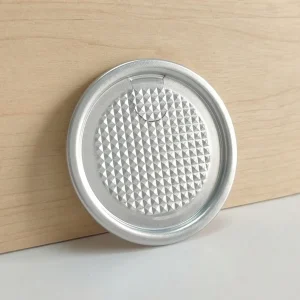
For specialized industrial applications, such as electronic-grade chemical powders, high-purity pharmaceutical ingredients, or sensitive toner compounds, standard packaging lids present a severe electrostatic risk. Friction during ocean transport can generate static charges on plastic or conventional lacquered aluminum surfaces, causing fine powder particles to cling to the inner rim or burst outward upon opening. Our proprietary China Anti-Static 300# Aluminum Easy-Open Lids incorporate conductive nano-additive organosol coatings that dissipate static charges safely (< 109 ohms/sq surface resistivity), ensuring zero particle adhesion and smooth product dispensing in automated laboratory and cleanroom environments.
To prevent chemical interaction between aggressive food acids, salty brine, or alcohol and the metallic substrate, interior surface passivation is mandatory. We employ state-of-the-art electro-static liquid spray and coil coating technology to apply BPA-Non-Intent (BPA-NI) epoxy-acrylic or polyester coatings. Every production lot undergoes an Enamel Rater test using a 1% NaCl electrical current solution. Current conduction must read strictly below 0.5 mA (and under 0.1 mA for critical beverage lines), guaranteeing complete, non-porous barrier coverage across the countersink, chuck wall, and stamped score line repair coats.
Full Technical Documentation, On-Site Seamer Integration, and Rigorous Regulatory Auditing.
Exporting industrial packaging components globally demands complete transparent alignment with international regulatory, environmental, and mechanical standards. A minor mismatch in end curl height or compound lining weight can trigger costly seam defects like false seams, cutovers, or side-seam droops on customer filling lines. Our factory mitigates client risk through a complete localization support model:
Every shipment is accompanied by Mill Test Certificates (MTC), Overall Migration Test Reports, Heavy Metal Analysis (RoHS/REACH), and Food Grade Declarations compliant with FDA 21 CFR 175.300, EU 1935/2004, and GB 4806.10. Facilities operate under strict ISO 9001 and FSSC 22000 food safety management protocols.
Our technical field engineers provide double-seam dimensional setup guides (including cover hook, body hook, overlap, seam thickness, and countersink depth recommendations). We supply test sample lots for seamer teardown analysis prior to full commercial container delivery.
To eliminate shipping damage, ocean humidity corrosion, and pallet shifting, ends are packed in heavy-duty paper sleeves or corrugated tubes inside moisture-barrier plastic bags, stacked on heat-treated ISPM-15 fumigated wooden or plastic pallets with protective top frames and shrink-hood wrap.
Engineered End-Use Formats Tailored to Distinct Industrial Requirements.
High-precision chemical compounds, conductive powders, toner resins, and laboratory reagents require non-reactive packaging. Utilizing anti-static 300# aluminum ends prevents particulate contamination, static attraction, and atmospheric moisture ingress during extended transit.
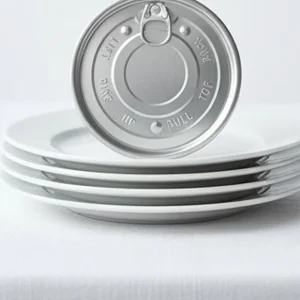
High-speed filling lines running beer, hard seltzers, soft drinks, and cold-brew coffee utilize 200# and 202# Stay-On-Tab (SOT) and Ring-Pull-Tab (RPT) ends. Superior buckle resistance handles up to 6.2 bar internal CO₂ pressure and pasteurization thermal cycles.
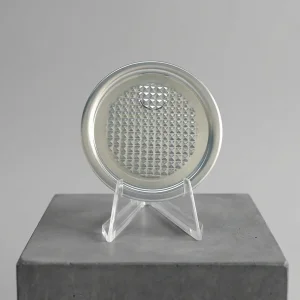
Infant milk powders, protein powders, and clinical nutritional supplements demand total hermetic seal integrity. Utilizing 300#, 401#, and 502# full open lids or transparent-top peelable membrane ends enables consumers to inspect product purity while retaining scoop shelf convenience.
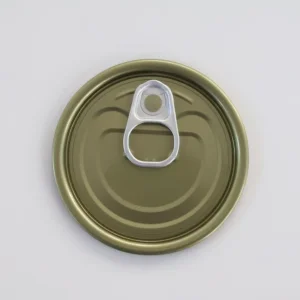
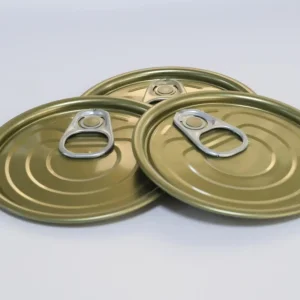
Vegetables, fruits, ready meals, and premium pet foods undergo severe thermal sterilization (up to 121°C/250°F retort conditions). Superior food-grade 211# and 300# tinplate lids feature high-grade PVC-free plastisol sealant compounds to guarantee zero seal loss during vacuum pressure shifts.
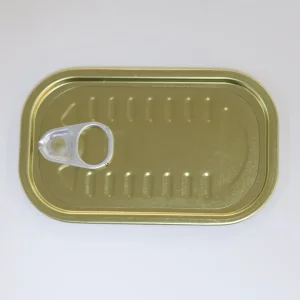
Square and rectangular tinplate lids provide distinctive visual shelf appeal for premium teas, edible oils, biscuits, and confectionery goods. Custom embossed logos, metallic lacquers, and airtight friction fits deliver an elevated consumer unboxing experience.
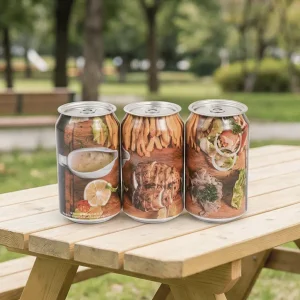
Single-serve sleek and slim 200ml–330ml aluminum cans with matching lightweight ends provide optimum portability, rapid chilling performance, and modern branding real estate for wellness shot formulations and natural energy beverages.
Pioneering the Next Horizon of Smart Packaging, Material Down-Gauging, and Digital Inspection.
As a leading Chinese enterprise serving global markets, our R&D engineering center continues to push the physical boundaries of metal packaging technology. Key strategic development vectors over the next decade include:
Through advanced finite element analysis (FEA) and work-hardening alloy development, our metallurgical engineers are down-gauging end shell thicknesses from standard 0.22mm down to 0.18mm while increasing dome buckle strength resistance. This achieves a 15% reduction in raw metal consumption per million ends manufactured, significantly trimming freight costs and carbon footprints for global buyers.
Our production lines are equipped with 100% inline AI-powered optical vision systems operating at 2,000 frames per second. Computer vision algorithms inspect every individual end for microscopic pinholes, score-line anomalies, curl deformation, and compound bead voids—automatically ejecting non-conforming units prior to automated packaging.
Anticipating future environmental regulations, we are actively testing plant-derived, 100% PVC-free and microplastic-free sealing compounds that maintain flexible hermetic compression across a temperature range of -40°C to +130°C, establishing new benchmarks for sustainable food-contact safety.
In-Depth Technical Answers for Procurement Managers, Packaging Engineers, and Quality Assurance Specialists.
We utilize high-purity, fully certified primary aluminum alloys tailored to specific mechanical duties. Can bodies are drawn from 3104-H19 aluminum for superior work-hardening during deep drawing and wall ironing (DWI). Easy-open end shell stock uses 5182-H48 or 5182-H19 for optimum tensile strength and buckle resistance, while opening tabs are stamped from 5052-H19 aluminum alloy to yield structural stiffness during pull-tab operation.
Our anti-static lids feature a specialized conductive organic surface treatment applied during coil coating. This coating reduces surface resistivity to under 109 ohms/sq, allowing static electricity generated during high-speed pneumatic filling or shipping friction to dissipate naturally. As a result, fine electronic-grade powders, milk powders, or toner chemicals do not cling to the inner rim or score line, ensuring clean opening and precise dosing.
Yes. All our food and beverage ends can be supplied with advanced BPA-NI (Bisphenol A Non-Intent) organosol, polyester, or modified acrylic coating systems. These interior passivations meet or exceed FDA 21 CFR 175.300, EU Regulation 1935/2004, and GB 4806.10 requirements. Comprehensive chemical migration test reports from accredited third-party laboratories (such as SGS or Intertek) are provided with every shipment.
Our easy-open ends are designed to international industry standard specifications (including 200, 202, 211, 300, 307, 401, and 502 diameter codes). Before mass production, our engineering team reviews your seamer model (e.g., Angelus, Ferrum, FMC) and delivers detailed double-seam setup parameters including target countersink depth, seam length, thickness, and cover hook dimensions. Sample lots are routinely provided for line trial teardown verification.
For standard stock lid sizes (such as 200# SOT, 202# RPT, 300# FOE, and 401# Tinplate ends) with plain or clear internal lacquer, MOQ starts from 200,000 pieces or one 20ft container equivalent. Customized printed cans or specialized custom end sizes typically require an MOQ of 500,000 pieces per design. Standard manufacturing lead time is 15 to 25 calendar days from artwork/technical drawing sign-off.
Every production batch undergoes mandatory Quality Control testing: 1) Air Leak Pressure Testing at 2.5 bar to detect micro-porosity; 2) Buckle Pressure Testing to establish maximum internal pressure failure thresholds (exceeding 6.2 bar for beverage ends); 3) Enamel Rater Testing (< 0.5 mA current) to verify interior lacquer continuity; and 4) Pop & Pull Force Gauge Testing to verify smooth consumer opening performance.
High-Performance Metal Packaging Components Available for Worldwide Direct Factory Delivery.