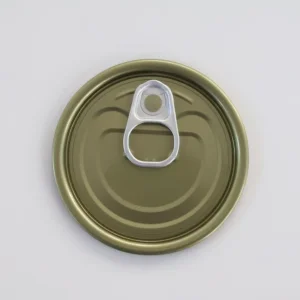
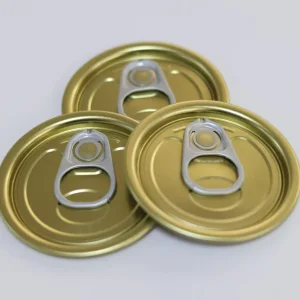
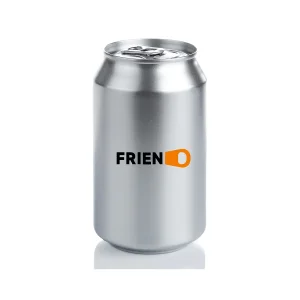
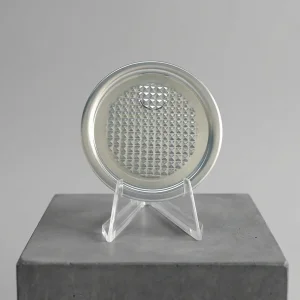
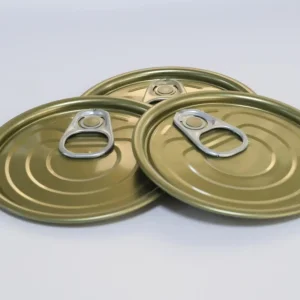
Direct factory supply of certified food-grade metal packaging components engineered for ultra-high-speed automated filling lines.
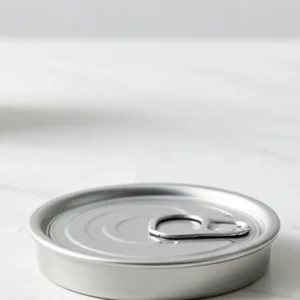
Analyzing the strategic shift toward high-performance colored aluminum foil, pre-coated coil, and zero-defect easy-open ends in the global supply chain.
The global metal packaging and aluminum substrate ecosystem is undergoing a paradigm shift driven by stringent carbon neutrality mandates, regulatory crackdowns on single-use polymers, and heightened demands for shelf-life preservation. As premier manufacturers operating from Shanghai—the logistics hub of Asian metalworking excellence—leading Chinese factories have evolved beyond basic metal conversion. Today, China’s industrial footprint in colored aluminum foil manufacturing and pre-coated aluminum coil processing represents the vanguard of sustainable, barrier-critical packaging solutions.
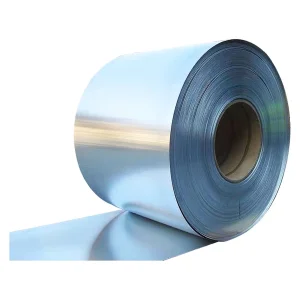
Colored aluminum foil and lacquered metal stock are far more than aesthetic enhancements. In modern industrial applications—ranging from pharmaceutical blister sealing, aseptic dairy lids, and flexible retorted pouches to high-speed drawn and wall-ironed (DWI) beverage can bodies—the color-coated surface acts as a functional barrier. Advanced continuous coil coating lines deposit micro-thin layers of polyglycol, epoxy-phenolic, vinyl, or polyester resins intermixed with inorganic pigments. This intricate multi-layer architecture delivers unmatched corrosion resistance, barrier defense against oxygen ingress, photo-degradation protection, and optimal coefficient of friction (COF) for high-speed automated denesting and double-seaming machinery.
Strategic Value Insight: High-speed canning lines operating at velocities exceeding 1,200 ends per minute require absolute physical consistency. Variations in coil temper, coating weight, or surface tension lead to line jams, coating fracturing, or micro-leakage. Integrated Chinese manufacturing clusters combine raw alloy smelting, continuous casting, precision cold rolling, chemical pre-treatment, and high-velocity thermoset lacquering under unified ISO-certified quality regimes.
Demands for colored aluminum coil and converted easy-open ends (EODs) vary significantly across international commercial jurisdictions:
In-depth physical, chemical, and mechanical parameters of aluminum alloys and lacquering methodologies optimized for structural integrity.
Selecting the precise aluminum alloy, temper state, and coating formulation is the foundational prerequisite for manufacturing high-integrity colored foil and packaging components. China's top-tier manufacturing suppliers leverage specialized mill metallurgy tailored to specific industrial strain profiles:
| Alloy Grade | Standard Temper | Tensile Strength (MPa) | Yield Strength (MPa) | Elongation (%) | Primary Packaging & Industrial Application |
|---|---|---|---|---|---|
| 3104 | H19 | 265 - 310 | 240 - 285 | 4 - 8 | DWI Beverage Can Bodies, Deep-Drawn Shells |
| 5182 | H48 / H19 | 360 - 410 | 310 - 360 | 6 - 10 | High-Pressure Easy-Open End Shells (202# SOT / RPT) |
| 5052 | H32 / H38 | 210 - 260 | 130 - 200 | 10 - 18 | Pull Tabs, Specialty Closures, Industrial Colored Foil |
| 8011 | H14 / O-Temper | 125 - 165 | 110 - 145 | 15 - 25 | Pharma Seals, Dairy Foil Lids, Powder Can Bottoms |
Achieving defect-free colored aluminum foil involves a multi-stage continuous coil coating process executing at precise line speeds:
Customizing metal specifications to overcome regional climate, transportation stress, and sector-specific filling constraints.
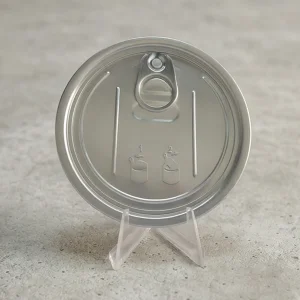
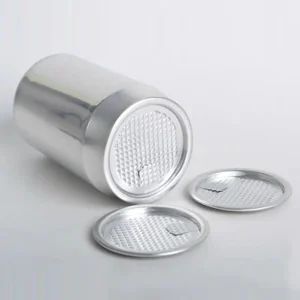
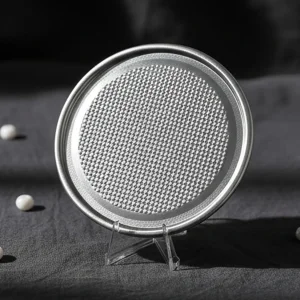
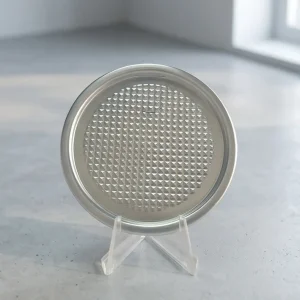
High-sensitivity powder formulations require absolute protection against moisture, oxygen ingress, and particulate contamination. Low-profile 502# and 401# easy-open aluminum ends are manufactured under Class 100,000 cleanroom environments, utilizing anti-static interior coatings that eliminate powder adhesion during automated high-nitrogen filling.
Processors operating in tropical regions face intense thermal and pressure stresses during autoclave sterilization. Specialized 307# and 211# aluminum/tinplate ends feature reinforced countersink depths and expandable expansion rings, surviving thermal retort cycles up to 121°C for 60 minutes without seam deformation or lacquer blistering.
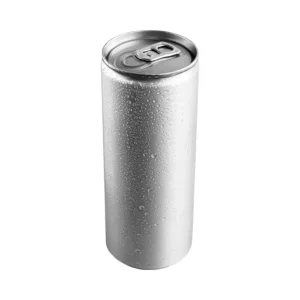
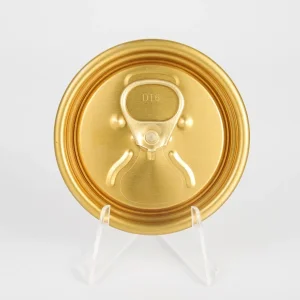
From highly carbonated soft drinks requiring internal pressure resistance exceeding 6.2 bar to craft beers needing oxygen scavenger liners, 202# Stay-On-Tab (SOT) and Resealable (RPT) ends engineered from 5182 aluminum ensure hermetic double-seam integrity across automated lines operating at 1,500+ cans/min.
Non-magnetic 209FA# easy-open lids and 8011 lacquered foil coils provide hermetic tamper-evident protection for pharmaceutical ingredients and medical powders. Coated surfaces withstand aggressive sterilization protocols while maintaining effortless peelability and zero metallic cross-contamination.
Full spectrum international certification, batch-level traceability, and engineering field support for rapid line onboarding.
Navigating cross-border customs clearance and food safety regulations requires flawless compliance documentation. Premier Chinese aluminum foil suppliers implement rigorous laboratory verification protocols for every batch shipped:
All interior lacquers are certified under US FDA 21 CFR 175.300, EU Framework Regulation (EC) No 1935/2004, and Chinese National Standard GB 4806.10. Complete overall migration limit (OML) and specific migration limit (SML) testing reports accompany every bill of lading.
Lacquered foil and coil stock are tested for zero coating micro-cracking using 0-T bend tests, solvent resistance (>100 MEK double rubs), cross-hatch adhesion (ISO 2409 Grade 0), and Enamel Rater readings below 0.5 mA under 6.2V electro-conductivity testing.
Engineering teams provide precise seaming parameter guidelines (first and second operation roll profiles, countersink depth target tolerances, hook length ratios) to ensure seamless integration with Ferrum, Angelus, or Pneumatic Scale seaming units.
Export Packaging Protocol: Aluminum coils are wrapped in anti-corrosion VCI (Vapor Corrosion Inhibitor) film, mounted on heavy-duty wooden skids with desiccants, and sealed within moisture-proof foil barrier bags. Easy-open ends are packed in hygienic polyethylene sleeves inside corrugated export drums, preventing transit indentation or salt-air oxidation during trans-oceanic transit.
Pioneering ultra-lightweight alloys, bio-based barrier polymers, and closed-loop circular manufacturing infrastructures.
As the metal packaging sector aligns with global decarbonization milestones, research and development across China's leading colored aluminum coil factories focus on three primary vectors:
By optimizing cold-rolling reductions and refining micro-alloying elements (such as fine-tuned manganese, magnesium, and iron ratios), engineers are reducing can body stock thickness from 0.260mm to 0.230mm while increasing buckle pressure resistance. Easy-open end shells are transitioning toward 0.208mm ultra-thin stock, drastically reducing material consumption per unit manufactured without compromising structural dome burst thresholds.
The transition away from legacy epoxy systems toward plant-derived bio-resins and 100% solid UV-curable coating technologies is accelerating. These eco-friendly coatings eliminate volatile organic compound (VOC) emissions during coil thermal stoving while offering enhanced resistance to organic acids, essential oils, and aggressive sulfur compounds found in food formulations.
Industrial 4.0 continuous coil monitoring systems integrate high-resolution optical cameras and laser thickness scanners along the production strip. Mill certificates, coating weight metrics, and mechanical stress data are digitized into unique QR code markers on each coil, granting global buyers instant end-to-end supply chain transparency.
Explore our complete production matrix encompassing high-grade aluminum cans, specialized powder lids, and pre-coated coil stock.
Expert insights addressing key metallurgical, regulatory, and logistics queries for international sourcing directors.
Leading Chinese manufacturing centers combine fully integrated supply chains—from bauxite processing and cold-rolling mills to continuous high-speed coil lacquering lines—under a unified geographical footprint. This proximity drastically reduces logistics lead times, offers superior economies of scale, and allows custom color-matching and coating formulations with minimum order quantities (MOQs) far more flexible than North American or European mills.
Coating performance is rigorously validated using standardized metallurgical methods: Cross-Hatch Tape Adhesion (ISO 2409 / ASTM D3359) ensures zero lacquer detachment after scoring; T-Bend Impact tests confirm coating flexibility without cracking down to 0-T radiuses; MEK (Methyl Ethyl Ketone) double-rubs verify solvent cross-linking; and continuous Salt Spray (ASTM B117) exposure up to 1,000 hours tests long-term tropicalized corrosion defense.
Yes. All interior barrier systems utilize certified BPA-NI (Bisphenol A Non-Intent) resin matrices such as modified polyesters, acrylics, or high-performance organosols. Shipments include comprehensive migration testing certificates compliant with US FDA 21 CFR 175.300, EU Regulation 1935/2004, and China's GB 4806.10 standards, confirming suitability for direct contact with fatty foods, acidic juices, and alcoholic beverages.
High-pressure beverage ends (such as 202# SOT or RPT) require 5182-H48 or H19 aluminum alloys due to their high magnesium content, delivering ultimate tensile strength capable of withstanding internal carbonation pressures above 6.2 bar. Conversely, non-pressure dry food lids (such as 502# or 401# powder ends) typically utilize 8011 or 5052 alloys, balancing structural rigidity with cost-effective metal yields.
Color fidelity is regulated using inline spectrophotometric measurement systems that measure ΔE (Delta E) values continuously across the moving aluminum strip. By maintaining ΔE variances under 0.8 relative to the master standard sample, we ensure imperceptible visual variation across separate production lots, preserving brand identity on retail shelves.
Finished coils and converted ends undergo multi-layer ocean packaging: coils are sealed with VCI anti-corrosion film, wrapped in heavy-gauge plastic sheeting, protected by plastic edge-protectors, and secured to hardwood skids. Shell ends are packed in cleanroom polyethylene sleeves, placed within moisture-sealed corrugated drums with silica gel packs, and stretch-wrapped on ISPM-15 heat-treated pallets for safe containerized ocean freight.