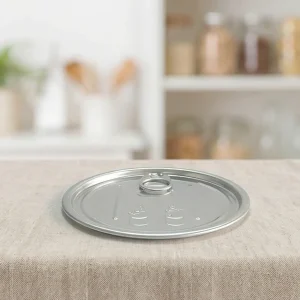
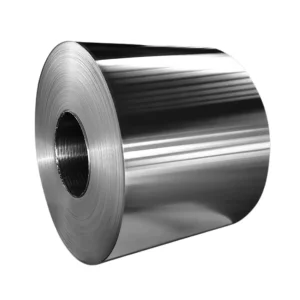
High-speed drawn & ironed (DWI) aluminum cans, 202/209/307/401/603 lids, and 5052 coil stock manufactured to rigorous international dimensional standards.
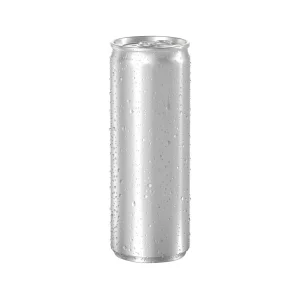
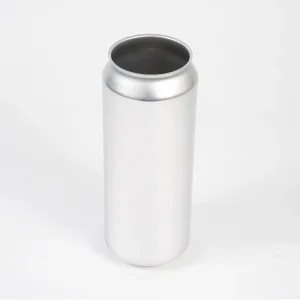
A comprehensive technical guide to two-piece Drawn and Ironed (DWI) aluminum can body profiles, necking ratios, and double-seam compatibility for modern high-speed rotary seamers.
In the high-speed commercial filling ecosystem, beverage container dimensional consistency directly governs line efficiency, seam tightness, and seam rejection rates. A deviation of mere micrometers in flange width or countersink depth can cause double-seam micro-leaks, pressure drop, or seamer jam at speeds exceeding 1,500 cans per minute (CPM). As a leading global beverage can factory in China, our production lines operate under strict SPC (Statistical Process Control) to deliver zero-defect dimensional geometry across Standard, Sleek, and Slim profiles.
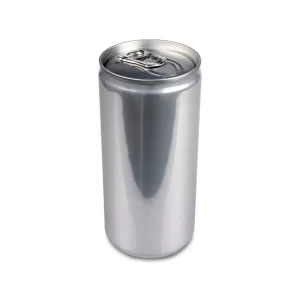
| Can Profile | Nominal Volume | Outer Body Dia. (mm) | Can Height (mm) | Neck Finish Code | Wall Gauge (mm) | Axial Load Min. | Max Internal Pressure |
|---|---|---|---|---|---|---|---|
| Slim 200ml | 200 mL / 6.8 oz | 53.3 ± 0.2 | 111.0 ± 0.3 | 200 Neck | 0.095 - 0.240 | > 800 N | ≥ 6.2 Bar (90 PSI) |
| Slim 250ml | 250 mL / 8.4 oz | 53.3 ± 0.2 | 134.5 ± 0.3 | 200 Neck | 0.097 - 0.245 | > 820 N | ≥ 6.2 Bar (90 PSI) |
| Sleek 250ml | 250 mL / 8.4 oz | 58.4 ± 0.2 | 115.2 ± 0.3 | 202 Neck | 0.098 - 0.250 | > 850 N | ≥ 6.2 Bar (90 PSI) |
| Sleek 330ml | 330 mL / 11.2 oz | 58.4 ± 0.2 | 145.8 ± 0.3 | 202 Neck | 0.100 - 0.255 | > 870 N | ≥ 6.2 Bar (90 PSI) |
| Standard 330ml | 330 mL / 11.2 oz | 66.3 ± 0.2 | 115.2 ± 0.3 | 202 Neck | 0.102 - 0.260 | > 900 N | ≥ 6.5 Bar (95 PSI) |
| Standard 355ml | 355 mL / 12.0 oz | 66.3 ± 0.2 | 122.0 ± 0.3 | 202 Neck | 0.102 - 0.260 | > 900 N | ≥ 6.5 Bar (95 PSI) |
| Standard 473ml | 473 mL / 16.0 oz | 66.3 ± 0.2 | 157.0 ± 0.3 | 202 Neck | 0.105 - 0.265 | > 950 N | ≥ 6.5 Bar (95 PSI) |
| Standard 500ml | 500 mL / 16.9 oz | 66.3 ± 0.2 | 168.0 ± 0.3 | 202 Neck | 0.106 - 0.270 | > 980 N | ≥ 6.5 Bar (95 PSI) |
Our multi-stage ironing dies reduce mid-body wall gauge down to 0.095mm while preserving top neck thickness (0.24mm) for vertical axial strength during stacking and transit.
Precision die necking transitions smooth out stress points. Flange width is controlled within ±0.10mm to ensure flawless cover-hook engagement during 1st and 2nd operation seaming.
Bottom dome architecture engineered to resist internal pressure spikes up to 95 PSI (6.5 Bar) for pasteurized beer, nitrogenated coffee, and highly carbonated soft drinks (CSDs).
The cross-disciplinary engineering behind high-formability aluminum alloys, organosol barrier coatings, and hermetic hermetical double-seam integrity.
Can bodies utilize high-purity AA3104-H19 alloy, engineered with controlled manganese (1.0-1.5%) and magnesium (0.8-1.3%) content to deliver maximum work hardening, excellent cupper deep-drawing capability, and minimal earing percentage (< 2.0%).
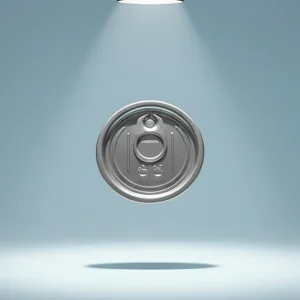
Easy-open ends (SOT/RPT) rely on AA5182-H48 alloy, providing superior tensile strength and fatigue resistance necessary to maintain tab score line integrity under repeat pressure cycling. Pull tabs are punched from AA5052-H19 aluminum stock for structural rigidity.
To insulate liquid products from metallic interaction, our internal spray application utilizes modern BPA-NI (Bisphenol A Non-Intent) Acrylic, Modified Polyester, or Polyorganosol resins. Applied at film weights between 50 mg/sq.m to 120 mg/sq.m depending on product aggressiveness.
Coating integrity is continuously verified using High-Voltage Conductivity Conductivity Enamel Rating checks (< 0.05 mA threshold) to eliminate micro-pinholes, protecting delicate flavor profiles of craft beers, wine, sparkling water, and energy drinks.
A double seam is created by interlocking the can body flange with the cover curl of the easy-open end in two distinct rolling operations. Our factory provides detailed seaming setup specs for customers operating Ferrum, Angelus, and Pneumatic Scale seamers:
Navigating international food safety regulations and providing on-site technical support for seam setup, filling line speed optimization, and shelf-life testing.
All aluminum cans, easy-open ends, and lid stocks strictly conform to international food contact standards, backed by third-party testing documentation:
We deploy field technical service engineers directly to client filling plants across Europe, North America, Middle East, and Southeast Asia. We assist your team with seamer tool setup, chuck and roll clearance alignment, seam teardown verification, and high-speed line troubleshooting to achieve optimal production yield.
To guarantee zero beverage degradation, our R&D center provides customized pack testing services. We analyze beverage chemistry (pH, organic acid profiles, CO2/nitrogen pressures) and perform accelerated hot-room storage trials to recommend exact lacquer film weights for extended shelf life (12 to 24 months).
Leveraging advanced Stolle & Minister stamping presses, automated AI vision quality checking, and Shanghai port maritime logistics leadership.
Our manufacturing facility houses state-of-the-art multi-die cuppers, bodymakers, and shell presses capable of producing over 3.5 billion cans and easy-open ends annually. Operating fully automated continuous coil lubrication, deep drawing, wall ironing, trimming, washing, internal spraying, and light pinhole inspection systems.
Every single container body and lid passes through high-resolution 360-degree AI vision optical camera systems. Automatic rejection mechanisms instantly remove items displaying flange dents, body scratches, internal coating voids, tab misalignment, or micro-pinholes, ensuring a zero-defect dispatch standard.
Located in close proximity to Shanghai Port—the world's largest container port—our facility offers unmatched export efficiency. Cans are packed using automated robotic bulk palletizers with top frames, moisture-proof slip sheets, and stretch hood wrapping. We maximize container fill factors to lower per-unit freight costs for international buyers across 40+ destination countries.
Optimizing unit pricing, reducing filling line spoilage, securing raw material hedging, and lowering global carbon footprints.
Raw aluminum coil accounts for 65-70% of total can production cost. We offer flexible pricing structures pegged to London Metal Exchange (LME) or Shanghai Futures Exchange (SHFE) spot prices, allowing enterprise procurement directors to lock in coil pricing during favorable market cycles.
Inconsistent neck dimensions or uneven flange widths lead to costly filling plant downtime. By guaranteeing dimensional consistency within ±0.10mm tolerances, our products reduce filling line jam and seamer rejection rates to less than 0.02%, drastically improving overall operational efficiency (OEE).
Aluminum is infinitely recyclable without loss of material properties. Transitioning from heavy glass bottles or single-use PET to lightweight aluminum beverage cans significantly reduces shipping weight per liter, directly shrinking Scope 3 freight logistics carbon emissions for corporate ESG compliance.
Key technological shifts shaping the future of metal beverage packaging: ultra-lightweighting, PCR recycling integration, and direct-to-can digital printing.
Pushing the boundary of aluminum body wall thickness down from 0.098mm toward 0.090mm through advanced strain-hardening metallurgy. Lightweighting directly lowers raw material consumption while preserving column crush strength and burst pressure performance.
Increasing the proportion of Post-Consumer Recycled (PCR) content in 3104 coil stock up to 75-85%. Recycling aluminum requires only 5% of the energy needed to produce primary aluminum, offering a massive reduction in greenhouse gas intensity.
Replacing traditional offset print plates with high-speed HD digital inkjet printing. Enables short-run craft beverage branding, seasonal SKU variations, variable QR code printing for consumer engagement, and zero plate set-up cost.
Engineered for diverse product categories requiring specific barrier properties, thermal pasteurization tolerance, or airtight powder seal integrity.
Requires low total pickup dissolved oxygen (TDO), 202 SOT pasteurization-stable lids, and high-opacity UV blocking to prevent hop light-striking and off-flavor development.
Demands high burst pressure resistance (> 90 PSI) to withstand dissolved CO2 gas carbonation levels up to 4.2 volumes, combined with acid-resistant internal organosol linings.
Utilizes 307#, 401#, and 502# easy-open lids with peel-off foil membranes and scoop leveling rims for infant formula, protein powders, and coffee beans requiring nitrogen flushing.
Explore our complete catalog of beverage cans, non-magnetic pharmaceutical powder lids, tinplate ends, and lacquered aluminum coils.
Detailed technical answers to common queries regarding dimensional standards, double seam setup, internal lacquers, minimum order quantities (MOQ), and shipping logistics.
