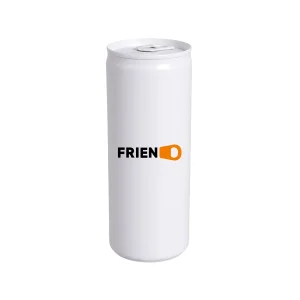
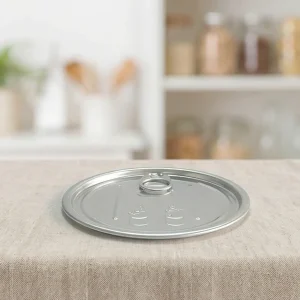
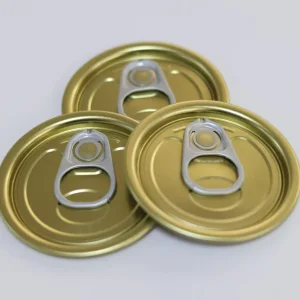
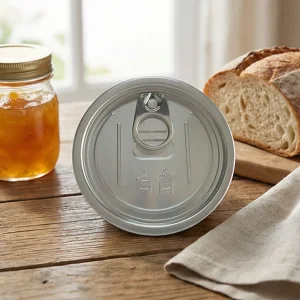
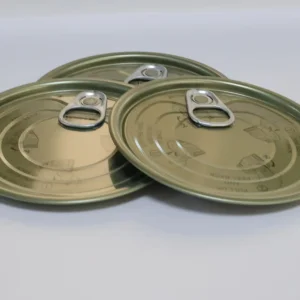
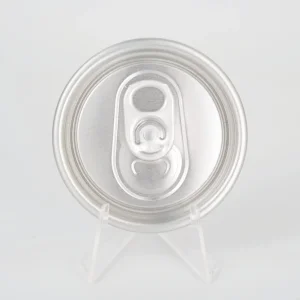
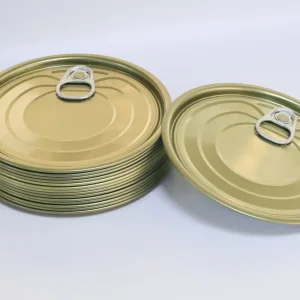
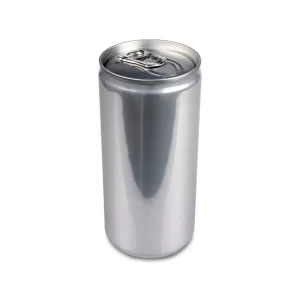
Explore our flagship food-grade tinplate lids, ultra-thin 202# stay-on tab (SOT) aluminum easy-open ends, 307# & 401# powder protection closures, and 250ml–355ml beverage cans engineered for extreme line-speed seam stability.
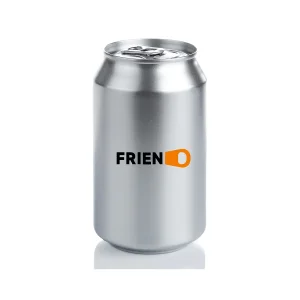
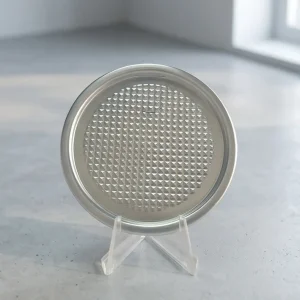
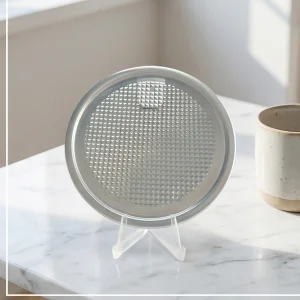
The rigid metal packaging industry is experiencing an unprecedented structural pivot toward infinite circularity, carbon-neutral supply chains, and high-speed automated canning lines. As global consumer packaged goods (CPG) conglomerates phase out single-use plastics, China has consolidated its standing as the epicenter of advanced metal forming technology, metallurgy innovation, and high-precision can end fabrication.
At the forefront of this industrial transformation, Chinese aluminum can ends manufacturers utilize multi-stage high-speed conversion presses (operating at speeds exceeding 3,000 ends per minute per line), integrating optical vision monitoring, closed-loop electro-hydraulic gauging, and automated compound lining. This enables extreme consistency across key performance indices: burst pressure tolerance, pop-and-pull force stability, countersink depth uniformity, and micro-leak resistance.
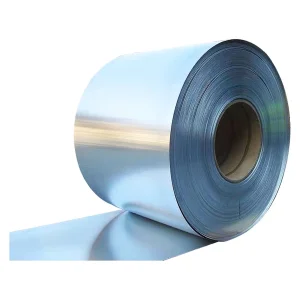
Global beverage brands—spanning craft beer, carbonated soft drinks (CSD), energy shots, ready-to-drink (RTD) teas, and infant formula powders—require can ends that perform flawlessly on high-speed filling equipment (such as Ferrum, Angelus, and KHS seamers). A minor deviation of 0.02mm in flange thickness or curl geometry can trigger downtime, seam micro-fractures, or seal failures during high-temperature pasteurization. Chinese manufacturing centers leverage state-of-the-art aluminum coil slitting, double-side lacquering, and automated post-repair compound deposition to eliminate downtime risks for overseas bottlers.
Achieving structural integrity while aggressively lightweighting metal packaging requires exact metallurgical tuning. Modern aluminum easy-open ends (EOE) utilize specialized aluminum-magnesium-manganese alloys tailored for distinct stresses:
Extremely high yield strength and tensile resilience. Used for the shell body of SOT and RPT beverage ends to withstand carbonation pressures up to 6.2 bar without dome distortion or premature rivet shear.
Optimized elongation and formability. Engineered for tab stamping to ensure firm grip, smooth leverage torque, and zero tab cracking during high-velocity opening cycles.
Superior surface cleanliness and low earing characteristics. Formulated specifically for deep-drawn can bodies and food-grade peelable foil lid ring stock.
The double-seam hermetic seal is created when the end curl interlocking with the can body hook is compressed by first and second operation seam rollers. Chinese manufacturers employ Finite Element Analysis (FEA) to calculate optimum countersink depth, end curl radius, and compound weight distribution. This guarantees that internal sealing compounds (water-based acrylic or solvent PVC-free formulations) flow evenly into the seam void, forming a zero-permeability gas and moisture barrier.
To assist global procurement directors and packaging engineers in intent-driven supplier evaluation, the matrix below provides precise physical dimensions, internal pressure capabilities, and recommended application profiles across major industry standardized sizes:
| End Size Code | Nominal Diameter (mm) | Base Alloy & Temper | Tab Type / Opening | Internal Buckle Resistance | Coating System | Primary Industrial Application |
|---|---|---|---|---|---|---|
| 200# SOT | Ø 50 mm | Alloy 5182-H48 | Stay-On Tab (SOT) | ≥ 6.2 Bar (90 PSI) | BPA-NI Epoxy / Organosol | Sleek & Slim Beverage Cans, Energy Drinks |
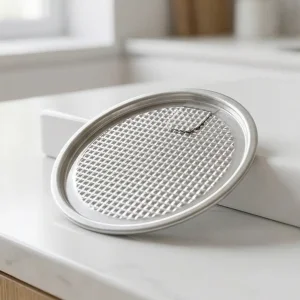
| 202# SOT / RPT | Ø 52 mm | Alloy 5182-H48 | SOT / Ring Pull (RPT) | ≥ 6.0 Bar (87 PSI) | BPA-NI Modified Polyester | Craft Beer, CSD, Hard Seltzer, RTD Cocktails |
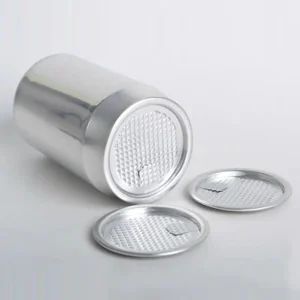
| 307# EOE | Ø 83 mm | Alloy 5052 / 8011 | Full Aperture Easy Open | Vacuum / Non-Pressure | Organosol / Vinyl Retort | Dry Milk Powder, Protein Powder, Canned Food |
| 401# EOE | Ø 99 mm | Alloy 5052 / Tinplate | Full Aperture / Safety Curl | Vacuum / Retort Capable | Food-Grade Gold Lacquer / BPA-NI | Infant Formula, Coffee Beans, Coastal Storage |
| 502# EOE | Ø 127 mm | Alloy 5052 / Tinplate | Full Open / Foil Membrane | Vacuum Nitrogen Flush | High-Barrier Protective Polymer | Bulk Infant Nutrition, Industrial Food Pack |
Metal packaging performance varies drastically based on regional climate dynamics, transport stresses, and product chemistry. Leading Chinese manufacturers design customized coating formulations and mechanical structures to excel across diverse localized environments:
In mountain regions and high-altitude transport corridors, ambient pressure drops significantly, increasing internal can pressure. Our 202# SOT ends incorporate re-engineered score-line depths to prevent bursting while maintaining smooth pull-tab detachment.
Tropical coastal warehousing subjects steel and aluminum rims to salt air oxidation. Special rust-inhibiting wax coatings and electro-plated tin layers on 401# & 307# lids guarantee 24+ months of corrosion-free shelf life.
Low pH beverages (cider, sour beers, RTD cocktails) degrade standard coatings. Dual-coat organosol liners prevent metal ion dissolution (aluminum pick-up < 0.5 ppm), protecting flavor purity.
Infant formula and medical nutrition demand zero-microbial ingress. 401# & 502# ends are manufactured under Class 100,000 cleanroom environments with 100% helium leak detection options.
Demonstrating uncompromised Experience, Expertise, Authoritativeness, and Trustworthiness (E-E-A-T), Chinese tier-1 packaging partners adhere to global food safety frameworks and environmental directives.
All internal lacquers are 100% BPA-Non-Intent (BPA-NI) and fully certified under US FDA 21 CFR 175.300, EU Regulation 1935/2004, European Commission Regulation 10/2011, and China National Food Safety Standard GB 4806.10.
Production operations run under ISO 9001:2015 quality management and FSSC 22000 food safety management systems. Automated high-speed vision inspection eliminates flange dents, metal slivers, and coating voids.
Every shipment carries a direct mill test certificate detailing raw coil heat numbers, alloy composition, gauge tolerances, enamel rater readings (< 0.5 mA), and pop/pull test values linked to batch QR codes.
As the packaging industry advances toward 2030 sustainability benchmarks, Chinese packaging leaders are executing strategic technology roadmaps focused on three core engineering innovations:
1. Ultra-Gauge Lightweighting (Down-Gauging): Transitioning standard end gauge from 0.224mm to 0.208mm and 0.198mm without sacrificing pressure performance. Through finite element structural redesign of the countersink wall and chime radius, metal utilization is reduced by 6–8%, cutting scope 3 carbon emissions.
2. Laser-Engraved Smart QR Code Tabs: High-speed inline fiber laser etching applies unique, high-resolution QR codes underneath or on top of the pull tab. This enables anti-counterfeiting tracking, direct-to-consumer digital engagement, and real-time supply chain traceability.
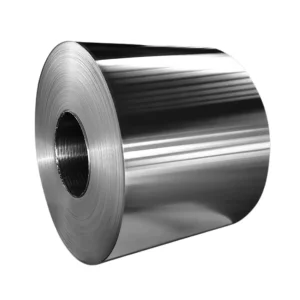
3. Low-Carbon Recycled Content (PCR Aluminum): Increasing post-consumer recycled (PCR) aluminum content in coil stock up to 80-90%. This reduces energy consumption during raw material extraction by up to 95%, enabling global CPG brands to meet stringent ESG mandates.
Comprehensive answers to critical technical questions asked by global procurement officers and canning line engineers:
Discover our high-purity 8011# & 5052# aluminum coil stock, rust-proof 401# coastal lids, high-temperature sterilizable lids for sterile medical powders, and food-grade tinplate packaging solutions.