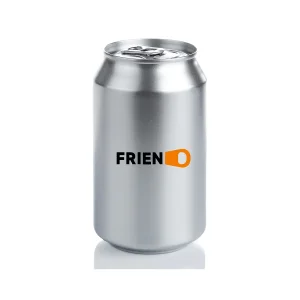
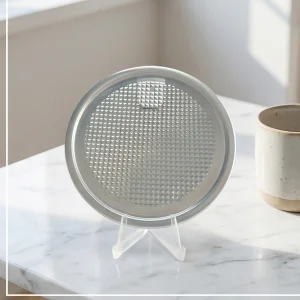
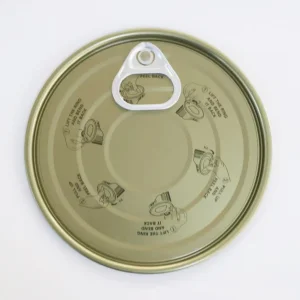
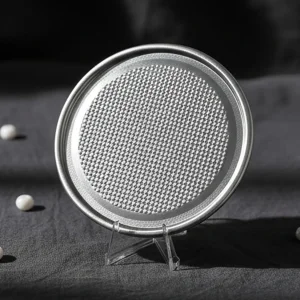
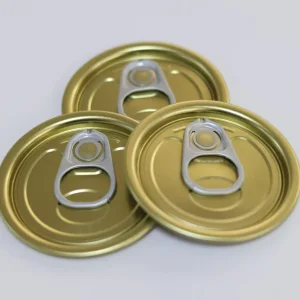
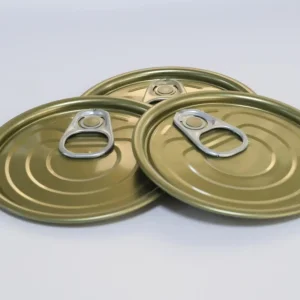
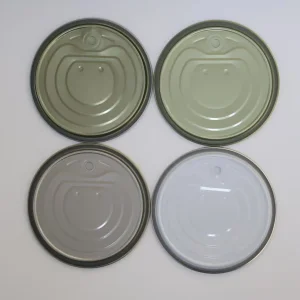
High-precision aluminum bottle seals, SOT/RPT easy-open ends, food-grade tinplate lids, and premium coil stock engineered for high-speed seaming lines.
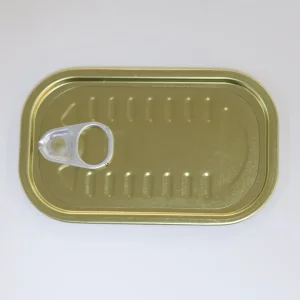
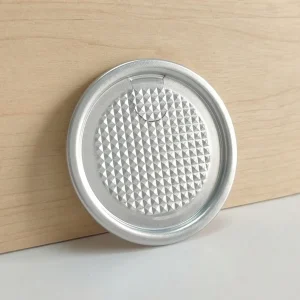
Analyzing macro-level supply chain transitions, regulatory compliance, and market demands driving global adoption of modern aluminum sealing solutions.
The global packaging economy is undergoing a structural transition toward infinitely recyclable, hermetically sealed, and lightweight metal closures. As fast-moving consumer goods (FMCG) conglomerates, craft beverage pioneers, infant nutrition giants, and pharmaceutical repackagers re-evaluate their carbon footprints and barrier performance requirements, aluminum bottle seals, easy-open ends (EOE), and ROPP (Roll-On Pilfer-Proof) closures have surged to the forefront of modern packaging architecture.
Historically, glass and rigid plastic containers relied on crowns, corks, or multi-component plastic caps. However, stringent volatile organic compound (VOC) regulations, microplastic contamination concerns, and stringent oxygen-barrier requirements have fundamentally shifted procurement preferences. Aluminum bottle seals provide an impenetrable physical barrier against ultraviolet light, oxygen ingress, and moisture vapor, extending beverage and food shelf-life to 18–36 months without chemical preservatives.
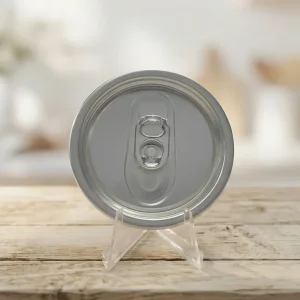
Rising demand for hard seltzers, cold-brew coffees, premium lagers, and wine-in-a-can requires pressure-tolerant 202# and 200# Stay-On Tab (SOT) ends with internal pressure ratings exceeding 6.2 bar.
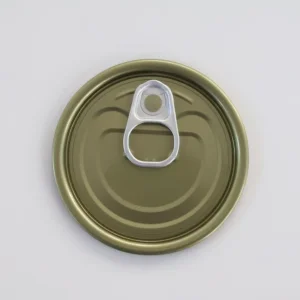
High-value dairy, protein, and medical nutrition formulations demand 401# and 502# peel-off foil membranes and aluminum easy-open ends sealed under nitrogen flushing to guarantee sub-0.5% residual oxygen levels.
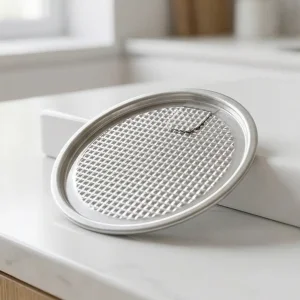
Tamper-evident aluminum ROPP caps and specialized tear-off seals protect anti-counterfeit integrity while providing smooth, repeatable torque opening dynamics for consumer safety.
How Chinese aluminum packaging manufacturing hubs achieve world-class yield, dimensional consistency, and speed-to-market.
China has consolidated its position as the world's primary manufacturing epicenter for high-precision metal closures, supplying over 42% of global easy-open end and aluminum coil exports. This leadership is sustained not merely by capacity, but by deep industrial integration across raw material refining, precision tooling engineering, high-speed automated press lines, and streamlined maritime logistics.
| Evaluation Parameter | Chinese Leading Manufacturers (e.g., Friend Metals) | Western European / N. American Tier-1 Mills | Sourcing Value Impact for Buyer |
|---|---|---|---|
| Coil-to-Finished End Lead Time | 12 – 18 Working Days | 6 – 10 Weeks | 70% faster inventory replenishment, reduced working capital tie-up. |
| Stamping Line Efficiency (Minster/Stolle) | 2,800 – 3,400 ends/min (High-speed multi-lane) | 2,200 – 2,800 ends/min | Substantial unit cost savings passed directly to high-volume buyers. |
| BPA-NI Coating Flexibility | Organosol, Acrylic, Polyester, Epoxy-Free options stock | Strictly allocated single-supplier lacquers | Seamless compliance across US FDA, EU 1935/2004 & China GB standards. |
| Custom Tooling & Prototyping | 10 – 14 Days (In-house CNC & EDM wire cutting) | 4 – 8 Weeks (Outsourced die shops) | Rapid R&D cycle for proprietary brand cap shapes and tab engravings. |
| Minimum Order Quantity (MOQ) | 100,000 – 200,000 units (Trial lots welcome) | 1,000,000+ units minimum | Lower barrier to entry for boutique craft brands and regional bottlers. |
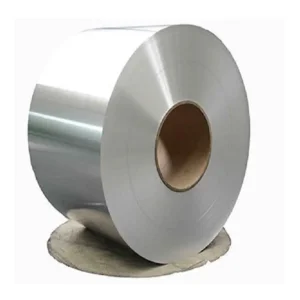
Chinese manufacturers maintain strategic proximity to top-tier aluminum rolling mills (utilizing ultra-pure 3104-H19, 5182-H48, and 8011-H14 alloys). By controlling the chemical composition (balancing magnesium and manganese ratios for optimal tensile vs. elongation profiles), factories eliminate edge-cracking, earing defects during deep drawing, and micro-porosity during conversion.
An engineering guide to alloy chemistry, internal lacquer selection, seam dimensions, and quality control tolerances.
Used exclusively for high-pressure easy-open ends and bottle caps. Containing 4.0–5.0% Mg and 0.20–0.50% Mn, 5182-H48 delivers ultimate tensile strength exceeding 360 MPa and yield strength of 310 MPa, preventing end dome buckle under carbonation pressure up to 6.2 bar.
Engineered for Drawn & Wall Ironed (DWI) bottle and can bodies. With 0.8–1.4% Mn and 0.8–1.3% Mg, 3104-H19 yields superior work hardening, ensuring uniform wall thickness down to 0.095mm while retaining axial column crush strength above 1,200 N.
Formulated for deep-drawn bottle seals, ROPP closures, and peelable powder membranes. High iron and silicon content (Fe+Si 1.5%) yields clean tearing properties, zero micro-pinholes, and high elongation for complex curling dies.
| Closure Code / Size | Shell Diameter (mm) | Nominal Thickness | Pop / Pull Force (N) | Internal Pressure Tolerance | Primary Industrial Application |
|---|---|---|---|---|---|
| 200# SOT (Stay-On Tab) | 50.30 ± 0.05 | 0.208 – 0.224 mm | Pop: 14–20 / Pull: 22–32 | > 6.2 bar (90 psi) | Sleek & Slim Craft Beverage, Energy Drinks |
| 202# SOT / RPT | 52.30 ± 0.05 | 0.218 – 0.235 mm | Pop: 15–22 / Pull: 24–35 | > 6.2 bar (90 psi) | Standard CSD, Beer, Cider, RTD Cocktails |
| 211# EOE (Easy-Open End) | 65.30 ± 0.08 | 0.230 – 0.250 mm | Pop: 18–26 / Pull: 28–42 | > 2.5 bar (Atmospheric) | Canned Foods, Juices, Wet Pet Food |
| 307# Foil / EOE | 83.30 ± 0.10 | 0.245 – 0.270 mm | Pop: 20–30 / Pull: 30–48 | Retort Tested 121°C / 30 min | Nuts, Coffee, Nutritional Powders, Soups |
| 401# Powder EOE | 99.00 ± 0.10 | 0.260 – 0.285 mm | Pop: 22–32 / Pull: 35–52 | Hermetic Vacuum < 0.5% O₂ | Milk Powder, Infant Formula, Protein Tins |
| 502# Large Format EOE | 126.50 ± 0.12 | 0.275 – 0.300 mm | Pop: 25–38 / Pull: 40–60 | Hermetic Vacuum < 0.5% O₂ | Bulk Infant Nutrition, Industrial Food Service |
Tailoring metal closure specifications to region-specific climate conditions, line speeds, and filling technologies.
Modern canning lines across North America (running at 1,200–2,000 cans per minute) demand strict end curl consistency and low enamel rater scores (< 2.0 mA at 6.3V). Chinese suppliers deliver 202# SOT ends pre-coated with BPA-NI (Bisphenol A Non-Intent) polymer linings that prevent flavor scalping and withstand pasteurization temperatures up to 85°C without liner delamination.
Coastal tropical regions subject aluminum seals and tinplate lids to severe atmospheric oxidation and salt-spray moisture. Factory-applied outer protective varnish coats (epoxy ester or modified polyester) pass 96-hour neutral salt spray tests (ASTM B117), preventing rim rust during prolonged ocean freight and humid warehouse storage.
In regions with extended ambient distribution cycles, protecting infant formula and powdered milk against humidity absorption is critical. Aluminum 401# and 502# easy-open ends featuring soft-peel aluminum-plastic composite foil membranes prevent razor-sharp edge injuries during opening while maintaining absolute hermetic seal integrity.
Examining technological roadmaps, gauge lightweighting, digital tab engraving, and decarbonization in metal packaging.
The metal closure sector is rapidly evolving under the dual pressures of environmental ESG mandates and consumer safety regulations. Leading Chinese aluminum bottle seal manufacturers are executing strategic multi-year technology roadmaps focused on three core pillars:
By optimizing shell profile geometries (transitioning from CDL and B64 profiles to CDL-II and Super-End geometries), engineers have reduced shell thickness from 0.224mm down to 0.208mm. This 7% material saving translates to hundreds of metric tons of reduced metal usage annually per filling plant while maintaining identical buckle resistance.
High-precision laser etching directly onto the underside of aluminum stay-on tabs allows beverage and spirit brands to encode unique matrix 2D QR codes. This enables instant consumer engagement, anti-channel flipping tracking, and direct supply-chain traceability.
Aluminum requires only 5% of the energy needed to produce primary virgin metal. Top Chinese suppliers are partnering with hydro-powered smelters to increase recycled content in 5182 and 3104 coil stock above 80%, dramatically reducing Scope 3 embedded carbon for global brands.
A practical risk mitigation playbook for international procurement managers sourcing metal closures from China.
Securing high-volume metal closure contracts requires rigorous verification of factory quality assurance systems. Global procurement teams must establish a clear 4-stage technical verification protocol prior to issuing purchase orders:
| Audit Stage | Technical Verification Protocol | Acceptable Quality Level (AQL) / Metric | Actionable Red Flag |
|---|---|---|---|
| Stage 1: Raw Material Verification | Spectrometric alloy analysis, coil thickness gauge consistency, mill test certificates (MTC) check. | ISO 9001 / Thickness tolerance ±0.005mm | Inconsistent magnesium content leading to tab splitting. |
| Stage 2: Compound & Lining Audit | Enamel rater micro-ampere test (< 2.0 mA), water-based vs. solvent compound distribution. | FDA 21 CFR 175.300 & EU 1935/2004 compliance | BPA migration above legal detection thresholds (> 0.01 mg/kg). |
| Stage 3: High-Speed Seaming Trial | 50,000-unit pilot run on buyer's automated seamer (Ferrum, Angelus, Canco). Seam teardown audit. | Defect rate < 50 PPM (Parts Per Million) | Countersink depth variation causing seamer jam or false seams. |
| Stage 4: Transit & Freight Protection | Polyethylene sleeve wrapping, desiccants inside ocean cartons, moisture-proof pallet stretch hood film. | Zero water stain / zero oxidation on arrival | Lack of container desiccants resulting in white rust (aluminum hydroxide). |
Expert answers to common engineering, regulatory, and logistics queries from global packaging buyers.
Explore our extended line of specialty tinplate lids, standard aluminum beverage cans, 401# powder closures, and coil stock.