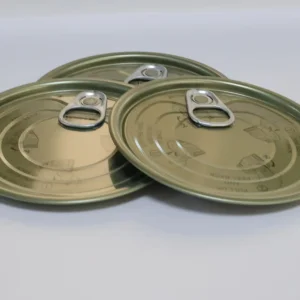
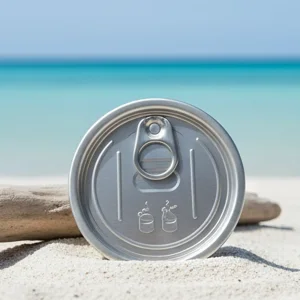
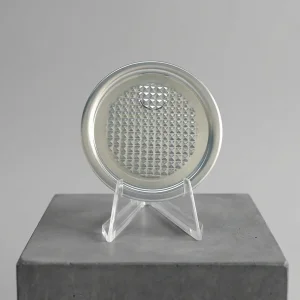
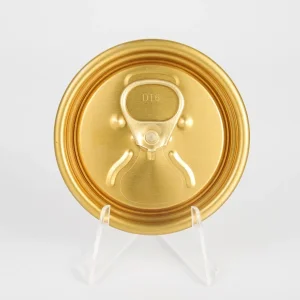
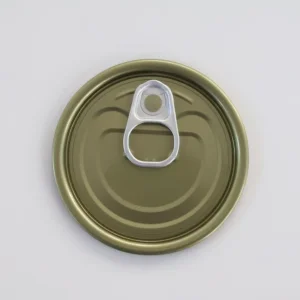
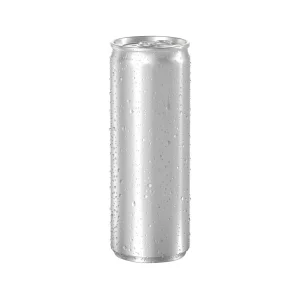
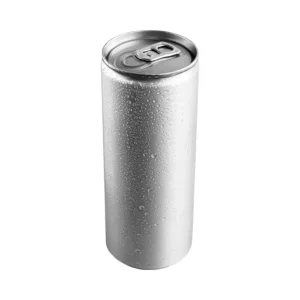
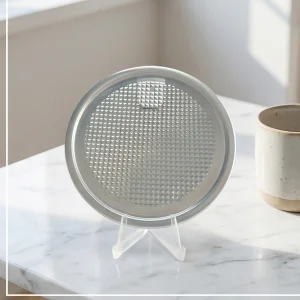
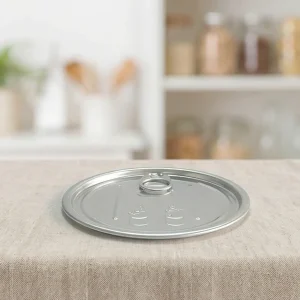
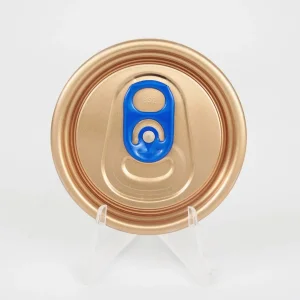
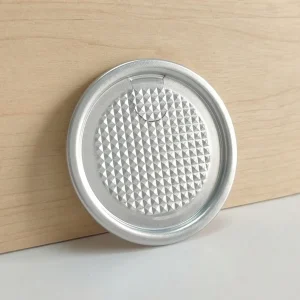
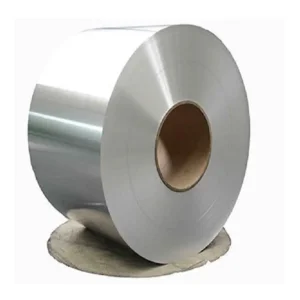
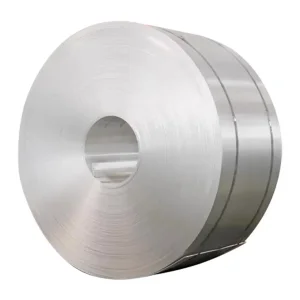
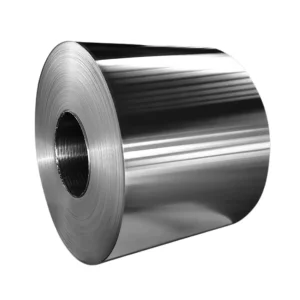
Explore our primary range of engineered tinplate lids, anti-static easy-open aluminum ends, sustainable powder container caps, and lightweight beverage packaging supplied directly from our automated Chinese production hubs.
In the rapidly evolving global packaging, architectural, automotive, and industrial enclosure sectors, aluminium profile caps and precision metal closures represent a critical nexus of metallurgical engineering and functional sealing technology. The global shift away from single-use plastics toward infinitely recyclable aluminum alloys has accelerated cross-industry demand for ultra-precise, corrosion-resistant, and high-barrier aluminum capping solutions. From high-speed beverage seaming lines running at 1,500 cans per minute to heavy-duty industrial structural aluminum profiles requiring hermetic end-cap seals, the requirements placed on modern manufacturing partners have escalated dramatically.
Historically, European and North American suppliers held a dominant market position in high-end specialty closure tooling. However, over the past decade, a profound structural realignment has occurred. Industrial purchasing managers, OEM package developers, and global supply chain directors now actively turn to China’s global leading aluminium profile cap factories. This shift is not merely driven by unit-cost optimization, but by comprehensive technological parity, unprecedented vertical integration, superior alloy formulation capabilities, and rapid prototyping agility.
Modern applications utilize premium 5182-H48, 3104-H19, and 8011-H14 aluminum alloys engineered for high tensile strength, optimal earing ratios, and superior burst pressure resistance under volatile thermal loads.
Implementation of next-generation BPA-NI (Bisphenol A Non-Intent) internal lacquers, organosol systems, and ceramic-infused anti-corrosion exterior coatings engineered for extreme pH ambient conditions.
Precision die-stamping and CNC profile extrusion holding structural tolerances within ±0.005mm, guaranteeing seamless compatibility with automated double-seaming and snap-fit machinery.
China’s competitive moat in the field of aluminium profile cap manufacturing and enterprise closure supply is built upon a dense, highly specialized industrial ecosystem concentrated in key manufacturing hubs such as Guangdong, Jiangsu, Zhejiang, and Shandong. Unlike fragmented regional operations elsewhere, top-tier Chinese facilities feature full vertical integration—encompassing molten alloy smelting, continuous casting, precision cold-rolling, chemical surface passivating, continuous coil lacquer coating, high-speed multi-die press stamping, and automated 100% optical camera inspection.
| Operational Metric | Western European / US Suppliers | Leading Chinese Factories | Engineering Value Delivered |
|---|---|---|---|
| Raw Material Coil Processing | Outsourced to third-party rerollers | Fully integrated coil slitting & lacquering | Eliminates supply chain friction & reduces coil lead times by 60% |
| Press Stamping Speeds | 800 – 1,100 strokes per minute (SPM) | Up to 1,500 – 1,800 SPM (Minster & Schuler lines) | Massively scalable capacity with uniform structural integrity |
| Custom Tooling Turnaround | 12 – 18 Weeks | 3 – 5 Weeks (In-house CNC / EDM tooling shop) | Accelerates Time-to-Market for custom profile cap designs |
| Quality Inspection Systems | Batch sampling / Statistical Process Control | 100% High-Speed Vision System + Online Enamel Rater | Zero-defect delivery threshold (<1 PPM defect rates) |
To maintain rigorous compliance standards across North American (FDA), European Union (EU Food Contact Regulation 1935/2004 & 10/2011), and global markets, leading Chinese factories enforce comprehensive Quality Assurance (QA) routines. Every coil batch of 5182, 3104, 5052, or 8011 aluminum alloy undergoes rigorous mechanical testing prior to deep drawing or profile stamping:
Coils are evaluated for yield strength, tensile elongation, gauge uniformity, and earing percentage (below 1.5% to prevent asymmetrical wall stretching during shell drawing). Stamped ends and profile caps undergo Buckle Pressure Testing (testing resistance up to 6.2 bar) and Pop & Pull Force Analysis to verify ergonomics and structural safety under pressurized conditions.
Internal lacquers undergo continuous Enamel Rater Testing (measuring current conductivity in mA to ensure 100% pinhole-free internal barrier protection). Finished caps are subjected to retort sterilization trials (121°C for 30 minutes) and Salt Spray Corrosion Testing (ASTM B117) exceeding 96 hours without micro-pitting or coating delamination.
Aluminium profile caps, easy-open ends, and specialized structural closures operate in vastly different environments. Top-tier Chinese manufacturers specialize in configuring specific lacquer systems, alloy tempers, lining compounds, and dimensional geometries customized to regional application demands.
In electronic chemical supply chains and advanced materials packaging, static electricity can cause powder cling and micro-contamination. Specialized Anti-Static 300# and 401# Aluminum Easy-Open Lids feature conductive surface coatings that dissipate static charge during high-speed vacuum filling, ensuring precise dosing and complete product evacuation.
Packaging exported across tropical ocean routes faces extreme relative humidity and airborne salt salinity. Rust-Proof 401# Aluminum Profile Caps utilize multi-layer epoxy-phenolic coatings combined with passivated aluminum substrate shell stock, eliminating rust oxidation at score lines or seaming curls during prolonged transit.
Beverage canning plants utilizing 202# SOT (Stay-on-Tab) and RPT (Ring Pull Tab) ends require absolute dimensional repeatability to avoid machine jam-ups on high-speed lines. Precision-rolled 5182-H48 shell stock guarantees exact countersink depths, precise curl angles, and consistent seam formation on automated seaming heads.
As enterprise buyers formulate 5-year packaging strategies, three major technological and environmental vectors are transforming the engineering requirements of aluminium profile caps and metal closures:
Driven by Scope 3 carbon reduction goals, factories are downsizing shell gauge thickness from 0.22mm down to 0.20mm and 0.18mm while maintaining identical buckle resistance. This is achieved through advanced structural ribbing, redesigned countersink geometries, and high-yield 5182 aluminum alloys.
Global regulatory tightening has mandated the removal of epoxy-based bisphenol formulations. Leading Chinese producers have transitioned 100% of their food and beverage lining capacity to next-generation Polyester (PE), Acrylic, and Polyolefin Dispersion (POD) coatings compliant with EFSA and FDA directives.
High-speed laser etching directly onto aluminum tab stock or profile surfaces enables unique QR coding, anti-counterfeiting tracking, and interactive consumer engagement. Chinese factories integrate online high-resolution laser marking systems directly into automated assembly lines without reducing throughput speeds.
When conducting supplier audits and establishing long-term procurement contracts for aluminum profile caps, easy-open ends, and metal stock, global procurement teams should evaluate potential factory partners against five core structural benchmarks:
Ensure the factory sources primary aluminum coils directly from Tier-1 mills (such as Chalco, Nanshan, or Mingtai) with mill test certificates (MTC) accompanying every heat number. Verify alloy chemistry (Si, Fe, Cu, Mn, Mg, Cr, Zn, Ti balance) to guarantee structural ductility and corrosion resistance.
Superior factories maintain internal CAD/CAM die-making facilities equipped with high-precision wire EDM and CNC machining centers. In-house tooling control allows rapid iteration of profile cap dimensions, custom embossing, and immediate repair of stamping die wear without production downtime.
Manual inspection is insufficient for high-volume enterprise orders. Audit the factory for high-resolution 360-degree optical camera inspection systems integrated directly into line presses to automatically detect micro-dents, scratch defects, compound void spots, and tab misalignment at full line speed.
Aluminum packaging components are vulnerable to transit damage and moisture oxidation. Leading suppliers utilize vacuum-sealed polyethylene inner sleeves, heavy-duty corrugated cartons, desiccants, top wooden frames, and heat-treated ISPM-15 export pallets wrapped with multi-layer stretch film.
Expert insights from our senior metallurgical engineers and packaging specialists addressing common sourcing questions.
Browse our secondary product lineup, featuring specialized rust-proof lids, standard beverage cans, premium aluminum raw material coils (5182#, 3104#, 5052#), and versatile powder closures.
Whether you are optimizing an existing high-speed beverage packaging line, developing anti-static profile closures for sensitive electronic powders, or sourcing premium 5182/3104 aluminum coils for local manufacturing, our technical engineering team provides immediate, data-backed support. Request comprehensive CAD drawings, MTC documentation, and sample test kits today.