High-performance metal closures and body solutions direct from our smart manufacturing facility.
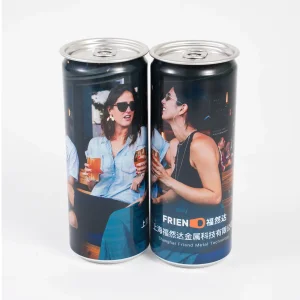
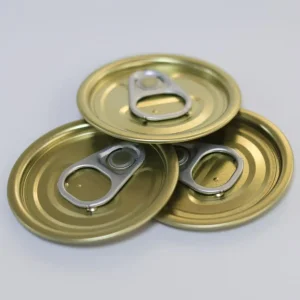
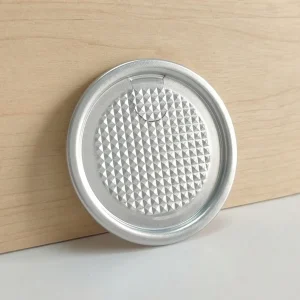
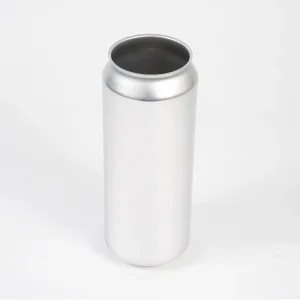
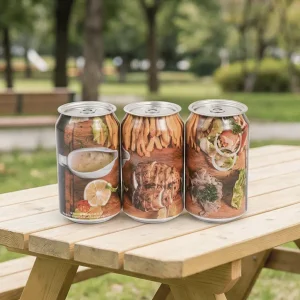
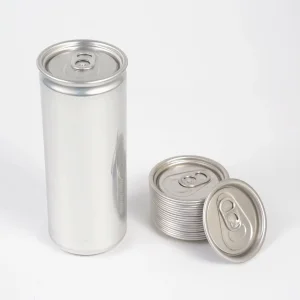
In the contemporary landscape of global rigid packaging, the aluminium packing cover—encompassing Easy-Open Ends (EOE), Stay-On Tabs (SOT), Ring Pull-Off Ends (RPT), peel-off foil membranes, and anti-static powder closures—represents an unprecedented convergence of advanced metallurgy, chemical barrier science, and ultra-high-speed mechanical conversion technology. As fast-moving consumer goods (FMCG) conglomerates, craft beverage innovators, infant formula producers, and industrial chemical manufacturers globally pivot away from single-use plastics to comply with stringent Extended Producer Responsibility (EPR) regulations and corporate Scope 3 decarbonization mandates, the demand for precision-engineered aluminium closures has reached an all-time strategic inflection point.
Aluminium packing covers serve as the primary seal and ultimate line of defense for hermetically packaged products. The technical requirements placed upon a contemporary aluminium cover are immensely challenging: it must withstand internal carbonation pressure exceeding 6.2 bar (90 psi), maintain zero gas transmission (OTR and WVTR = 0.000 g/m²/day), offer effortless opening mechanics with precisely controlled score-line residual depth, and ensure complete chemical inertness across shelf lives spanning up to 36 months under varying climatic stresses. Achieving this level of mechanical reliability at production speeds exceeding 3,000 ends per minute requires a integrated manufacturing ecosystem that only China's Industry 4.0 smart packaging clusters have successfully deployed at scale.
Key Insight: Modern aluminium packing cover manufacturing is no longer a traditional metal-stamping process. It is a digitalized, high-precision engineering discipline where micro-alloying chemistry (Al-Mg-Mn series 5182 and 3104), high-definition machine vision, and real-time finite element analysis (FEA) dictate global market competitiveness.
Aluminium packing covers possess a closed-loop recycling efficiency of over 95%. Recycling aluminium requires 95% less energy than primary smelting, dramatically reducing carbon footprint for international brand owners.
Utilizing next-generation organosol and non-BPA (BPA-NI) cross-linked internal coatings, modern aluminium lids prevent metal ion migration, preserving organic sensory profiles for delicate beverages and dry powders.
Through computer-controlled double-seam curling and online laser gauge profiling, cover edges maintain micro-inch consistency, ensuring flawless double-seaming compatibility across high-speed filling lines.
To fully appreciate the technical superiority of China's leading aluminium packing cover factories, one must examine the microstructural characteristics of the raw alloys and the rigorous mechanical tolerances maintained during conversion. The substrate choice primarily revolves around temper-grade Al-Mg alloys (such as 5182-H48 and 5052-H32) for the shell and tab stock, paired with 3104-H19 or 8011-O alloys for deep-draw container bodies and soft-peel membrane covers.
The core challenge in score-line engineering is optimizing the balance between pop-and-tear force and burst pressure resistance. If the residual metal thickness along the score line is too thick, end-users will experience excessive opening resistance; if it is too thin, the lid will suffer premature micro-fracturing or blowouts during high-temperature thermal processing (retort autoclaving up to 121°C) or high-altitude logistics transportation.
| Cover / Lid Size | Primary Alloy | Thick. Tolerance | Buckle Strength | Pop / Tear Force | Coating System | Target Application |
|---|---|---|---|---|---|---|
| 200# SOT / RPT | Alloy 5182-H48 | ±0.002 mm | ≥ 6.2 Bar (90 psi) | Pop: 15-22N / Tear: 22-30N | BPA-NI Epoxy / Organosol | Sleek Energy Drinks, Sparkling Water |
| 202# SOT Standard | Alloy 5182-H48 | ±0.002 mm | ≥ 6.5 Bar (94 psi) | Pop: 18-25N / Tear: 25-35N | Modified Polyurethane / Epoxy | Beer, Carbonated Soft Drinks (CSD) |
| 300# Anti-Static EOE | Alloy 5052-H32 | ±0.003 mm | ≥ 2.5 Bar (36 psi) | Pop: 12-18N / Tear: 18-26N | Anti-Static Conductive Coating | Electronic Powders, Chemical Reagents |
| 401# Foil Peel-Off | 8011-O / 5182 Ring | ±0.005 mm | Hermetic (<0.05% Leak) | Peel Force: 10-15N Smooth | Food-Grade Heat-Seal Lacquer | Infant Formula, Coffee, Powdered Milk |
| 502# Large Diameter | Alloy 5052 / 3104 | ±0.004 mm | ≥ 2.0 Bar (29 psi) | Pop: 20-28N / Tear: 28-38N | Organosol / Retort White Enamel | Bulk Nutritional Powder, Snack Foods |
| 211# / 307# Tinplate | MR-Grade ETP T3/T4 | ±0.003 mm | ≥ 3.0 Bar (Retort) | Pop: 22-30N / Tear: 30-42N | Aluminized Organosol Gold | Wet Pet Food, Canned Fruits & Meat |
Leading Chinese supplier factories operate multi-die shell presses (such as Stolle or Minster systems) coupled with high-speed conversion lines capable of executing multiple intricate operations in fractions of a second: shell feeding, bubble formation, staking, score-line incision, tab forming, tab riveting, curling, and compound lining. The application of water-based sealant compounds in the curl area is monitored via automated optical sensors to ensure uniform film distribution, preventing micro-leakage along the double seam after chuck interaction on the customer's seaming machine.
How integrated manufacturing hubs in China deliver structural cost advantages, rapid prototyping, and unmatched global volume elasticity.
The global dominance of Chinese aluminium packing cover suppliers is anchored in deep vertical integration and systemic supply chain resilience. Rather than relying on fragmented regional sub-contractors for rolling, slitting, coating, stamping, and logistics, China’s primary metal packaging parks combine every link in the value chain within tight geographic clusters. Raw primary aluminium from smelters is directly processed into high-purity coiled sheet stock, coated on ultra-wide continuous lacquering lines, and fed into automated stamping dies operating in cleanroom-controlled environments.
100% online high-resolution camera systems inspect every single lid at 3,000 PPM. Defects such as score cracks, tab misalignment, compound voids, or surface scratches trigger instantaneous pneumatic rejection without halting production lines.
By employing in-house CNC wire EDM tooling shops and additive manufacturing mold design, custom lid profiles, proprietary embossing patterns, or specialized pull-tab geometry can transition from CAD models to physical line trial samples within 14 business days.
Chinese factories maintain direct strategic buffer stockpiles of premium coil grades (5182, 3104, 8011). This protects international procurement partners against global metal market price volatility and sudden geopolitical shipping disruptions.
Procurement requirements for aluminium packing covers vary significantly depending on geographic climate, regional regulatory frameworks, and end-use fill medium. A factory supplier operating on a global scale must offer bespoke technical solutions that address specific operational pain points faced by filling plant engineers in North America, Europe, the Middle East, Southeast Asia, and Latin America.
Challenge: Acidic juices, kombucha, craft beers, and RTD cocktails induce corrosive stress on internal lacquers, while tunnel pasteurization subjects the lid to cyclical thermal expansion and internal pressures up to 6.0 bar.
Factory Solution: Dual-coat cross-linked modified organosol or BPA-NI phenolic linings combined with high-buckle 5182-H48 shell profiles. Score-line residuals are laser-measured to prevent micro-stress corrosion cracking during thermal holds at 65°C.
Challenge: Oxygen sensitivity in lipid-rich powders leads to rancidity. High-speed filling lines require absolute zero oxygen ingress following vacuum nitrogen flushing (residual O₂ < 0.5%).
Factory Solution: Easy-Open Foil Peel-Off Ends (401# / 502#) featuring multi-layer laminated aluminium foil membranes (Alu/PE or Alu/PP) heat-sealed to rigid tinplate or aluminium ring stock. Ensures 100% barrier integrity with low pull force for end consumers.
Challenge: Electrostatic charges generated during high-speed powder filling cause fine particles to adhere to the rim, compromising double-seam integrity and causing seal failures.
Factory Solution: Anti-static coated 300# easy-open lids treated with specialized conductive conductive lacquers (surface resistivity 10^6 – 10^9 ohms/sq). Dissipates static charges instantly, ensuring clean contact surfaces during high-speed seaming.
Challenge: Steam-air autoclave retorting at 121°C to 131°C creates extreme pressure differentials, causing lid buckling, panel collapse, or internal coating delamination.
Factory Solution: Retort-grade 211# and 307# tinplate and thick-gauge aluminium EOE ends engineered with deep, flexible expansion rings that absorb pressure fluctuations while retaining compound adhesion post-sterilization.
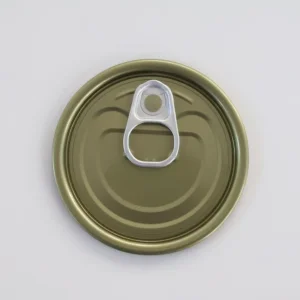
Explore our full line of powder lids, anti-static covers, and tinplate closures engineered for global industrial and food applications.
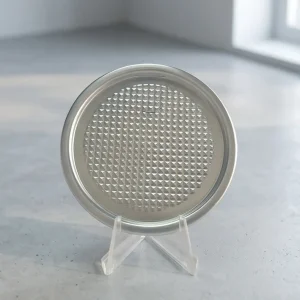
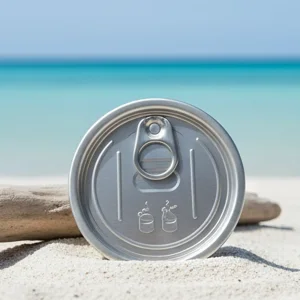
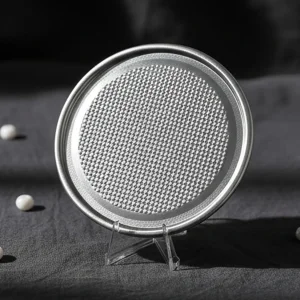
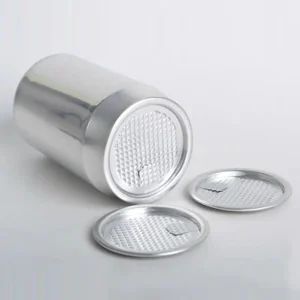
For B2B procurement managers, sourcing directors, and packaging operations executives, selecting a long-term China factory supplier for aluminium packing covers requires far more than comparing FOB per-thousand unit prices. A low initial purchase price can quickly be eroded by filling line jams, micro-leaks, high double-seam teardown rejection rates, or regulatory non-compliance fines in destination ports.
A rigorous Total Cost of Ownership (TCO) evaluation model must account for six crucial operational vectors:
Ensuring that the lid curl thickness, countersink depth, and profile radius exactly align with existing seaming machinery chucks (e.g., Ferrum, Angelus, CFT, Pneumatic Scale) to prevent flange distortion and double-seam wrinkles during high-speed runs.
Verifying that every production batch undergoes mandatory electrical current testing (Enamel Rater testing < 2.0 mA under 6.3V standard conductivity testing) to ensure zero pinholes or micro-voids in the internal lacquer layer.
Demanding comprehensive food-contact compliance declarations including FDA 21 CFR 175.300, EU Regulation No. 1935/2004, Commission Regulation (EU) No. 10/2011, and GB 4806.10-2016 for heavy metals, phthalates, and bisphenol migration limits.
Confirming that water-based sealing compound film weight is consistently applied inside the curl (± 5mg accuracy) to guarantee micro-channel sealing following high-speed mechanical seaming compression.
Monitoring statistical process control (SPC) data for score-line residual thickness (measured via optical cross-sectioning down to 0.001mm) to eliminate catastrophic line blowouts during thermal process holds while maintaining easy pull mechanics.
Enforcing strict packing standards: heavy-duty corrugated wooden or plastic pallets, polyethylene sleeve wrapping, desiccant pouches inside sealed moisture-barrier bags, and strapping frames capable of surviving multi-modal ocean transit.
Direct engineering answers to frequently asked sourcing questions regarding aluminium covers, cans, and lid specifications.
