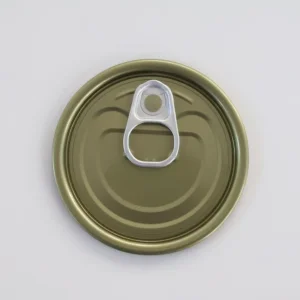
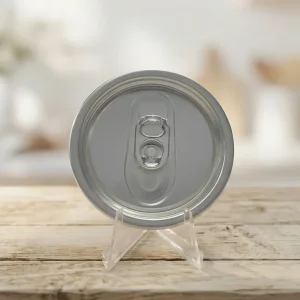
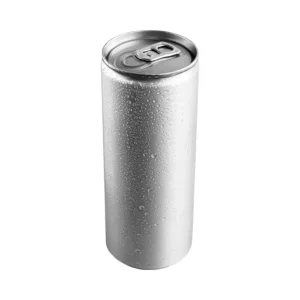
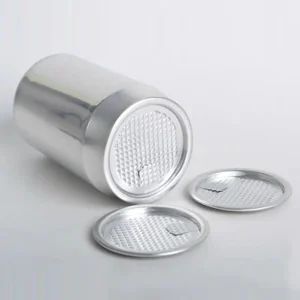
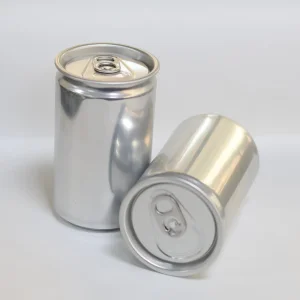
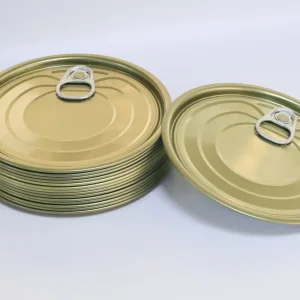
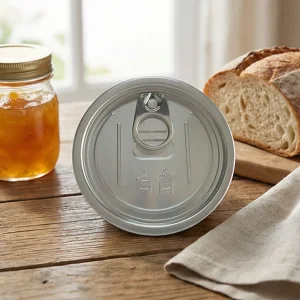
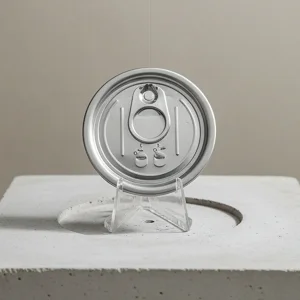
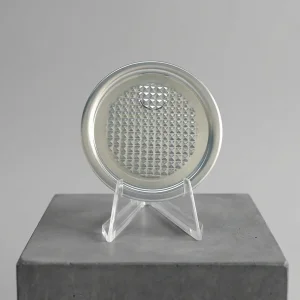
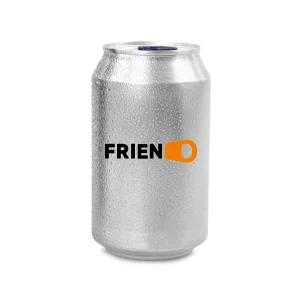
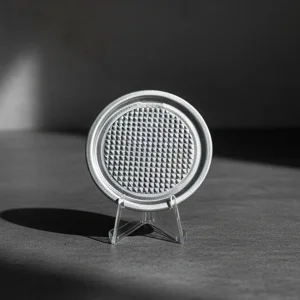
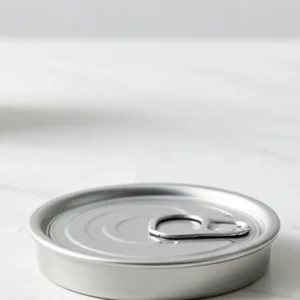
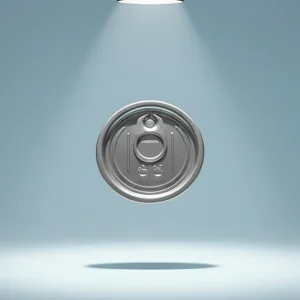
Certified food-grade aluminum cans, easy-open ends, and specialty closures manufactured to strict international tolerance standards.
An authoritative analysis of high-speed mechanical integrity, alloy selection, and surface chemistry for modern high-pressure beverage packaging.
The global beverage packaging ecosystem has undergone a structural migration toward infinitely recyclable aluminum substrates. At the core of this transition is the standardized 330ml aluminum beverage can paired with the 202 diameter Easy-Open End (EOE), representing the gold standard in volumetric efficiency, structural stability, and thermal conductivity. For global procurement directors, beverage brands, and co-packing entities, understanding the technical nuances of Chinese advanced manufacturing facilities provides a clear competitive vector in unit cost optimization and packaging reliability.
Modern 330ml two-piece aluminum cans are produced through a high-precision Drawn and Wall Ironed (DWI) process. The choice of alloy dictates the axial load strength, internal pressure resistance, and necking behavior on high-speed seaming lines:
| Component Specification | Alloy & Temper | Nominal Gauge (mm) | Critical Mechanical Parameter |
|---|---|---|---|
| 330ml Can Body (Standard/Sleek) | AA3104-H19 | 0.245 – 0.260 mm | Axial Load Resistance > 800 N; Internal Burst > 6.2 bar |
| 202 SOT / RPT Lid Shell | AA5182-H48 | 0.205 – 0.220 mm | Buckle Pressure > 6.2 bar; Feathering Score Depth Calibration |
| Stay-On Tab (SOT) Mechanism | AA5052-H19 | 0.330 – 0.360 mm | Pop Force: 14–22 N; Pull-Open Force: 22–32 N |
The internal surface of the 330ml can body and the underside of the 202 lid are coated with advanced polymeric barriers to eliminate metal-to-liquid contact, preventing flavor distortion, aluminum leaching, and liner perforation caused by acidic liquids (pH < 3.0).
To adhere to stringent global food safety protocols—including European Union Regulation (EC) No 1935/2004 and US FDA 21 CFR 175.300—leading Chinese manufacturers have converted production lines to BPA-NI (Bisphenol A Non-Intent) thermosetting lacquers. These acrylic or modified polyester resin coatings are applied via electrostatic spray systems and cross-linked in high-temperature ovens, achieving complete film continuity validated by Enamel Rater testing (< 2.0 mA electrical current penetration).
Why premier global beverage conglomerates partner with tier-one Chinese aluminum container manufacturers for large-scale, defect-free supply chains.
Utilizing high-precision Stolle and Minster conversion presses operating at up to 3,400 ends per minute. Integrated machine vision systems scan every lid in real-time for micro-flaws, score line anomalies, and tab misalignment.
Full adherence to ISO 9001, FSSC 22000, and GMP standards. Batch-coded production enables 100% coil-to-can traceability, ensuring complete quality accountability across global distribution channels.
Direct integration with localized aluminum smelting and coil lacquering hubs minimizes raw material transport overheads. Scales of production enable optimized per-unit pricing while preserving premium material specs.
Engineering support for double-seam optimization, line speed synchronization, and critical seamer tool matching.
A primary challenge for beverage high-speed filling facilities (operating at 600 to 1,200 cans per minute) is eliminating seam defects such as micro-leaks, false seams, cutovers, and split curls. The interaction between the 202 lid end-curl and the 330ml can body flange requires rigorous mechanical tolerance matching.
Leading Chinese exporters provide comprehensive technical datasheets and chuck/roll tooling profiles compatible with global seamer brands like Ferrum, Angelus, and Pneumatic Scale. Establishing proper double-seam integrity requires tight control over five critical dimensional indices:
Maintained within ± 0.10 mm to ensure proper seating of the chuck nose and resist internal pressure without lid dome distortion.
Precisely controlled via first and second-operation roll profiles, mitigating loose seams or metal fractures along the cover hook.
Targeted consistently above 55%, ensuring the rubber compound gasket achieves gas-tight hermetic compression.
Customized barrier coatings, internal pressures, and print decorations tailored to specific product categories.
Requires low dissolved oxygen (DO) pickup during seaming. The 202 SOT lid provides tight score line tolerances to withstand pasteurization pressures while locking in hop aromatics and carbonation.
Carbonated soft drinks impose continuous internal pressures up to 4.5 bar. High-strength 5182-H48 lid shells prevent end dome reversal or fatigue failure under elevated ambient logistics temperatures.
Formulations containing taurine, high citric acid, or vitamins demand specialized internal epoxy or organosol linings to eliminate liner aggressive breakdown and shelf-life degradation.
Non-carbonated liquid fills use liquid nitrogen dosing (LN2) prior to seaming to create internal pressure. 330ml thin-wall cans gain sidewall rigidity while retaining lightweight benefits.
Mitigating supply chain risks, optimizing container loading factors, and ensuring damage-free maritime transit.
Procuring aluminum cans and easy-open ends from Chinese manufacturing hubs involves complex intercontinental logistics. Leading tier-one suppliers execute strict packaging engineering protocols to safeguard high-volume shipments against humidity oxidation, denting, and pallet destabilization.
330ml aluminum cans are shipped in bulk layer-packed configurations separated by high-density corrugated kraft or plastic slip sheets. Pallets are secured using automated stretch hooding and edge-board protectors, providing complete dust and moisture isolation during sea freight.
Every commercial invoice and container dispatch is accompanied by a Quality Assurance Certificate of Analysis (COA) specifying test results for film weight, alloy chemistry, enamel rater readings, pop/pull opening force, and buckle pressure strength. Complete compliance with REACH, RoHS, EU No 10/2011, and US FDA requirements guarantees seamless customs clearance in North America, Europe, Asia-Pacific, and MEA regions.
Direct answers to the most critical technical, metallurgical, and contractual questions asked by global beverage brands and sourcing managers.
SOT (Stay-On Tab) leaves the opened tab attached to the end shell permanently, preventing littering and complying with global environmental laws. RPT (Ring Pull Tab) separates completely from the lid upon opening. SOT is the dominant choice for beverage cans, while RPT is typically used for dry food, powders, or select regional applications.
Tier-one Chinese facilities utilize certified non-BPA internal lacquer systems supplied by global chemical leaders such as AkzoNobel, PPG, and Valspar. Every batch undergoes third-party GC-MS migration testing (SGS/TÜV Rheinland) to verify non-detectable levels of Bisphenol A under strict FDA and EU 10/2011 limits.
Standard 202 aluminum lids feature a nominal buckle rating of ≥ 6.2 bar (90 psi). For products distributed across mountain transit routes or air freight where ambient pressure drops, this high buckle strength prevents lid dome expansion or seal integrity failure.
Yes. Advanced 6 to 8-color dry offset printing presses can apply combination varnishes, including spot matte, tactile sand-feel, metallic gloss, and thermo-chromic inks that change color based on product temperature.
The tab rivet is formed through multi-stage cold staking press dies. An integrated liquid sealant is applied underneath the score area and rivet head during conversion, ensuring 100% gas-tight sealing even under severe thermal expansion.
With modern polymer film weights (typically 70–90 mg/sqm for standard beverages and >100 mg/sqm for highly acidic drinks), shelf life ranges from 12 to 24 months, verified by accelerated corrosion resistance testing in incubator chambers.
You must supply the seamer machine model (e.g., Ferrum 8-head, Angelus 60L), line operating speed, target double-seam dimensional specs, and end curl parameters. Detailed CAD drawings are exchanged for engineering sign-off prior to tooling production.
Plain/unprinted (bright) 330ml cans generally start at a minimum order of one 40ft container (approx. 90,000–100,000 units). Custom-printed cans usually require an MOQ of 300,000 to 500,000 units per artwork SKU due to high-speed press set-up and ink calibration requirements.
Explore additional specialized easy-open ends, powder container seals, and beverage can variants manufactured in our certified facilities.