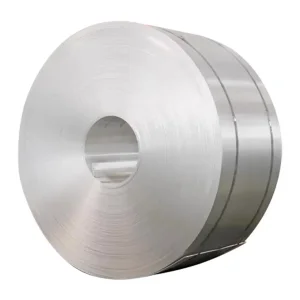
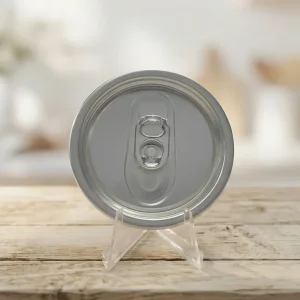
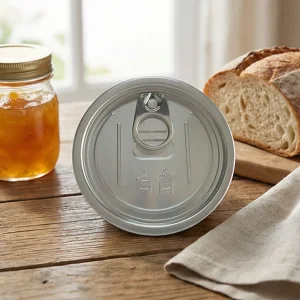
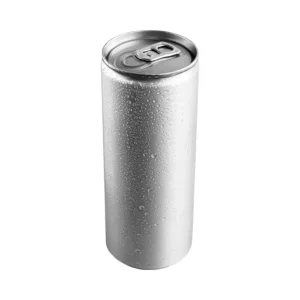
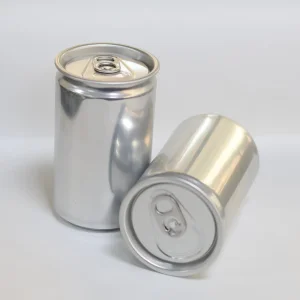
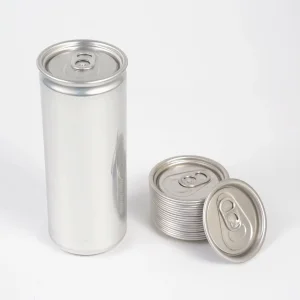
Precision-engineered food-grade easy-open ends, 8011/3104/5182 aluminium coils, and high-barrier packaging solutions tested for international seaming lines.
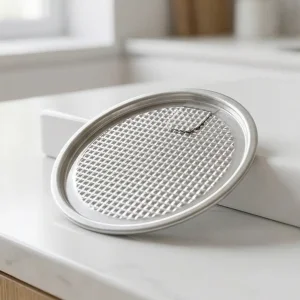
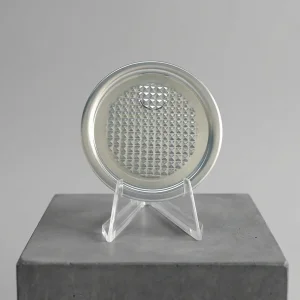
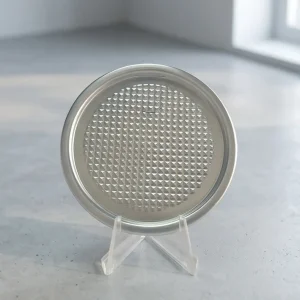
Understanding the global transition toward circular metal packaging, carbon offset mandates, and raw material optimization across international manufacturing hubs.
In the modern international packaging landscape, Kerajang Aluminium (aluminium foil, lacquered coil, and precision metal closures) represents the apex of barrier protection and circular economy design. As consumer goods manufacturers, pharmaceutical giants, and beverage fillers navigate stringent Extended Producer Responsibility (EPR) regulations and Scope 3 carbon reduction targets, aluminium packaging has transitioned from a traditional utility material into a strategic asset.
Global demand for aluminium coils, draw-redraw (DWI) can bodies, and easy-open ends (EOE) is projected to surpass $32 Billion by 2030, driven predominantly by rapid urbanization across APAC, high demand for single-serve premium RTD (Ready-To-Drink) beverages in North America, and rigorous food-contact legislation in the European Union. Unlike single-use polymers that degrade structurally during mechanical recycling, kerajang aluminium retains its metallurgical properties indefinitely. Recycling processed aluminium consumes 95% less energy than primary smelting from bauxite, creating an undeniable financial and environmental imperative for global brand owners.
Drastically reduces logistics carbon footprints due to low tare weight while offering 100% closed-loop recycling capabilities mandated by global environmental standards.
Complete opacity prevents photo-oxidation, oxygen ingress, and moisture permeation, extending shelf life for sensitive infant powders, beers, and pharmaceuticals.
Engineered feather-edge curls and countersink depths match high-speed automated chucks and seamers (e.g., Angelus, Ferrum) with zero flaking.
How Chinese metallurgical ecosystems, automated stamping presses, and rigorous testing protocols deliver uncompromised quality at scale.
China’s industrial metal infrastructure operates on an integrated cluster model. From bauxite refining and continuous hot-rolling mills in Henan and Shandong to precision slitting and multi-die press stamping in Shanghai, the supply chain eliminates intermediary transport delays and thermal stress variances.
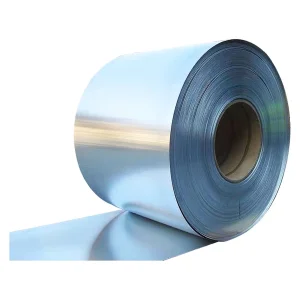
This geographic concentration allows factories to maintain tight thickness tolerances (down to ±0.002mm) on 3104-H19 can body stock and 8011-O foil coils. High-capacity continuous annealing lines ensure that grain direction and tensile elongation remain uniform throughout a 10-metric-ton coil, drastically reducing web breaks during high-speed lid punching or deep drawing.
Leading Chinese facilities utilize state-of-the-art multi-station conversion presses (including Schuler, Stolle, and Minster systems) operating at speeds exceeding 3,000 ends per minute. Integrated Vision Inspection Systems (AOI) scan every single lid for pinholes, score depth anomalies, tab alignment, and compound gasket positioning in real time.
To comply with stringent international food safety standards (such as FDA 21 CFR 175.300, EU Regulation 1935/2004, and GB 4806.10), Chinese manufacturers enforce rigorous batch-level testing routines before releasing shipments:
Matching specific metal packaging grades, alloys, and lacquers to distinct B2B industry applications.
| Category | Alloy & Temper | Gauge Range | Internal Lacquer | Key Application | Performance Spec |
|---|---|---|---|---|---|
| Beverage Ends (SOT / RPT) | 5182 - H48 | 0.210mm - 0.240mm | BPA-NI Epoxy / Acrylic | Carbonated Soft Drinks, Craft Beer, RTD Cocktails | Buckle Pressure > 6.2 Bar; Pop Force < 22 N |
| Powder & Dry Food Lids | 8011 / 5052 - H14 | 0.220mm - 0.280mm | Organosol / Food-Grade Gold | Infant Formula, Coffee, Protein Powders | Zero Oxygen Transmittance; Peel Force 12-18 N |
| Can Body Stock | 3104 - H19 | 0.245mm - 0.275mm | Modified Water-Based Acrylic | Sleek, Slim, and Standard Beverage Cans | Tensile Strength > 290 MPa; Earing Rate < 1.8% |
| High-Temp Retort Lids | 8011 - O / H22 | 0.180mm - 0.250mm | Retort-Resistant Polypropylene | Canned Pet Food, Ready Meals, Sterilized Meat | Autoclave Stability at 121°C / 131°C for 45 min |
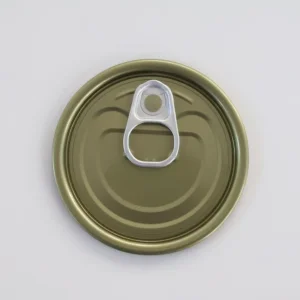
| Tinplate Sanitary Ends | TH550 / MR Tempers | 0.180mm - 0.220mm | Aluminized Organosol / Polyester | Canned Vegetables, Soups, Paints | Hermetic Compound Seal; High Axial Load Strength |
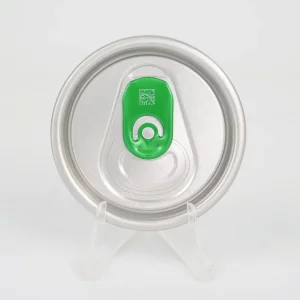
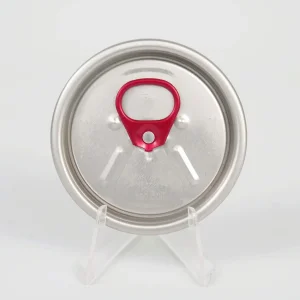
200# and 202# Stay-On Tab (SOT) ends designed to withstand internal beverage pressures up to 90 PSI while maintaining double-seam integrity under pasteurization.
211#, 300#, 401#, and 502# Easy-Open Lids (EOE) and foil membrane ends engineered for nitrogen-flush sealing, keeping residual oxygen under 0.5%.
305# high-temperature sterilizable aluminium lids equipped with specialized heat-seal lacquers capable of enduring intense autoclave thermal processing.
From non-intent BPA lacquers to laser-etched smart packaging, explore the technological shifts driving global procurement strategies.
Regulatory bodies worldwide, including California's Prop 65 and the European Food Safety Authority (EFSA), are accelerating restrictions on Bisphenol-A (BPA) in food-contact packaging. Modern Chinese production lines have pioneered the deployment of advanced acrylic, polyester, and polyolefin resins that provide superior chemical resistance without leaching synthetic hormones into acidic or alcohol-based contents.
Every fraction of a millimeter reduced in coil thickness yields significant raw material savings and transport carbon reduction. Through finite element analysis (FEA) and modified alloy chemistry, coil thickness for 202# ends has been optimized from 0.24mm down to 0.208mm without sacrificing column load capacity or buckle resistance under tropical shipping conditions.
Short-run seasonal craft beers, specialty functional drinks, and localized promotional campaigns require agile printing methods. Modern dry-offset press lines (capable of up to 8–10 colors) alongside direct-to-shape digital inkjet systems allow high-resolution photorealistic imagery on aluminium cans and decorated lids with zero plating setup delays.
High-value sectors—such as premium infant formula and luxury RTD beverages—are adopting laser-etched QR codes on pull tabs and undersides of easy-open ends. This allows brand owners to provide end-to-end traceability, consumer engagement portals, and instant authenticity verification directly at the point of consumption.
Key quality metrics procurement directors must evaluate when selecting a supplier for Kerajang Aluminium products.
Always demand a complete Mill Test Certificate (MTC) detailing exact chemical composition (Si, Fe, Cu, Mn, Mg, Cr, Zn, Ti), tensile strength, yield strength, and elongation percentage. Each lot should link directly back to the original aluminum ingot melt number.
Ensure the supplier provides detailed technical mechanical drawings confirming curl height, countersink depth, radius angles, and outer diameter. Request a trial lot (e.g., 50,000 pieces) to conduct double-seam teardown trials on your specific seaming machinery prior to full container ordering.
Verify that migration test reports are issued by accredited third-party laboratories (such as SGS, Intertek, or TÜV). Confirm compliance with FDA 21 CFR 175.300, EU 10/2011, and relevant heavy metal limits (RoHS & REACH).
Aluminium coils and easy-open lids are susceptible to oxidation if exposed to marine humidity. Confirm that shipment packaging includes desiccant packs, VCI (Volatile Corrosion Inhibitor) film wrapping, heavy-duty wooden skids, and stretch-hood pallethization.
In-depth expert answers addressing technical, regulatory, and commercial queries for metal packaging buyers.
Each alloy temper is optimized for specific mechanical demands. 3104-H19 contains manganese and magnesium, offering high tensile strength and elongation ideal for deep drawing (DWI process) beverage can bodies. 5182-H48 has higher magnesium content, imparting superior buckle pressure resistance needed for carbonated drink ends (SOT/RPT shells). 8011 (often in O or H14 temper) is an iron-silicon alloy providing high ductility, excellent corrosion resistance, and zero pinhole permeability, making it perfect for thin foil lacquered lid stock and pharmaceutical blister seals.
We utilize customized internal coating formulations, such as modified epoxy-phenolic or BPA-NI organosol coatings applied at controlled film weights (typically 6 to 12 g/m²). Post-curing cross-linking density is monitored in baking ovens. Each production batch undergoes 100% online Enamel Rater electrical current testing (keeping leakage below 0.05 mA) as well as accelerated pack testing using citric acid, salt brine, and alcohol solutions to ensure zero coat breakdown over extended shelf lives.
For plain/bright unprinted cans or standard stocked easy-open ends (such as 200#, 202# SOT, 211#, 300#, and 401#), trial orders start at 100,000 to 200,000 pieces with lead times of 10–15 working days. For custom dry-offset printed cans requiring graphic proofing and plate manufacturing, the standard MOQ is typically 1 full 20ft/40ft container per SKU (approx. 150,000 - 300,000 cans), with a production lead time of 20 to 25 days following artwork approval.
Products are packed according to heavy-duty export marine standards. Coils are wrapped in anti-corrosion VCI stretch film, padded with plastic edge protectors, secured on fumigated wooden pallets, and loaded with silica gel desiccant bags. Easy-open ends are packed into moisture-sealed polyethylene sleeves inside heavy-duty corrugated cartons or fiber drums, loaded on pallets wrapped with automated stretch hooders to prevent ambient moisture ingress across ocean transit routes.
Browse our comprehensive series of 200# SOT, 305# sterilisable, 3104 coil, and sleek/slim beverage can solutions available for export worldwide.