Engineered for ultra-fast seaming lines, certified food-grade contact, and zero-leak hermetic sealing performance across international supply networks.
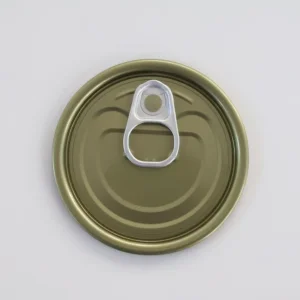
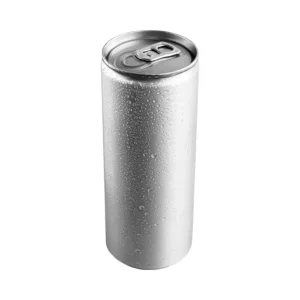
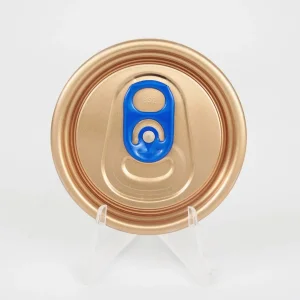
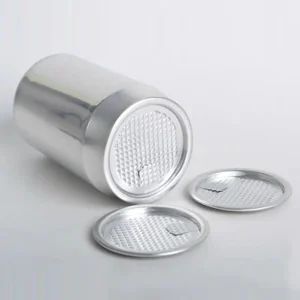
The global metal packaging market is undergoing a seismic shift driven by strict environmental regulations, ESG mandates, and consumer transitions away from single-use plastics toward endlessly recyclable aluminum and tinplate materials. At the epicenter of this industrial evolution are China Global Easy Open End (EOE) Can Factories. As international beverage brands, food canning conglomerates, and pharmaceutical packaging procurers scale up filling speeds to exceed 1,500 cans per minute (CPM), the demand for high-precision, low-defect metal lids and drawn-and-wall-ironed (DWI) aluminum body cans has reached an unprecedented zenith.
Modern fast-moving consumer goods (FMCG) operations require extreme dimensional consistency. A micro-deviation of mere micrometers in curl diameter, score depth, or rivet tightness can precipitate catastrophic seam failures, micro-leaks, line jams, and costly plant downtime. Chinese manufacturing ecosystems have responded by integrating advanced European high-speed stamping presses (such as Minster and Stolle lines), real-time machine vision inspection systems, and sophisticated metallurgical controls using high-grade 5182-H48 and 3104-H19 aluminum alloys alongside electrolytic tinplate (ETP).
Information Gain Insight: The global transition to BPA-NI (Bisphenol A Non-Intent) internal lacquers and light-weighted 200# / 202# stay-on tab (SOT) shells has redefined factory qualification criteria. Importers no longer seek mere component suppliers; they mandate integrated engineering partners capable of guaranteeing double-seam integrity under high thermal pressure and severe oceanic transit environments.
The manufacturing of Easy Open Ends is an exercise in extreme mechanical engineering. The process begins with raw coil selection, where tensile strength, elongation, and grain orientation dictate the behavior of the metal during high-speed blanking, forming, scoring, and tab attachment.
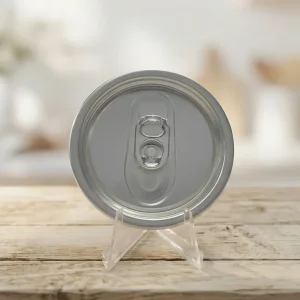
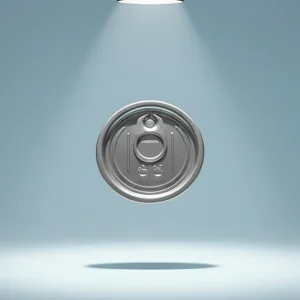
For beverage applications utilizing Stay-On Tab (SOT) or Ring Pull Tab (RPT) mechanisms, top-tier Chinese factories employ AA5182-H48 aluminum coil for end shells. This alloy provides superior work-hardening characteristics and exceptional buckle resistance necessary to withstand internal pressures up to 6.2 bar generated by carbonated soft drinks (CSD) and pasteurized craft beers. For the tab component, AA5052-H38 aluminum delivers optimal formability to create clean rivet structures without micro-fracturing.
| Component Type | Primary Alloy & Temper | Nominal Thickness | Internal Coating System | Typical Application |
|---|---|---|---|---|
| 200# / 202# SOT Lid | AA5182-H48 Aluminum | 0.205 mm - 0.225 mmBPA-NI Organosol / Modified Acrylic | Carbonated Soft Drinks, Energy Drinks, Beer | |
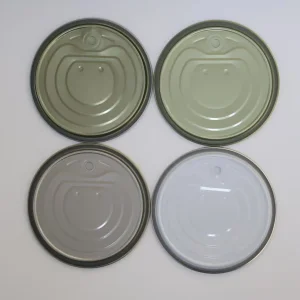
| 211# / 300# Food End | Electrolytic Tinplate (ETP) / TH330 | 0.190 mm - 0.230 mmEpoxy Phenolic / Organosol Gold | Canned Vegetables, Soups, Ready-to-Eat Meats | |
| 401# / 502# Powder Lid | AA8011-O / ETP Ring Shell | 0.230 mm - 0.280 mmAluminum Foil Membrane / Heat Seal Lacquer | Infant Formula, Protein Powders, Coffee Beans | |
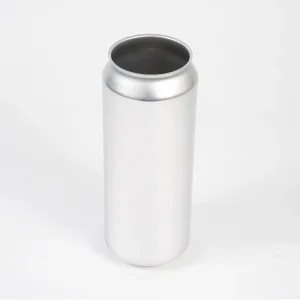
| 330ml / 500ml Can Body | AA3104-H19 Aluminum | 0.255 mm - 0.270 mmWater-based Polyethylene/Acrylic Spray | FMCG Beverages, RTD Cocktails, Sparkling Water |
The defining technical challenge of an easy-open end lies in balancing opening ease with structural stability during thermal processing or high-altitude transport. Factories must control the score residual depth—the thickness of metal remaining along the score groove—to within +/- 0.002 mm. If the residual is too thick, the consumer cannot break the seal (resulting in high pop/pull forces); if too thin, the end suffers premature burst or stress-corrosion cracking.
Advanced score profiling ensures initial pop force remains below 30 N while tab pull-up force stays under 45 N, ensuring accessible ergonomics across all demographic groups.
Precision-engineered curl thickness and radius guarantee optimal overlap, body hook, and cover hook values when matched with high-speed automatic filling line seamers.
Fully compliant non-intent bisphenol internal spray coatings prevent organoleptic degradation, safeguarding flavor purity across 12-to-24-month storage lifespans.
Leading Chinese easy-open end and aluminum can factories do not merely deliver off-the-shelf commodities; they manufacture customized packaging suites adapted to regional filling regulations, climatic challenges, and specific food matrix chemistries.
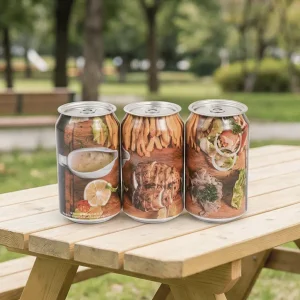
Beverages containing high volumes of dissolved carbon dioxide (up to 4.2 volumes CO₂) or those requiring tunnel pasteurization at 60°C–65°C demand ultra-stiff end geometry. The 202# SOT (Stay-On Tab) end, featuring a countersink design engineered to resist dome reversal, is the global benchmark. Coupled with 330ml, 355ml (12oz), and 500ml standard or sleek aluminum cans, beverage brands achieve maximal shelf impact with minimal metal mass.
Sensitive powdered nutrition matrices suffer oxidative rancidity when exposed to fractional traces of oxygen or moisture vapor. Factories supply 401# and 502# Peel-Off Ends (POE) consisting of a rigid tinplate or aluminum ring lined with an aluminum foil membrane. These lids feature an oxygen transmission rate (OTR) effectively approaching absolute zero (< 0.005 cc/m²/24hr). Furthermore, high-humidity coastal destinations require anti-corrosion lacquers on the outer rim to eliminate oxidation risks during long freight journeys.
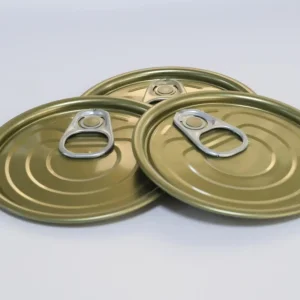
Thermal sterilization under steam autoclave conditions (121°C for up to 45 minutes) imposes severe thermal shock upon can structures. Full-aperture easy-open tinplate ends (such as 211#, 300#, and 307# EOE) utilize specialized organosol linings with high cross-linking density. This ensures the internal barrier remains continuous despite expansion and contraction of the food matrix during cooking cycles.
Navigating international food-contact safety standards requires transparent, rigorous quality management frameworks. Certified Chinese packaging suppliers maintain comprehensive compliance documentation verified by accredited third-party laboratories (SGS, TUV, Intertek).
Fully compliant with FDA 21 CFR 175.300, EU Regulation 1935/2004, Commission Regulation (EU) 10/2011, and China National Standard GB 4806.10, verifying zero toxic heavy metals or unreacted monomers.
High-speed optical sensors evaluate 100% of manufactured ends for pinholes, rivet distortion, lacquer voids, and edge defects at speeds exceeding 2,500 parts per minute.
Senior seamer technicians provide worldwide on-site installation, pin height calibration, chuck/roll profile alignment, and double-seam teardown training for client operational teams.
To guarantee complete hermetic isolation, factory quality control units enforce stringent seam dimensional tolerances. The five key parameters monitored during routine line teardowns include:
The next decade of metal packaging manufacturing is being forged through digital innovation and material science breakthroughs. Leading Chinese manufacturing clusters are executing long-term technical roadmaps structured around four core vectors:
Transitioning from 0.208 mm shell stock down to 0.180 mm through advanced high-yield aluminum alloys, reducing raw metal tonnage by up to 12% without sacrificing buckle threshold.
Integrating high-speed laser etching on the underside of tabs or inside shells to print serialized QR codes for anti-counterfeiting, supply chain tracking, and interactive consumer loyalty activations.
Scaling up utilization of post-consumer recycled (PCR) aluminum coil stocks, dramatically lowering carbon footprints (up to 95% energy savings versus primary smelting aluminum).
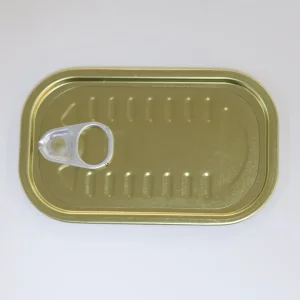
Explore our full operational catalog featuring food-grade tinplate lids, odor-proof herb/spice ends, sleek aluminum beverage bodies, and specialty square closures.
In-depth answers addressing procurement parameters, line compatibility, compliance certifications, and freight logistics for global beverage and food packaging buyers.
SOT (Stay-On Tab) ends remain attached to the shell after opening, making them the global standard for carbonated beverages and beer to prevent littering. RPT (Ring Pull Tab) ends detach completely, ideal for juices or milk beverages. POE (Peel-Off Ends) use a flexible aluminum foil membrane heat-sealed to a metal ring, engineered primarily for dry powders (infant formula, coffee) requiring tamper evidence and easy, safe peelability without sharp edges.
Certified suppliers employ modified acrylic or polyester-based organosol liquid coatings specifically formulated without Bisphenol A monomers or derivatives. Batch samples undergo chemical extraction testing under extreme heat (e.g., migration testing in 10% ethanol, 3% acetic acid, and fatty food simulants) to verify compliance with FDA 21 CFR 175.300 and EU Regulation 10/2011 limits.
Plain or bright (unprinted) aluminum cans typically carry a minimum order of one 20 ft or 40 ft high-cube container (approx. 100,000 to 150,000 units depending on size). For custom 6-to-8 color dry offset printed cans, MOQs start at 100,000 pieces per artwork design to justify press setup, ink fountain calibration, and printing plate production.
Ends are stacked into paper sleeves or moisture-barrier polyethylene tubes, sealed in corrugated cartons, and palletized on heat-treated ISPM-15 wooden or plastic pallets. Pallets are wrapped with stretch hood film and packed with industrial desiccant bags to control relative humidity within ocean containers, preventing oxidation or salt-spray air degradation during 30-to-45-day sea voyages.
Yes. Shell profiles (such as CDL, B64, and ISE ends) are engineered to strict ISO and CMI (Can Manufacturers Institute) standard dimensions. Technical engineering teams provide exact seaming roll profiles, chuck specifications, and initial setup guidance to ensure drop-in compatibility on high-speed Angelus, Ferrum, Continental, or Somme seaming units.
