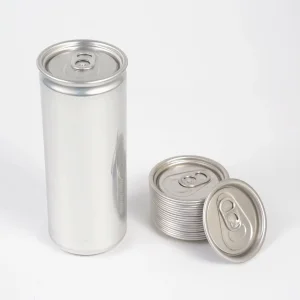
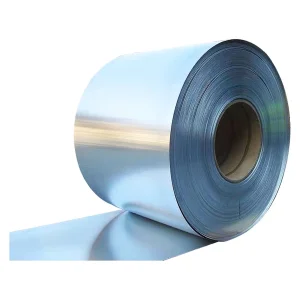
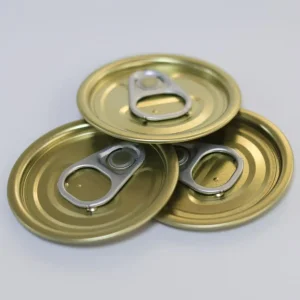
Engineered aluminum container shells, easy-open lids, and flexible metal substrates manufactured under ISO 9001 and FSSC 22000 standard protocols.
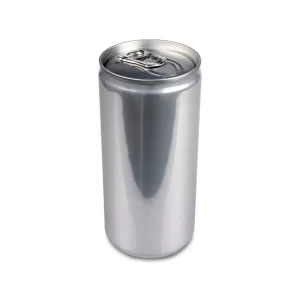



The global market for advanced aluminum substrates—spanning ultra-thin packaging films, cold-form foil laminates, drawn and wall-ironed (DWI) beverage can bodies, and precision-stamped easy-open ends (EOE)—is undergoing a structural transition toward deep decarbonization, closed-loop circular economy models, and micro-gauge structural engineering. Valued at over USD 28.5 billion globally, the high-barrier metal packaging sector is fueled by rapid consumer shifts away from single-use fossil-based polymers toward infinitely recyclable aluminum ecosystems.
As global fast-moving consumer goods (FMCG) conglomerates, pharmaceutical giants, and industrial formulators accelerate their Scope 3 emissions reduction pathways, the semantic boundary between "aluminum film", "foil barrier membranes", and "rigid metal shells" has unified. Modern packaging architecture relies on a synergistic continuum: thin-gauge flexible aluminum film laminates provide absolute moisture and gas barriers, while high-tensile alloy shells (such as 3104-H19 and 5182-H48) deliver mechanical burst resistance and structural integrity.
China's manufacturing ecosystem stands at the epicentre of this global transformation. By coupling ultra-modern smelting and continuous cold-rolling infrastructure with state-of-the-art lacquering and conversion equipment, Chinese manufacturers offer global buyers unparalleled technical precision, strict alloy consistency, and end-to-end supply chain traceability. This technical whitepaper explores the material science, process engineering, regulatory compliance, and economic efficiencies that define China’s leadership in global aluminum film and metal container manufacturing.
Achieving an optimal balance between ductility, burst strength, corrosion resistance, and printability requires precise metallurgical control during casting, homogenization, hot rolling, and cold work hardening. Aluminum film and coil stock utilized across modern conversion lines are broadly classified into distinct alloy series, each tailored for specific mechanical stress profiles:
| Alloy Grade | Temper Designation | Primary Elements | Tensile Strength (MPa) | Primary Application Scenarios |
|---|---|---|---|---|
| AA 8011 | O / H18 / H22 | Fe (0.6-1.0%), Si (0.5-0.9%) | 100 - 185 | Pharma foil, blister lid films, flexible barrier laminates, food-grade lids. |
| AA 3104 | H19 | Mn (0.8-1.4%), Mg (0.8-1.3%) | 270 - 320 | DWI Beverage can bodies (250ml, 330ml, 500ml standard/sleek formats). |
| AA 5182 | H48 | Mg (4.0-5.0%), Mn (0.2-0.5%) | 360 - 410 | High-stress Easy-Open Ends (202# SOT, RPT), beverage container ends. |
| AA 5052 | H32 / H34 | Mg (2.2-2.8%), Cr (0.15-0.35%) | 210 - 260 | Pull-tabs, non-magnetic pharmaceutical easy-open lids, chemical closures. |
Direct contact between reactive beverage acids, pharmaceutical active ingredients (APIs), or aggressive salty/fatty food slurries and bare aluminum matrix can lead to oxidation, metallic taste transfer, or container degradation. To mitigate this risk, state-of-the-art Chinese converting facilities utilize electrostatically sprayed organic liquid coatings or pre-laminated polymer film layers.
Utilizing modified acrylic, polyester, and organosol resins to guarantee zero bisphenol migration into sensitive food matrices, complying fully with EU 2018/213 and US FDA 21 CFR 175.300 standards.
Continuous foil lamination techniques achieve a Water Vapor Transmission Rate (WVTR) < 0.01 g/m²/24h and Oxygen Transmission Rate (OTR) < 0.01 cc/m²/24h, establishing an absolute seal against ambient degradation.
Specialized cross-linked internal lacquers withstand thermal sterilization environments up to 131°C (268°F) for 90 minutes without blistering, micro-cracking, or delamination from the substrate.
China's dominance in global aluminum film and metal packaging supply chains is rooted in structural industrial integration. Unlike fragmented overseas manufacturing models where aluminum smelting, rolling, lacquering, stamping, and printing occur in geographically isolated facilities, Chinese packaging mega-clusters integrate the entire value chain within tight regional industrial zones.
Primary aluminum ingots flow seamlessly into continuous hot-rolling mills (such as Chalco and Southwest Aluminum), securing precise gauge tolerance (+/- 0.002mm) and predictable alloy temper prior to slit-coil delivery.
Utilizing multi-cavity Minster and Stolle conversion presses capable of running up to 3,000 ends per minute (EPM) with inline high-resolution optical AI vision inspection systems detecting pinhole anomalies as small as 0.01mm.
Strategic proximity to Tier-1 container hubs (Shanghai, Ningbo, Qingdao) allows seamless multimodal export dispatch. Automated palletization, desiccant sleeve packing, and stretch-hood wrap prevent sea-freight humidity damage.
By leveraging this unmatched manufacturing scale, Chinese factories provide overseas brand owners, contract co-packers, and regional distributors with 30% to 45% total cost of ownership (TCO) optimization, shorter production cycle leads (often within 14-21 business days), and flexible order quantities ranging from sample trial containers to multi-vessel OEM deployments.
The structural versatility of aluminum film and metal container solutions caters to distinct regional market requirements, local consumer habits, and stringent regulatory demands. Below are key international sector implementations:
High carbonation levels (up to 4.2 volumes of CO₂) demand ultra-reliable 202# SOT (Stay-On Tab) ends equipped with 5182-H48 shell stock. German and Scandinavian craft beverage producers utilize sleek 330ml aluminum cans with pasteurization-resistant internal lacquers to preserve hop aromatics and avoid light-induced spoilage.
The dominant 12oz (355ml) standard and 16oz standard can profiles depend on uniform neck dimensions compatible with high-speed filling lines running in excess of 1,200 cans per minute. Smooth tab opening force (pop < 30N, pull < 45N) guarantees positive user experience.
Sensitive nutritional powders require non-magnetic 401# and 502# easy-open lids featuring peelable foil membranes or high-integrity aluminum ends. Nitrogen flushing creates a low-oxygen (<0.5% O₂) hermetic chamber, ensuring up to 36 months of shelf-life stability in hot, humid climates.
Ultra-pure AA 8011-O temper aluminum film with thickness ranging from 20µm to 30µm forms the backbone of push-through blister packs and strip foil laminates. Zero pinholes and full compliance with FDA DMF (Drug Master File) standards safeguard active drugs against hydrolytic degradation.
The next decade of metal packaging will be defined by three critical pillars: aggressive down-gauging (lightweighting), high PCR (Post-Consumer Recycled) content integration, and smart digital surface functionalization.
R&D engineers are reducing beverage can body wall thickness from 0.245mm down to 0.210mm while maintaining axial column strength (>1.0 kN) through redesigned bottom-dome geometries and strain-hardened 3104 alloy modifications.
Transitioning from primary aluminum smelter reliance to high-percentage recycled coil stock. Recycled aluminum requires only 5% of the energy consumed in primary extraction, dramatically lowering product carbon footprint (PCF) per unit.
Eliminating printing plates via high-speed water-based inkjet systems that enable custom micro-run beverage branding, stealth scannable QR codes for supply chain anti-counterfeiting, and real-time consumer engagement.
Deploying metal containers across international borders demands comprehensive regulatory documentation, rigorous food-contact safety clearances, and field engineering alignment with customer seaming equipment.
| Regulatory Standard | Geographic Region | Compliance Focus & Test Protocol | Documentation Provided |
|---|---|---|---|
| FDA 21 CFR 175.300 | North America | Resinous and polymeric coatings food contact migration testing. | FDA Certificate of Compliance & Migration Test Summary |
| EU Reg. 1935/2004 | European Union | Materials and articles intended to come into contact with food. | Declaration of Compliance (DoC) & Heavy Metal Analysis |
| GB 4806.10-2016 | China / Asia-Pacific | National Food Safety Standard for Paints and Coatings. | CMA / CNAS Accredited Third-Party Test Reports |
| REACH & RoHS | Global / EU | Absence of Substances of Very High Concern (SVHC) & heavy metals. | SGS / TÜV Rheinland Full Chemical Screening Reports |
Supplying ends or cans is only half the equation; verifying double-seam integrity on high-speed filling lines (Ferrum, Angelus, CFT, Pneumatic Scale) is essential. Technical service teams provide on-site or virtual support including first-operation seam overlap calculations, countersink depth checks, roll profile selection, and seam teardown micro-section inspection prior to commercial scale-up.
Advanced coils, specialized lids, and high-performance beverage containers engineered for global export markets.