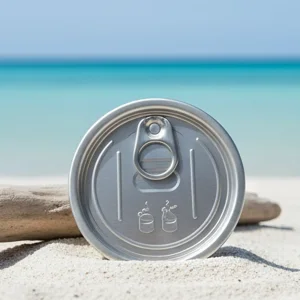
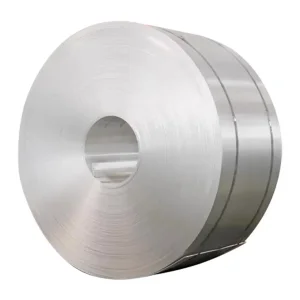
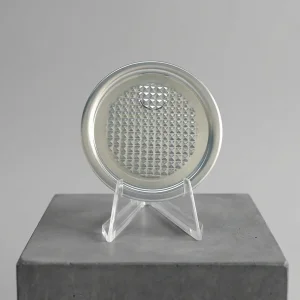
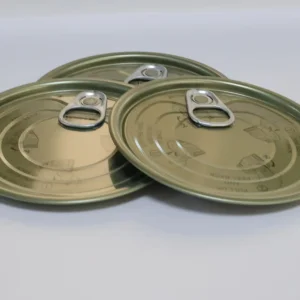
Explore our flagship export offerings sourced directly from premier Chinese manufacturing hubs. Every component adheres to ultra-strict dimensional tolerances, high-speed automated line compatibility, and international food-contact safety standards.
The global metal packaging market is undergoing a seismic paradigm shift driven by the imperative for circular economy compliance, stringent decarbonization mandates, and the rapid expansion of ready-to-drink (RTD) beverages and specialized powder goods. Aluminum can ends—commonly referred to as Easy-Open Ends (EOE), Stay-On Tab (SOT) lids, and Ring-Pull Tab (RPT) ends—represent the most engineering-intensive component of a two-piece container assembly. While body drawing relies on continuous wall ironing, can ends must withstand high internal pressures, maintain absolute hermetic integrity across multi-year shelf lives, and deliver consistent, user-friendly opening mechanics without compromising structural stability.
China has solidified its position as the world’s preeminent manufacturing hub for advanced aluminum can ends and coil substrates. By integrating upstream bauxite refining, precision alloy casting, ultra-thin coil rolling, and automated high-speed conversion pressing, Chinese factories offer an unprecedented combination of scale, cost efficiency, and metallurgical precision. Modern Chinese packaging plants operate multi-stage conversion presses running at speeds in excess of 3,000 ends per minute, utilizing advanced vision inspection systems (AOI) to guarantee zero-defect production runs.
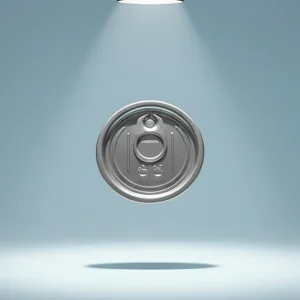
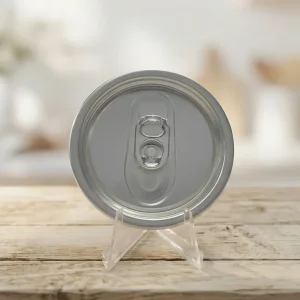
The global benchmark for carbonated soft drinks, beers, and sparkling waters. Designed to keep the pull-tab attached to the end after opening, facilitating 100% recycling without micro-littering.
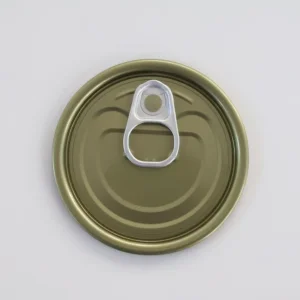
Engineered for complete aperture removal, ideal for processed foods, canned meats, fish, and specialized non-carbonated beverages requiring direct access or pouring ease.
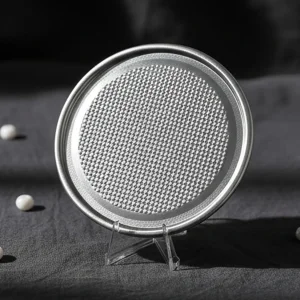
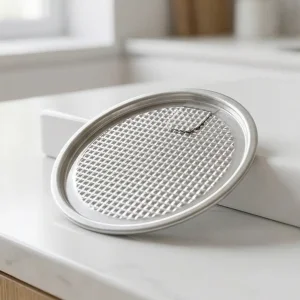
Specialized closure systems featuring anti-static linings, transparent window panels, and foil-peelable membranes tailored for infant formula, nutritional powders, and electronic reagents.
The production of premium aluminum can ends demands incredible material science rigor. Unlike standard sheet metal stamping, end conversion involves high-speed cold deformation, intricate rivet forming, scoring line depth control within tolerances of ±0.002 mm, and automatic liquid compound lining.
| Standard Code | Alloy & Temper | Nominal Thickness | Internal Lacquer System | Buckle Pressure (Bar) | Primary Industrial Application |
|---|---|---|---|---|---|
| 200# SOT CDL | AA 5182-H48 | 0.203 mm - 0.208 mm | BPA-NI Polyorganosol | ≥ 6.2 Bar | Ultra-sleek energy drinks, slim sodas |
| 202# SOT B64 | AA 5182-H48 | 0.216 mm - 0.224 mm | Epoxy-Acrylic / BPA-NI | ≥ 6.5 Bar | Carbonated soft drinks, craft beer, RTDs |
| 206# RPT / SOT | AA 5182-H48 / AA 5052 | 0.235 mm - 0.245 mm | Waterborne Modified Epoxy | ≥ 5.8 Bar | Standard juice cans, RTD coffee, canned beer |
| 300# Anti-Static | AA 8011 / AA 3104 | 0.220 mm - 0.250 mm | Conductive Anti-Static Liner | Vacuum / Non-Pressure | Electronic-grade powders, high-purity chemicals |
| 307# EOE Retort | AA 5182 / TFS Steel | 0.250 mm - 0.280 mm | Organosol Retort Resistant | Thermal 121°C Autoclave | Canned meats, pet foods, retorted soups |
| 502# Foil Peel-Off | AA 8011 / Composite | 0.280 mm - 0.320 mm | Heat-Sealable Polyolefin | Airtight Hermetic Seal | Infant formula, milk powder, nutritionals |
Score Line Depth & Opening Mechanics: The critical feature of any easy-open end is the score residual thickness. If the score line is cut too deep, the end risks premature rupture under internal carbonation pressure or thermal expansion during ocean freight. If cut too shallow, consumer pop-and-pull forces exceed ergonomic limits (target opening force: pop < 30 N, pull < 45 N). Advanced Chinese conversion factories employ laser gauge displacement sensors to verify score residual depth continuously across 100% of production.
Sealing Compound & Double-Seam Optimization: The curl radius of the end holds a precise dosage of water-based synthetic latex compound. During the double-seaming process on the filler’s high-speed line, this compound compresses into the mechanical interlock between the can body flange and the end curl, forming a gastight barrier capable of locking in CO₂ and blocking O₂ ingress.
Global beverage brands and industrial packaging distributors face continuous geopolitical, inflationary, and logistics challenges. The Chinese metal packaging supply ecosystem offers unmatched resilience built upon structural, technological, and geographic integrations:
Unlike converter facilities in Europe or North America that rely on third-party aluminum coil suppliers, leading Chinese industrial zones maintain co-located casting, rolling, and lacquering mills.
Chinese factories possess state-of-the-art CNC machining and spark erosion facilities, enabling custom tooling development for proprietary end profiles in weeks rather than months.
Logistics Masterclass & Sea-Freight Cushioning: Situated adjacent to deep-water shipping channels including Shanghai, Ningbo, and Qingdao ports, Chinese factories ship hundreds of forty-foot high-cube (40HC) containers daily. Ends are packed in heavy-duty moisture-barrier paper sleeves, loaded onto heat-treated ISPM-15 wooden pallets, and wrapped in high-tension stretch film equipped with desiccant packs to prevent transit corrosion during long ocean transits.
The versatility of aluminum can ends extends far beyond carbonated beverages. Tailored metallurgical tempers, specialized inner lacquers, and custom aperture geometries enable seamless integration into diverse industrial sectors globally:
High-tech electronics manufacturers require ultra-clean packaging for semiconductor-grade powders, conductive pastes, and rare-earth materials.
Anti-static 300# aluminum ends prevent electrostatic discharge (ESD) and particle cling, ensuring 100% material discharge and preventing contamination during automated dispenser loading.
High-value dairy and infant nutrition products demand zero-oxygen environments to avoid lipid oxidation and vitamin degradation.
Our 401# and 502# easy-open lids feature deep-drawn safety rims, tamper-evident foil membranes, and nitrogen-flush capability, extending product shelf life up to 36 months under tropical ambient conditions.
Volatile aromatic compounds can attack standard plastic closures, leading to aroma loss and container deformation over time.
Specialized odor-proof aluminum easy-open ends lined with chemical-resistant organosol barriers prevent essential oil migration, keeping herbs and gourmet spice mixes fresh for export markets.
As global climate regulations tighten and AI-driven smart factories mature, China’s metal packaging sector is advancing along a clear engineering roadmap toward ultimate sustainability and smart functionality.
Transitioning standard 202# shell gauge from 0.216 mm down to 0.198 mm without compromising buckle pressure resistance. Utilizing higher-strength 5182 modified alloys and optimized countersink geometry to reduce metal usage by up to 8% per end.
Phasing out epoxy-based internal coatings in favor of advanced acrylic, polyester, and plant-derived organosols (BPA-NI and PVC-Free). Fully compliant with strict European Union EFSA directives and US FDA 21 CFR 175.300 standards.
High-speed laser printing of unique high-density 2D QR codes on the underside or topside of the tab. Enables anti-counterfeiting tracking, direct-to-consumer digital engagement, and real-time supply chain traceability.
Expanding post-consumer recycled (PCR) aluminum content in coil production up to 85%+, dramatically reducing the embodied carbon footprint per end from 0.08 kg CO2e down to under 0.02 kg CO2e.
Partnering with a Chinese global supplier requires total assurance regarding quality control and regulatory clearance. Leading manufacturers operate rigorous quality management systems backed by international third-party certifications.
Full conformance with FDA 21 CFR 175.300, EU Regulation 1935/2004, ISO 9001, FSSC 22000, and GB 4806.10 national food safety standards.
Every lot ships with a COA (Certificate of Analysis) detailing enamel rater values, rivet tightness, burst pressure ratings, and overall migration testing.
Packaging engineers provide remote and on-site technical support to help line engineers optimize seamer setup, chuck-and-roll tooling clearance, and double seam dimensions.
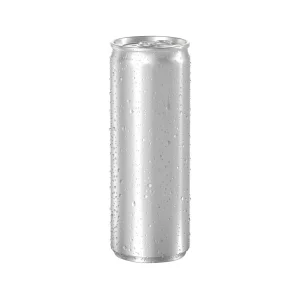
Complete your manufacturing setup with our secondary product lineup, including high-grade 3104 coil stock, slim aluminum can bodies, specialized tinplate closures, and premium powder lids.
For carbonated soft drinks, beer, and high-pressure beverages (internal pressure up to 6.5 bar), ends are manufactured using AA 5182-H48 shell stock combined with AA 5052-H19 tab stock. AA 5182 offers superior tensile strength and work hardening resistance, which prevents dome distortion and premature rivet failure. Conversely, non-pressure powder lids or peel-off ends frequently utilize AA 8011 or AA 3104 alloys, which prioritize deep-drawing flexibility, foil heat-seal compatibility, and cost efficiency.
Fine electronic powders, high-purity chemical reagents, and pharmaceutical active ingredients are highly susceptible to triboelectric charging during high-speed automated packaging. Standard lacquers can accumulate static electricity, causing powder particles to cling to the underside of the lid rim and contaminate the double-seam area. Our specialized anti-static 300# lids incorporate a conductive additive within the food-grade organic lining that safely dissipates static charges, ensuring clean filling lines and a perfect mechanical seal.
CDL, B64, and ISE represent evolutionary generations of aluminum end shell geometry. B64 is the traditional standard end profile widely used across legacy filling lines. CDL (Can Disposal Lid) features a redesigned countersink and narrower curl profile that reduces metal weight by approximately 8–10% while increasing buckle resistance. ISE represents a further optimized lightweight geometry tailored for ultra-high-speed modern canning plants. Chinese conversion plants maintain tooling for all three geometries to match customer seamer setups seamlessly.
Every shipment exported from our Chinese manufacturing partners includes a comprehensive compliance dossier:
• FDA 21 CFR 175.300 Compliance Certificate for resinuous and polymeric coatings.
• EU Regulation 1935/2004 and EU 10/2011 Overall and Specific Migration Test Reports.
• BPA-NI (Bisphenol A Non-Intentional) Statement verified via third-party SGS/Intertek testing.
• ISO 9001 quality audit logs, Enamel Rater test sheets (< 2.0 mA standard), and batch traceability reports.
Easy-open ends are highly delicate components; any damage to the end curl or protective lacquer will cause double-seamer jams or micro-leaks. Chinese factories employ a multi-layer ocean packaging system: ends are tightly sleeve-wrapped in heavy moisture-proof craft paper or plastic sleeves, placed in heavy-duty corrugated master cartons, stacked on heat-treated fumigation-free ISPM-15 wooden pallets, topped with protection boards, bound with high-tensile PET strapping, and completely shrink-wrapped with desiccants placed inside every container to prevent ocean sweat condensation.
Yes. High-speed conversion presses in China can integrate online tab anodization (providing tabs in red, black, gold, blue, or custom pantones), laser-etching on top of the tab or shell (logos, promotional codes, text), and internal high-definition ink printing on the underside of the tab or shell for direct-to-consumer promotional campaigns.
For standard stocked end diameters (e.g., 202# SOT raw silver ends or 300# standard easy-open ends), the MOQ starts at one 20-foot full container load (approx. 1.2 to 1.5 million ends depending on size), with dispatch within 10–15 days. For custom printed tabs, non-standard lacquer formulations, or bespoke embossing, the MOQ ranges from 2 million to 5 million pieces, with production turnaround within 25–30 days from artwork sign-off.
Cold-fill and ambient carbonated beverages utilize standard water-based synthetic rubber/latex lining compounds designed for elastic recovery during seaming. However, retorted products (such as canned coffee, milk teas, or processed meats subjected to 121°C autoclave sterilization for 30+ minutes) require high-temperature resistant, low-extractable PVC-free or organosol lining compounds that do not degrade, blister, or lose seal adhesion under thermal stress.