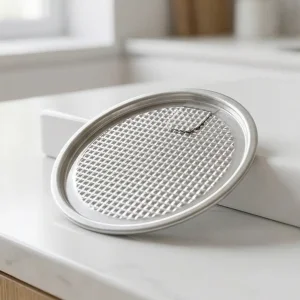
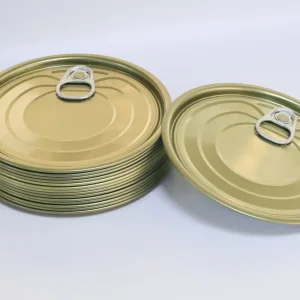
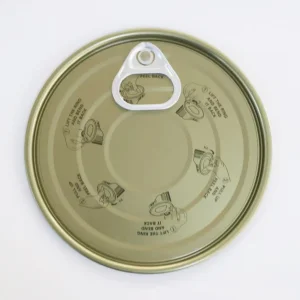
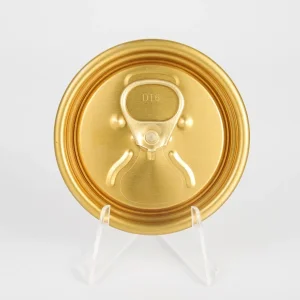
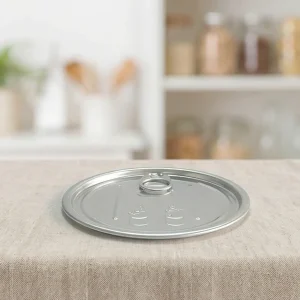
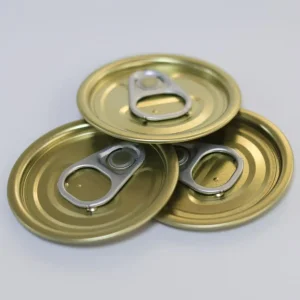
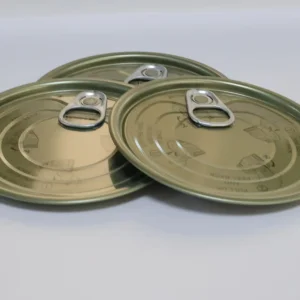
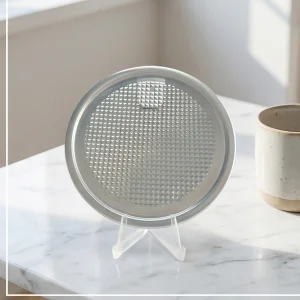
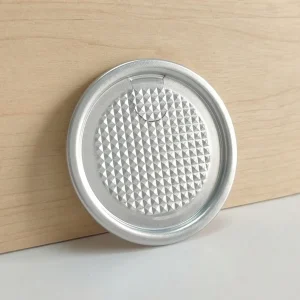
Direct factory supply of certified food-grade aluminium cans, lids, and easy-open closures engineered for high-speed filling lines.
An exhaustive analysis of metallurgical shifts, environmental regulations, and lightweight packaging economics transforming FMCG and industrial packaging worldwide.
Global regulatory bodies, including the EU packaging directive (PPWR) and US state-level EPR regulations, are penalizing single-use plastics. Aluminium stands out as an infinitely recyclable material—nearly 75% of all aluminium ever produced remains in active use today. Sourcing aluminium jars significantly reduces Scope 3 carbon accounting emissions for multinational brands.
Driven by rising ocean freight and logistics costs, advanced cold-rolling processes allow ultra-thin wall gauges (down to 0.21mm-0.28mm) without sacrificing column crush strength or internal pressure stability. Transitioning from heavy glass containers to rigid lightweight aluminium jars cuts transit payload weights by up to 38%.
Modern sensitive formulations—such as active cosmetics, organic food powders, and solvent-based industrial compounds—demand absolute oxygen, UV, and moisture barriers. The industry standard has shifted rapidly toward advanced BPA-NI (Bisphenol A Non-Intent) organosol and acrylic-polymer internal coatings that eliminate cross-reactivity and leaching.
Decoding what B2B buyers, packaging engineers, and supply chain managers require when evaluating Chinese metal packaging manufacturers.
High-speed automated filling lines operating at 300 to 1,200 cans per minute cannot tolerate dimensional variance. B2B buyers look for tight tolerances on flange geometry, countersink depth, curl dimensions, and thread pitch to prevent jam-ups and seam failures during rotary double-seaming.
Global procurement teams require complete traceability and regulatory proof before issuance of POs. Essential paperwork includes FDA 21 CFR 175.300, EU Regulation 1935/2004, heavy metal testing (RoHS/REACH), and specific overall migration limit (OML) test certificates issued by third-party testing labs like SGS or Intertek.
While legacy factories demand multi-million unit MOQs, modern global brands need agile sourcing. Enterprise buyers prioritize suppliers capable of running 100,000-unit trials while maintaining access to custom die-tooling for unique neck-down profiles, embossed logos, and specialized lid closures.
Long-distance maritime shipping exposes metal packaging to denting, humidity corrosion, and pallet shifting. Sourcing criteria demand high-density wooden/plastic pallets, heavy-duty top frames, anti-corrosive desiccant packs, and UV-resistant stretch-hood wrapping for flawless overseas delivery.
How Shanghai Friend Metals technology leverages automated high-speed pressing, AI visual inspection, and strategic port logistics to guarantee operational excellence.
Our Shanghai facility integrates state-of-the-art multi-station high-speed transfer presses capable of stamping easy-open lids and drawing aluminium jar shells at speeds exceeding 1,200 parts per minute with micron-level consistency.
Every lid and container passes through high-resolution inline optical camera systems. AI algorithms instantly inspect pinhole defects, coating scratches, tab alignment, and curling rim uniformity—automatically ejecting non-conforming items prior to palletization.
Located in Shanghai—the world’s busiest container port—our logistics network provides direct vessel sailings, immediate container availability, and streamlined export customs procedures, shortening ocean delivery lead times by 7 to 10 days.
Detailed material science metrics for packaging engineers and quality assurance specialists selecting ideal metal grades.
| Alloy & Temper Grade | Typical Application Component | Tensile Strength (MPa) | Yield Strength (MPa) | Key Engineering Characteristics |
|---|---|---|---|---|
| 3104-H19 Aluminium | DWI Drawn Can & Jar Bodies | 270 - 310 | 255 - 290 | High drawability, excellent earing control, superior column strength for thin-wall deep drawing. |
| 5182-H48 Aluminium | SOT / RPT Easy-Open End Shells | 360 - 410 | 310 - 360 | Exceptional buckle pressure resistance, high fatigue strength under carbonation/gas flush stress. |
| 5052-H32 Aluminium | Pull Tabs & Screw Cap Closures | 210 - 260 | 160 - 210 | Outstanding corrosion resistance, clean score line tearability, ideal for ergonomic tab forming. |
| 8011-O / H14 Aluminium | Lacquered Lid Stock & Tear-Off Foils | 140 - 180 | 100 - 150 | Exceptional ductility, high surface cleanliness for lacquering, superior heat-seal bond strength. |
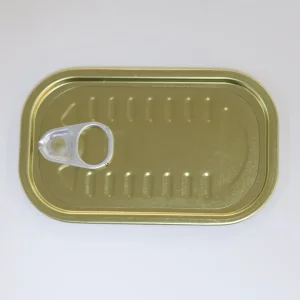
| MR Grade Tinplate (E2.8/2.8) | Airtight Industrial & Powder Lids | 330 - 450 | 300 - 400 | High structural rigidity, economic protection for dry powders and retordable food cans. |
From premium personal care to sterile nutritional powders—how our aluminium containers and lids are customized for localized global markets.
Seamless drawn aluminium jars with continuous thread screw caps are widely used for luxury hair pomades, body creams, and solid perfumes. Matte varnishes, embossing, and anodized metallic finishes provide shelf appeal for European and North American retail markets.
Utilizing 401# and 502# aluminium easy-open lids with peelable foil membranes or transparent-top windows. Applied in cleanroom packaging environments requiring nitrogen flushing to achieve residual oxygen levels below 0.5% for extended shelf freshness.
300# Anti-static coated aluminium lids and airtight tinplate closures engineered specifically for electronic-grade conductive powders, high-purity chemical reagents, and coastal salt-spray exposed packaging environments.
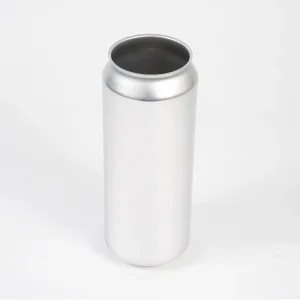
Standard 330ml, 355ml, and 500ml aluminium cans paired with 202# SOT pasteurization-stable lids. Engineered to withstand pasteurization heat cycles (up to 65°C) and internal carbonation pressures up to 6.2 bar.
Complete catalog items engineered for specialized industrial, pharmaceutical, and food-grade packaging specs.
How Shanghai Friend Metals technology enforces rigid quality assurance parameters across every batch of metal containers and easy-open ends.
Every 2 hours during production runs, sample cans and ends undergo automated optical double seam teardown. Parameters checked include seam length, thickness, body hook, end hook, overlap percentage (>85% requirement), and countersink depth to prevent micro-leakage.
Internal lacquer continuity is tested using high-precision electronic Enamel Raters (WACO formula). An electrical current checks for micro-pores in the internal organosol lining, guaranteeing readings under 2.0 mA to protect acidic beverages and aggressive products from metal contact.
Easy-open tabs and score lines undergo mechanical stress testing to calibrate opening ergonomics. Pop force (initial tab rupture) is maintained between 15 N to 28 N, while pull force (complete score line tearing) is maintained between 25 N to 45 N for effortless consumer opening.
Clear answers to crucial technical queries raised by global procurement executives and packaging engineers.