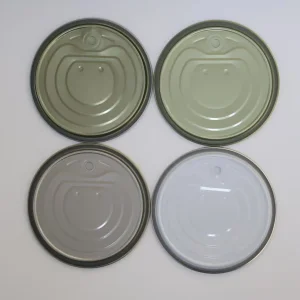
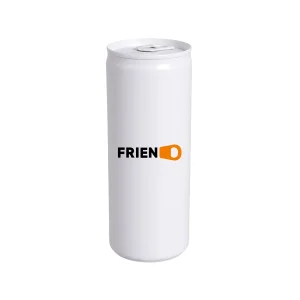
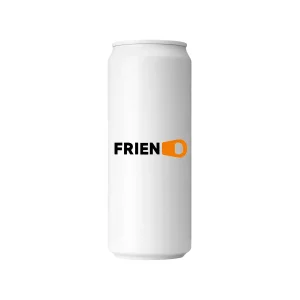
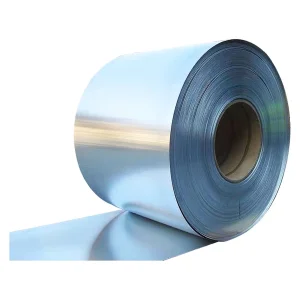
High-performance aluminium ends, lids, coils, and beverage cans manufactured to stringent international food-grade standards.
An executive analysis of global metal packaging shifts, material economics, supply resilience, and precision manufacturing capabilities.
The global metal packaging sector is undergoing a profound structural transformation. Driven by stringent global ESG (Environmental, Social, and Governance) imperatives, consumer resistance against single-use plastics, and the explosive rise of ready-to-drink (RTD) beverages, craft beers, and functional powder products, aluminum beverage cans and easy-open ends (EOE) have emerged as the gold standard of sustainable packaging.
Within this global ecosystem, China stands as the indisputable hub for advanced metal packaging manufacturing. Operating at the confluence of upstream metallurgical abundance (high-purity 5182, 3104, and 8011 aluminum coils) and downstream mega-scale high-speed conversion facilities, Chinese global aluminum can end factories deliver unmatched supply chain reliability, dimensional consistency, and cost-competitiveness.
To global beverage filler giants, contract packaging operations, and dairy brands across North America, Europe, the Middle East, and Asia-Pacific, partnering with leading Chinese suppliers provides not merely volume capacity, but engineering collaboration at the micro-meter level.
Understanding the physics, alloy formulations, score-line hydraulics, and barrier coatings that define world-class aluminum ends.
Aluminum ends demand exceptional tensile strength and elongation balance. The industry standard utilizes AA 5182-H48 or AA 5052-H19 aluminum coil stock. AA 5182 contains elevated magnesium (4.0–5.0%) and manganese (0.2–0.5%), giving the shell the structural integrity to withstand internal pressures exceeding 6.2 bar (90 psi) without buckling.
The score line—where the tab fractures the metal upon opening—is calculated to micro-meter tolerances. Residual metal thickness along the score line must be maintained between 0.055 mm and 0.065 mm. Too thick, and the consumer experiences high opening force; too thin, and thermal expansion during pasteurization causes premature micro-venting.
Food safety compliance requires advanced barrier coatings to eliminate metal migration into acidic carbonated drinks or milk powders. State-of-the-art Chinese suppliers utilize BPA-Non-Intent (BPA-NI) acrylic, polyester, or organosol coatings compliant with US FDA 21 CFR 175.300, EU 1935/2004, and China GB 4806.10 standards.
Comprehensive technical parameter matrix covering global standard sizes, tab types, profile geometry, and target application fields.
| End Designation | Nominal Diameter (mm) | Opening Mechanism / Tab Type | Material Thickness | Buckle Pressure | Primary Applications |
|---|---|---|---|---|---|
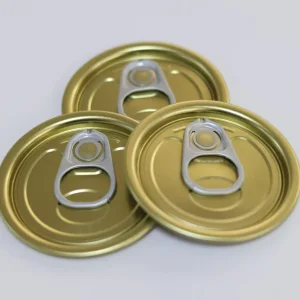
| 200# SOT / RPT | 50.8 mm | Stay-On Tab / Ring Pull Tab | 0.208 - 0.224 mm | ≥ 6.2 bar | Sleek & Slim Beverage Cans, Energy Drinks, Craft Beers |
| 202# SOT / RPT | 52.5 mm | Stay-On Tab / Large Opening (LOE) | 0.216 - 0.230 mm | ≥ 6.2 bar | Standard Carbonated Soft Drinks, RTD Teas, Beer Cans |
| 206# SOT | 57.0 mm | Stay-On Tab / Wide Mouth | 0.230 - 0.245 mm | ≥ 5.8 bar | Juices, Hot-Fill Flavored Beverages, Mass Market Cans |
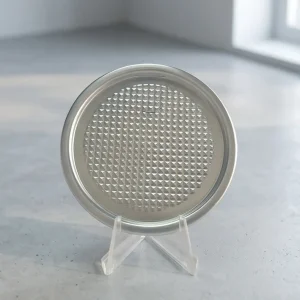
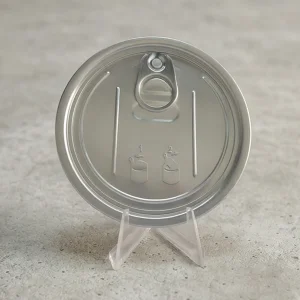
| 307# EOE | 83.3 mm | Full Aperture Easy Open (FAEO) | 0.240 - 0.260 mm | Retort Proof | Canned Foods, Vegetables, Meats, Seafood, Dry Snacks |
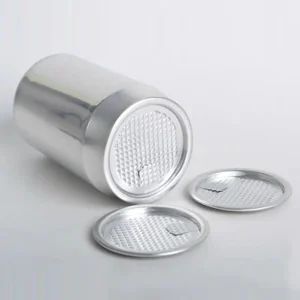
| 401# EOE | 99.0 mm | Full Aperture / Safety Foil Peel-off | 0.260 - 0.280 mm | Airtight Vacuum | Nutritional Milk Powders, Coffee Beans, Pet Foods |
| 502# EOE | 126.3 mm | Full Open / Transparent Window Option | 0.270 - 0.300 mm | High Structural Rigid | Bulk Infant Formula, Industrial Powders, Specialty Foods |
Tailoring metal packaging specifications to survive rigorous global filling, thermal sterilization, and transcontinental supply chains.
For high-carbonation beverages maintaining up to 4.2 volumes of dissolved CO₂, the interface between the can body neck and the end shell curl must maintain perfect double-seam symmetry. Chinese suppliers supply precision-engineered 202# SOT ends with pre-applied, water-based lining compounds that flow seamlessly into double-seam overlaps during high-speed seaming (up to 1,500 cans/minute).
Wet canned foods undergo severe retort sterilization at 121°C (250°F) under high pressure. Standard aluminum ends would suffer thermal distortion or lacquer failure. To solve this, specialized 307# and 401# easy-open lids utilize high-temperature retortable organosol lacquers paired with modified shell profiles that expand elastically during autoclaving without breaking hermetic seals.
The decade-long paradigm shift towards ultra-lightweighting, smart traceability, and decarbonized aluminum metallurgy.
Transitioning from 0.224 mm down to 0.208 mm and 0.198 mm shell stock stock. By redesigning the countersink depth and chuck wall radius, factories achieve identical buckle resistance (6.2 bar) while reducing raw aluminum consumption by 7.5% per billion units.
Deployment of multi-camera, deep-learning optical inspection vision lines operating at 3,500 ends per minute. Real-time micro-crack detection, compound void identification, and instant tab rivet torque monitoring eliminate factory defect pass-throughs completely.
Integration of over 85% Post-Consumer Recycled (PCR) aluminum content into 5182 alloy production without loss of ductility or corrosion resistance, dramatically reducing carbon emissions per end by up to 60% compared to primary smelter origins.
Direct insights from senior packaging engineers regarding line integration, quality audits, logistics, and compliance.
Explore additional specialized easy-open ends, powder packaging solutions, and aluminum cans designed for export markets.