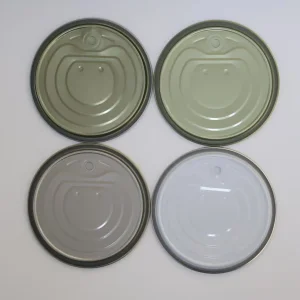
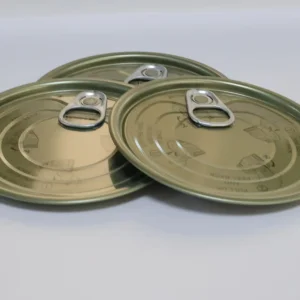
Engineered for food safety, extended shelf-life, and high-speed automatic filling compatibility.
The global rigid packaging market is undergoing a seismic paradigm shift. Driven by worldwide ESG (Environmental, Social, and Governance) mandates, Extended Producer Responsibility (EPR) legislation, and a shifting consumer consensus away from single-use plastics, metal packaging—specifically China empty tin cans, drawn-and-ironed (DWI) aluminum cans, and specialized tinplate lids—has emerged as the premier sustainable substrate for modern industrial and retail applications.
Metal packaging represents a true closed-loop circular economy. Unlike polymers that undergo thermal degradation during mechanical recycling, aluminum and electrolytic tinplate (ETP) maintain their structural integrity indefinitely through infinite recycling cycles. Today, Chinese manufacturers sit at the nexus of this global transformation, deploying state-of-the-art high-speed stamping presses, advanced laser-guided vision inspection systems, and low-VOC coating technologies to deliver cost-optimized, ultra-reliable metal containers worldwide.
Technical Insight: Modern two-piece drawn and wall-ironed (DWI) aluminum cans and three-piece welded tinplate cans manufactured in Shanghai offer gas permeability rates virtually equal to zero. This absolute barrier against oxygen, UV light, moisture, and microbial ingress extends product shelf life up to 36 months without chemical preservatives.
Key industrial drivers accelerating the adoption of China-manufactured empty tin cans and aluminum closures include:
Combining high-grade metallurgical alloys with precision coil slitting and automated double-seam quality assurance.
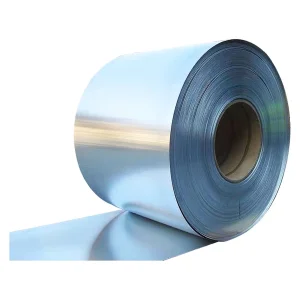
We source top-grade 3104-H19 aluminum for can bodies, 5182-H48 for easy-open end shells, 5052 for pull tabs, and superior 8011/3104 lacquered coils tailored for severe draw ratios and retort pasteurization cycles.
Precision-engineered end curls, compound lining application, and countersink depths designed to match Chuck & Seam Roll profiles perfectly, achieving zero-leakage hermetic seals under internal pressures up to 6.2 bar.
All internal coatings, exterior inks, and sealing compounds strictly comply with US FDA 21 CFR 175.300, EU Regulation 1935/2004, China GB 4806.10, and REACH/RoHS environmental directives.
Understanding the metallurgical matrix and coating chemistry is vital for sourcing procurement directors and packaging engineers. Empty tin cans and aluminum closures are not generic commodities; they are highly customized engineered structures calibrated to specific thermal processing, pressure dynamics, and product corrosive indexes.
Tinplate consists of a low-carbon steel substrate (blackplate) electroplated on both sides with pure metallic tin (Sn). The steel base provides structural strength, ductility, and deep-draw capability, while the tin layer provides corrosion resistance, solderability, and a bright aesthetic finish.
Direct contact between aggressive media (acidic beverages, sulfur-containing proteins, or chemical solvents) and bare metal can lead to dissolution of tin/iron, off-flavors, hydrogen swelling, or container perforation. Modern packaging lines utilize multi-layer polymer internal spray coatings:
BPA-Non-Intent (BPA-NI) Acrylic & Polyester Resins: Developed to replace conventional Bisphenol-A epoxy coatings, these formulations prevent chemical migration into food and beverage matrices, passing stringent EU 10/2011 overall migration testing (OMT) and heavy metal migration limits.
Custom-engineered container and lid configurations tailored for specialized market verticals.
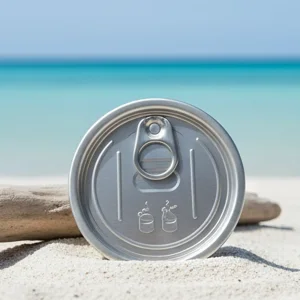
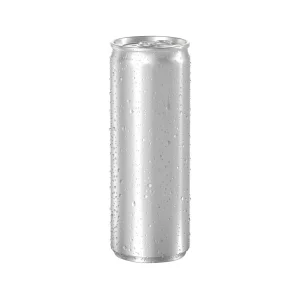
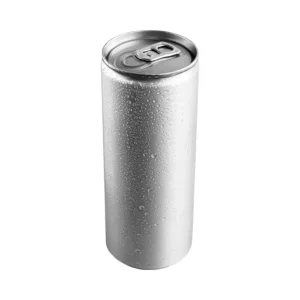
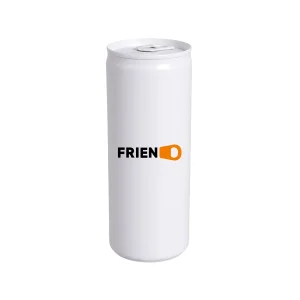
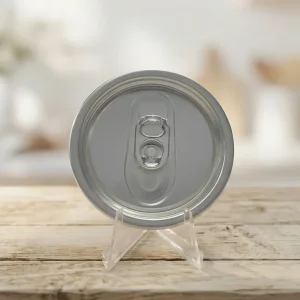
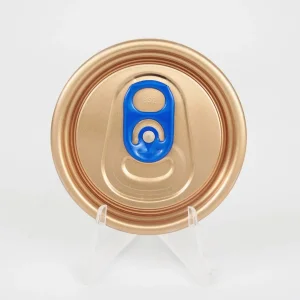
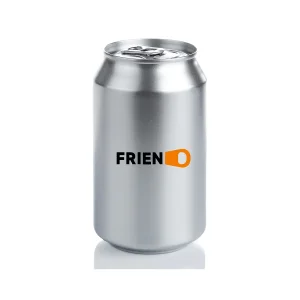
Standard 330ml, 355ml, and 500ml aluminum cans paired with 200# or 202# Stay-On-Tab (SOT) and Resealable (RPT) ends, built to withstand 6.2 bar internal burst pressure during flash pasteurization.
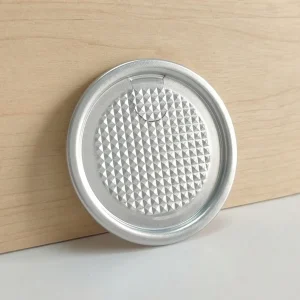
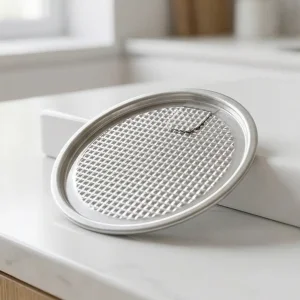
401# and 502# easy-open lids featuring aluminum peel-off foil membranes (POF), nitrogen-flush hermetic seals, and anti-static inner coatings preventing particle cling during automated scoop dispensing.
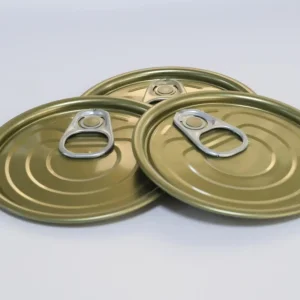
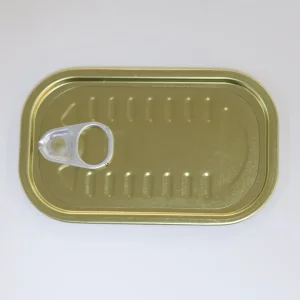
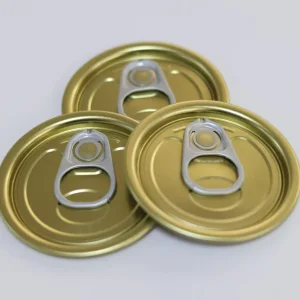
202#, 300#, 307#, and 315# tinplate and aluminum ends designed for high-temperature thermal sterilization (121°C to 130°C for 45 minutes) without shell buckling or compound degradation.
In high-speed beverage and food canning operations, the single most critical failure mode is loss of seam integrity leading to micro-leakage, bacterial contamination, or product spoil. Shanghai Friend Metals Technology Co., Ltd. implements a multi-tier Quality Assurance System covering raw coil receiving, inline stamping, and final pre-shipment auditing.
A double seam is formed by interlocking the can body flange with the lid curl through two distinct mechanical operations. To guarantee an airtight seal, three physical parameters must be met continuously:
OL% = (BH + CH + EP - SH) / (SH - (2 * EP + 2 * CP)) * 100.Every production batch of China empty tin cans, aluminum easy-open ends, and lacquered coils undergoes rigorous destructive and non-destructive testing:
Anticipating future regulatory shifts and packaging trends through continuous metallurgical and digital manufacturing advancements.
Reduction of can wall thickness down to 0.095mm and end shell thickness to 0.20mm using high-yield 5182-H48 alloys without sacrificing buckle pressure resistance.
Deployment of direct-to-shape water-based inkjet printing lines for short-run craft beverage cans, reducing pre-press set-up times to zero.
Integration of 100% inline high-resolution optical cameras powered by AI vision models detecting surface pinholes, scratch defects, and curl deformities at 2,400 SPM.
Transitioning raw coil sourcing toward green-steel and recycled-content aluminum streams to reach Net-Zero operational scope targets by 2030.
In-depth technical answers addressing common B2B procurement, engineering, and logistics queries.
For beverage bodies, 3104-H19 aluminum is industry standard due to its optimum balance of tensile strength and wall-ironing ductility. For easy-open lids, 5182-H48 aluminum shell stock combined with a 5052-H38 tab alloy offers exceptional burst strength (> 6.2 bar). When tinplate is used, Single Reduced T3 or T4 temper with an internal BPA-NI organosol spray coat provides maximum protection against organic acid pitting.
Micro-leakage during thermal processing (e.g., 121°C for 45 min) occurs when internal pressure exceeds external retort counter-pressure, distorting the end curl. We prevent this by engineering high-depth countersinks, utilizing high-elasticity water-based sealing compounds (PVC-free), and recommending precise overpressure retort cycles (air-overpressure) to balance internal expansion.
For standard bright (plain) empty cans and stock easy-open lids (200#, 202#, 307#, 401#), trial orders start at 100,000 to 200,000 pieces. For custom 6-color dry offset printed cans, the MOQ typically starts at one 40ft High Cube container per SKU design (~150,000 to 180,000 cans depending on volume format) to amortize plate setup and ink purging overheads.
Yes. All internal spray lacquers and roller-coat resins are strictly BPA-Non-Intent (BPA-NI) and conform to US FDA 21 CFR 175.300, EU Regulation 1935/2004, EU 10/2011, and China National Food Safety Standard GB 4806.10. Third-party SGS/TÜV overall migration test reports (OMT) and certificate of compliance (CoC) documents are supplied with every bill of lading.
Cans are stacked on ISO wooden/plastic pallets with heavy-duty kraft slip-sheets, top frame boards, corner protectors, and wrapped in shrink hood film with anti-moisture desiccant packs. Easy-open lids and tinplate ends are packed into moisture-barrier polyethylene sleeves and loaded into heavy-duty corrugated cartons or fiber drums on export pallets.
Comprehensive tinplate lids, anti-static powder closures, and custom aluminum formats.