Direct factory-engineered empty cans, high-barrier easy-open ends, and industrial grade coils manufactured to ISO 9001 and FSSC 22000 standards.
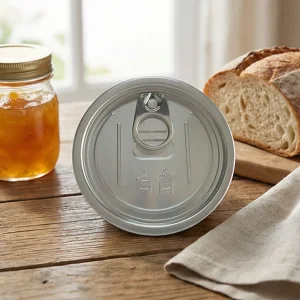
An analysis of China's dominant position in global empty tin can and aluminum container export ecosystems.
The global metal packaging industry has undergone a massive structural shift over the past two decades. China has emerged as the premier global manufacturing hub for empty tinplate cans, aluminum beverage containers, and high-barrier easy-open ends (EOE). Driven by massive capital expenditure in high-speed, automated production lines—such as Schuler, Minster, and Stolle presses—Chinese manufacturing facilities deliver unmatched economies of scale, strict metallurgical consistency, and sophisticated surface decoration capabilities.
Today, empty metal cans are no longer treated as simple commodity vessels; they are highly engineered, ultra-lightweight structural shields designed to protect delicate food, beverage, pharmaceutical, and chemical products throughout extended global supply chains. The global demand for rigid metal packaging continues to expand, propelled by stringent environmental regulations banning single-use plastics, expanding fast-moving consumer goods (FMCG) markets in Latin America, Southeast Asia, and the Middle East, and growing consumer demand for shelf-stable, tamper-evident, and premium packaging formats.
China's competitive advantage in empty tin can manufacturing stems from fully integrated industrial clusters located primarily in eastern coastal provinces such as Shanghai, Jiangsu, Zhejiang, and Shandong, as well as southern manufacturing centers in Guangdong. These industrial hubs house a complete ecosystem: from cold-rolling steel mills producing high-grade Electrolytic Tinplate (ETP) and Tin-Free Steel (TFS) to specialized lacquering plants, high-precision tool and die makers, and digital pre-press lithography studios.
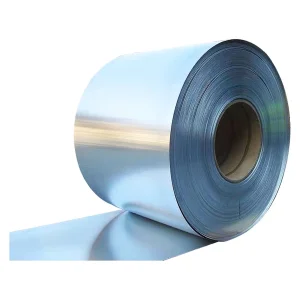
This geographic density drastically reduces lead times for raw coils (such as 3104, 5182, 5052 aluminum alloys and T2-T4/DR8-DR9 tinplate), allows immediate access to food-grade lacquer formulations (including Bisphenol A Non-Intent / BPA-NI options), and optimizes port logistics for prompt ocean shipping to over 120 destination ports globally.
Utilizing high-speed cupping presses and multi-die body makers that maintain wall thickness uniformity within ±0.002mm across high-volume production runs.
Advanced internal spray systems featuring organosol, polyester, and modified epoxy coatings compliant with strict FDA 21 CFR 175.300 and EU 1935/2004 regulations.
Engineered rim curls and countersink profiles optimized for seamless integration with Ferrum, Angelus, and Continental high-speed automatic double seamers.
An overview of metallurgical selection, drawing & ironing (DWI) physics, lithographic printing, and rigorous inline quality assurance.
The manufacture of modern empty metal containers represents a pinnacle of high-volume precision mechanical engineering. Whether producing two-piece Drawn and Ironed (DWI) aluminum beverage cans, two-piece Drawn and Redrawn (DRD) food cans, or traditional three-piece micro-welded tinplate containers, metallurgical stability and precise chemical composition are paramount.
For aluminum beverage containers, body stock relies predominantly on 3104-H19 alloy, which offers high manganese and magnesium content to deliver superior strain hardening, allowing body wall thicknesses to be reduced down to 0.095mm while maintaining column strength (axial crush resistance > 850 N). Easy-open end shells utilize 5182-H48 alloy due to its outstanding ductility and high tensile strength under internal pressurization (pop and tear force balance).
In tinplate manufacturing, Electrolytic Tinplate (ETP) uses low-carbon steel coated with a micron-thin layer of metallic tin (e.g., E2.8/2.8 g/m² coating weight). The steel substrate temper is precisely calibrated—ranging from T2 (soft, deep drawing) to DR8/DR9 (double reduced, high-yield strength)—to prevent paneling under thermal processing or vacuum conditions during retort sterilization (121°C for 30–60 minutes).
| Component / Material | Alloy / Temper | Thickness Range | Barrier / Coating System | Key Performance Metrics |
|---|---|---|---|---|
| DWI Can Body | AA 3104-H19 | 0.095 mm - 0.260 mm | Modified Acrylic / Polyester (BPA-NI) | Axial Load > 900 N; Dome Burst > 6.2 Bar |
| 202/206 SOT Lids | AA 5182-H48 | 0.205 mm - 0.225 mm | Organosol / Epoxy-Free Shell Coating | Buckle Pressure > 6.5 Bar; Pop Force < 30 N |
| 3-Piece Tinplate Can | ETP T3 / DR8 | 0.150 mm - 0.230 mm | Gold Epoxy / Organosol / White Base Coat | Side-seam welded; Retort stable up to 121°C |
| Powder Easy-Open End | AA 8011-O / ETP | 0.180 mm - 0.280 mm | Peelable Foil Membrane / Aluminum EOE | Hermetic Oxygen Barrier (< 0.5% O₂ head space) |
Customized packaging formulations engineered specifically for fill temperatures, internal pressure loads, and regional regulatory frameworks.
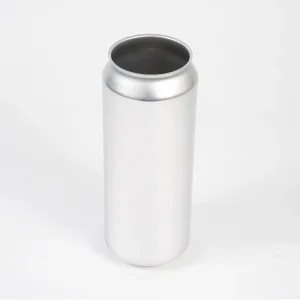
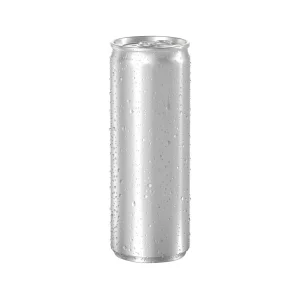
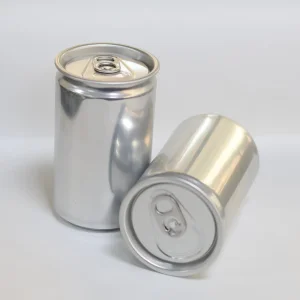
Carbonated soft drinks and beer impose severe internal pressure (up to 4.5 volumes of CO₂) and acid-induced corrosive stress. Chinese factories supply high-performance 202 SOT (Stay-On Tab) aluminum ends paired with 330ml, 355ml, and 500ml cans featuring complete internal coverage. High-speed video inspection ensures 100% seal integrity for pasteurized craft beers subject to thermal expansion.
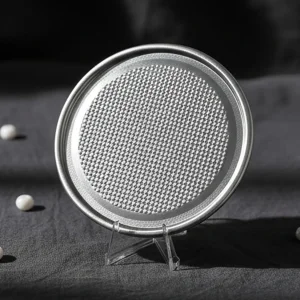
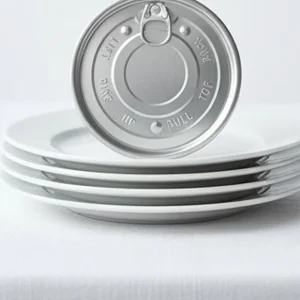
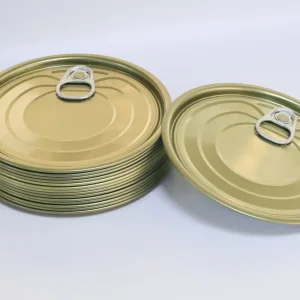
Nutritional products require zero oxygen ingress and complete moisture isolation. China suppliers lead in supplying specialized 401#, 502#, and 603# Easy-Open Lids and transparent-top membrane ends. Coupled with nitrogen-flush filling operations, these containers maintain headspace oxygen below 0.5%, protecting delicate lipids, vitamins, and infant formula powders against oxidation for up to 36 months.
Canned vegetables, tomato paste, tuna, and meat require 3-piece tinplate or 2-piece DRD aluminum cans capable of enduring aggressive retort temperatures (121°C–130°C). Chinese manufacturers apply double-coat lacquer systems (e.g., organosol with aluminum paste or titanium dioxide base) to eliminate sulfur staining, iron dissolution, and internal lacquer breakdown.
Empty tin cans designed for solvent-borne paints, automotive coatings, and aerosols demand heavy-gauge tinplate with high-integrity welded side seams. Automated induction welding machines produce ultra-smooth seam structures, preventing pinhole leaks and ensuring safe transport under hazardous goods shipping protocols (UN-certified packaging options).
How Chinese metal packaging suppliers are pioneering infinite recyclability, ultra-lightweighting, and AI-driven quality control.
As corporate environmental, social, and governance (ESG) mandates become stricter across global markets, metal containers hold a decisive advantage over plastics. Aluminum and tinplate are infinitely recyclable materials—up to 75% of all aluminum ever produced globally remains in active economic use today. Recycling empty metal cans uses 95% less energy than producing primary aluminum from bauxite ore, making metal containers the ultimate cornerstone of the circular economy.
1. Ultra-Lightweighting & Necking Technology: Through advanced computer-aided finite element analysis (FEA), Chinese engineers are progressively thinning body wall gauges while optimizing dome geometry. Modern 202-neck designs permit smooth transitions from standard 211 diameter bodies, yielding substantial material savings per million units without compromising axial column strength.
2. Transition to Bisphenol-A Free (BPA-NI) Linings: In response to strict European Chemicals Agency (ECHA) updates and US FDA guidelines, Chinese factories have fully commercialized high-performance acrylic and polyester internal spray systems. These non-intent barrier layers deliver identical flavor neutrality and storage shelf-life (> 24 months) without containing any trace bisphenol compounds.
3. AI Vision Inspection & Intelligent Manufacturing: Modern empty tin can factories in China feature fully integrated Industry 4.0 architecture. Automated Optical Inspection (AOI) camera modules operate at high line speeds (> 3,000 units/min), detecting micro-scratches, pinholes, flange dents, and print misalignments down to 0.05 mm². Defective units are ejected instantly, guaranteeing near-zero defect rates (PPM < 5) upon arrival at customer filling plants.
High-grade raw materials and custom lid profiles tailored for high-volume canning operations.



Direct answers from our packaging metallurgical engineers regarding double seam setup, coating compliance, minimum order quantities (MOQs), and shipping protection.
